
How to size a creasing matrix from board caliper and rule thickness, when to choose PVC, resin, fibre, reverse-bend or coil matrix, and a step-by-step fix list for cracked, weak or off-register creases in die-cutting.
Table of Contents
- What does a creasing matrix do?
- How to calculate creasing matrix size
- Quick size chart (2 pt / 0.71 mm crease rule)
- Creasing matrix types compared
- How to fit a creasing matrix (step by step)
- Crease cracking and other faults: troubleshooting
- Matrix, rule and rubber: the full die-cutting setup
- Frequently Asked Questions
By Gavin Gao — 15+ years in foil stamping and post-press supply at All-in Pack. Reach me at sales@allinpacks.com.
Quick answer: A creasing matrix is the pre-formed channel strip fixed to the counter plate of a die-cutter so a crease rule can press a clean fold line into board. For folding carton, size it with two starting formulas: channel width = 1.5 × board caliper + rule thickness and channel depth ≈ board caliper, then confirm with a test crease.
Most crease problems on the press — cracked folds, weak creases that spring back, cartons that won't square up on the folder-gluer — come back to three choices: the matrix size, the matrix material and how it was fitted. This guide covers all three, from the supplier side.
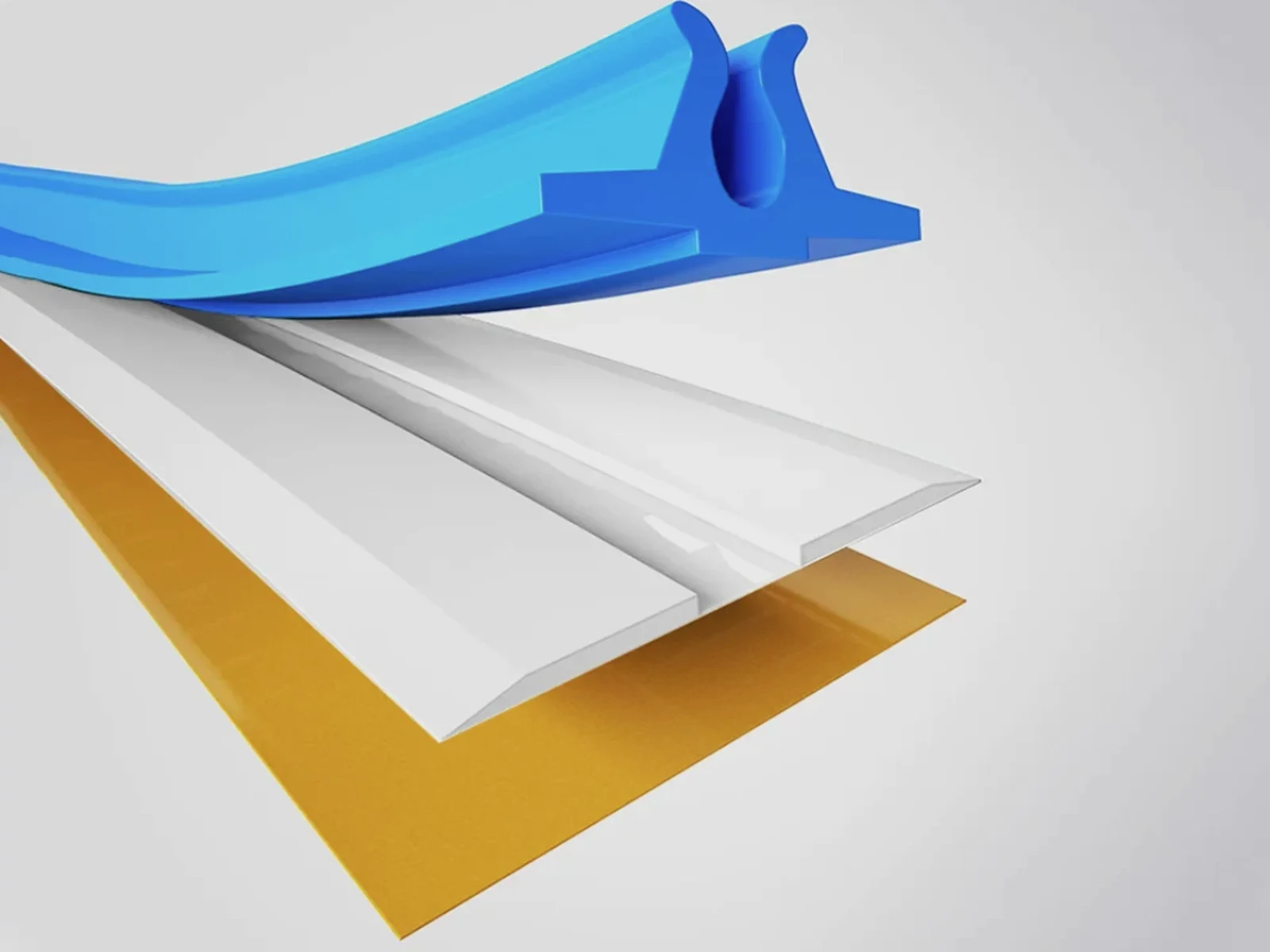
What does a creasing matrix do?
A creasing matrix gives the crease rule a defined channel to push the board into. Without it, the rule simply flattens fibres against a hard plate and the fold line is weak and unpredictable. With the right channel, the board is displaced into a controlled bead on the reverse side, which becomes the hinge of the fold.
Each matrix has three parts that matter:
- Base (carrier) strip — usually adhesive-backed, sets the overall height.
- Channel — the groove width and depth that shape the bead.
- Locating strip (plastic guide) — keeps the channel centred on the rule during fitting, then is peeled away.
How to calculate creasing matrix size
These formulas are the common industry starting point for folding carton and solid board. They are rules of thumb, not guarantees — board fibre, coating and moisture all shift the result.
| Parameter | Starting formula | Example: 0.40 mm board, 0.71 mm (2 pt) rule |
|---|---|---|
| Channel width | 1.5 × caliper + rule thickness | 1.5 × 0.40 + 0.71 = 1.31 mm → use 1.3 mm |
| Channel depth (matrix height) | ≈ board caliper | ≈ 0.40 mm |
| Crease rule height | Cutting rule height − board caliper | 23.80 − 0.40 = 23.40 mm |
Quick size chart (2 pt / 0.71 mm crease rule)
| Board caliper | Typical board | Channel width | Matrix height |
|---|---|---|---|
| 0.30 mm | 230–250 gsm folding boxboard | 1.2 mm | 0.3 mm |
| 0.40 mm | 300–350 gsm SBS / FBB | 1.3 mm | 0.4 mm |
| 0.50 mm | 400 gsm board | 1.5 mm | 0.5 mm |
| 0.60 mm | heavy board / lined chipboard | 1.6 mm | 0.6 mm |
| 0.80 mm | rigid board, E-flute micro | 1.9 mm | 0.8 mm |
Round to the nearest stock width your supplier carries. For corrugated (E, F, B flute) the flute crushes differently; plants typically widen the channel further and test on the actual board rather than relying on the solid-board formula.
Two adjustments worth making:
- Against the grain: creases running across the grain often need the next wider channel.
- Laminated, foil-stamped or heavily varnished boards: the surface layer is less elastic than the board — go one width wider or slightly shallower to protect the print. If you also hot foil stamp the same carton, crease after stamping and check the foil at the fold.
Creasing matrix types compared
| Type | Best for | Strength | Watch out for |
|---|---|---|---|
| PVC creasing matrix (AP-PM) | Short–medium runs, standard folding carton | Low cost, easy to fit, wide size range | Channel wears faster under high pressure |
| Resin / fibre creasing matrix (AP-RM) | Long runs, heavy board, high-speed automatic die-cutters | Holds channel profile longer, fewer re-make-readies | Higher unit cost |
| Reverse-bend creasing matrix (AP-RB) | Flaps and partitions folding away from print | Clean reverse fold without cracking the face | Must match rule position precisely |
| Creasing matrix coils (AP-CR) | Many jobs, frequent make-readies | Cut exact lengths on press, less waste | Needs a clean cutting tool and fitting discipline |
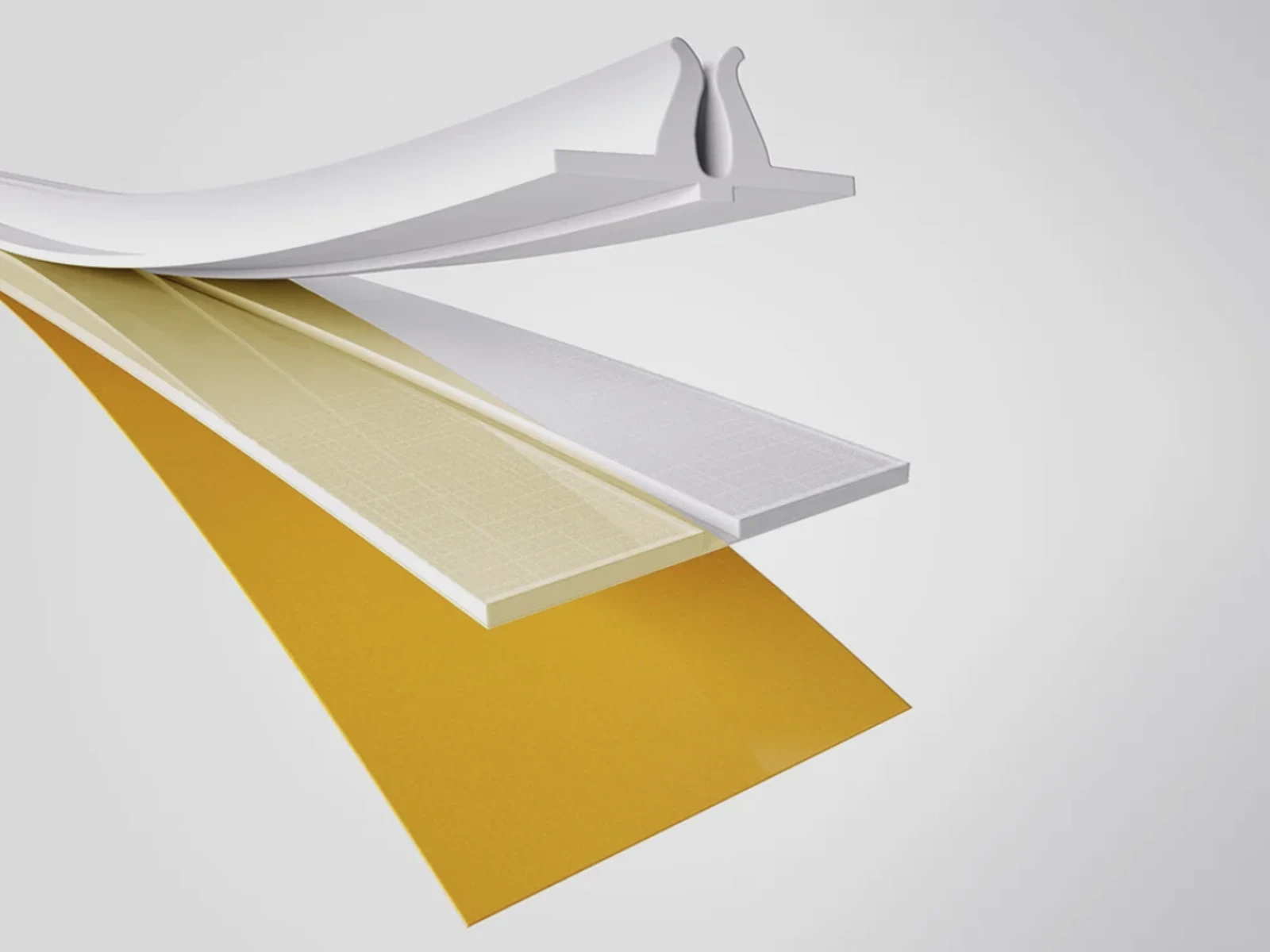
Simple selection rule: start with PVC; move to resin or fibre when the job is long, the board is heavy or your press runs fast enough that matrix wear becomes the reason you stop. Use reverse-bend only where the fold direction requires it.
How to fit a creasing matrix (step by step)
- Clean the counter plate of old adhesive and dust.
- Cut matrix lengths with a square, clean cut; mitre the corners where creases meet.
- Slide the locating strip over the crease rule so the channel sits centred on it.
- Peel the adhesive liner and close the press gently to transfer the matrix to the plate.
- Remove all locating strips before running.
- Run a test sheet, fold it by hand and on the folder-gluer, then fine-tune make-ready.
Crease cracking and other faults: troubleshooting
| Symptom | Likely cause | Fix |
|---|---|---|
| Outside of fold cracks | Channel too narrow or too deep; rule too high; dry board; folding against grain | Widen channel one size, reduce rule height or make-ready, condition board to ~45–55% RH |
| Crease weak, carton springs open | Channel too wide or too shallow; rule too low | Narrow channel or raise matrix height; add make-ready under the rule |
| Crease off-centre or doubled | Matrix not centred on rule; locating strip left on; plate shifted | Re-fit with locating strip; check plate register |
| Print or foil cracks at fold | Surface layer less elastic than board | Wider channel, consider reverse-bend matrix, crease with the grain where possible |
| Channel wears quickly | PVC on a long or high-pressure job | Switch to resin / fibre matrix |
| Board tears at crease ends | Matrix ends not mitred; cut rule and crease rule too close | Mitre ends cleanly; check die layout at junctions |
Matrix, rule and rubber: the full die-cutting setup
A clean crease is a system, not a single part. The matrix only works if the steel rule heights are consistent, the ejection rubber releases the sheet without pulling the crease, and gap filler sponge and rubber strips keep the sheet flat as it leaves the die. If you are specifying a new press, see our automatic flatbed die-cutting machine.
Browse the full range of post-press consumables, or send us your board caliper, rule thickness and run length and we will recommend matrix sizes and send samples.
Frequently Asked Questions
Quick answers about creasing matrix.
Companion Products
Specs and samples for the products discussed in this article.
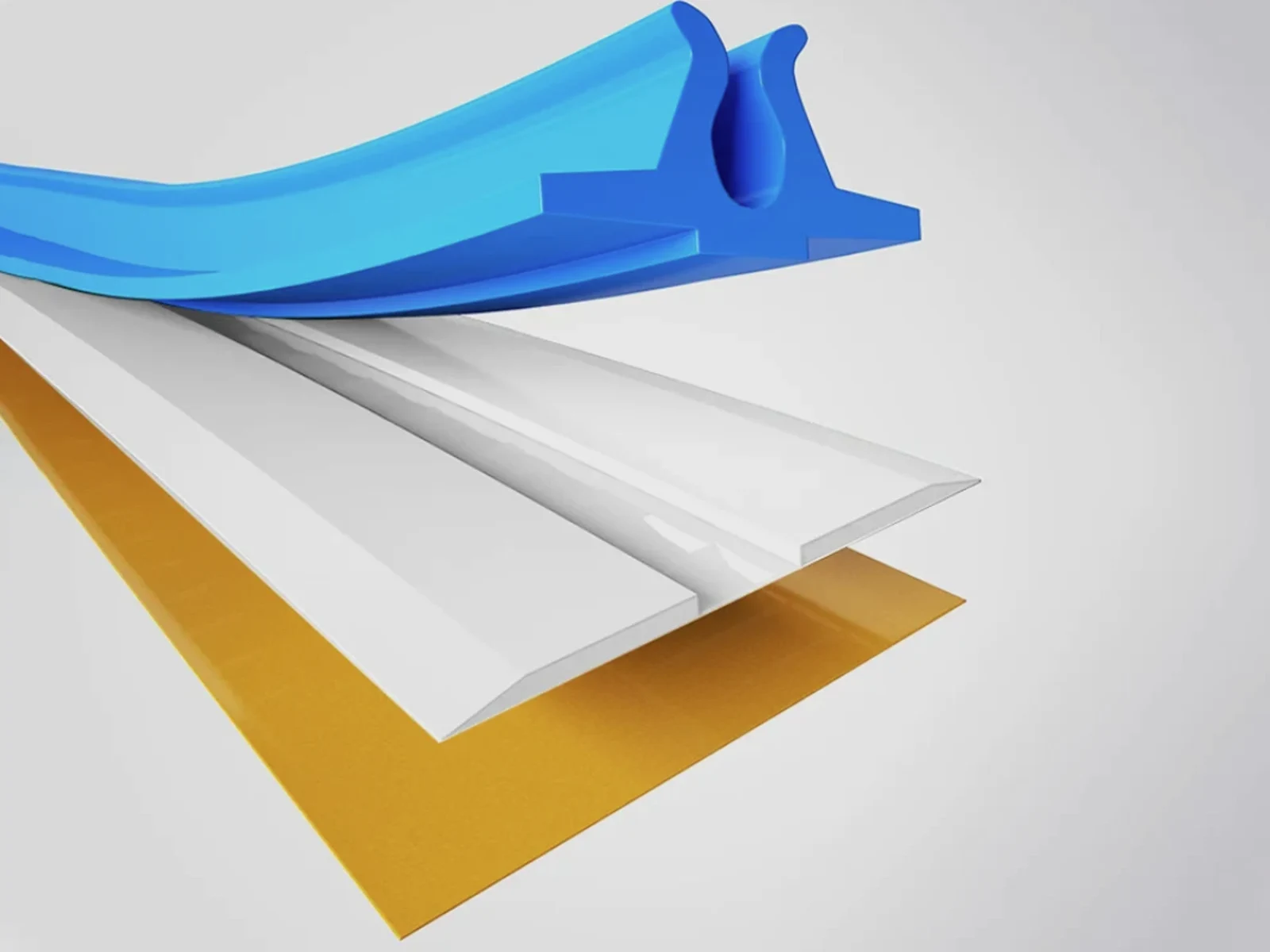
AP-PM PVC Creasing Matrix for Die-Cutting
PVC-base self-adhesive creasing matrix in standard, narrow, wider, off-centre and double-crease profiles for crack-free folds.
View product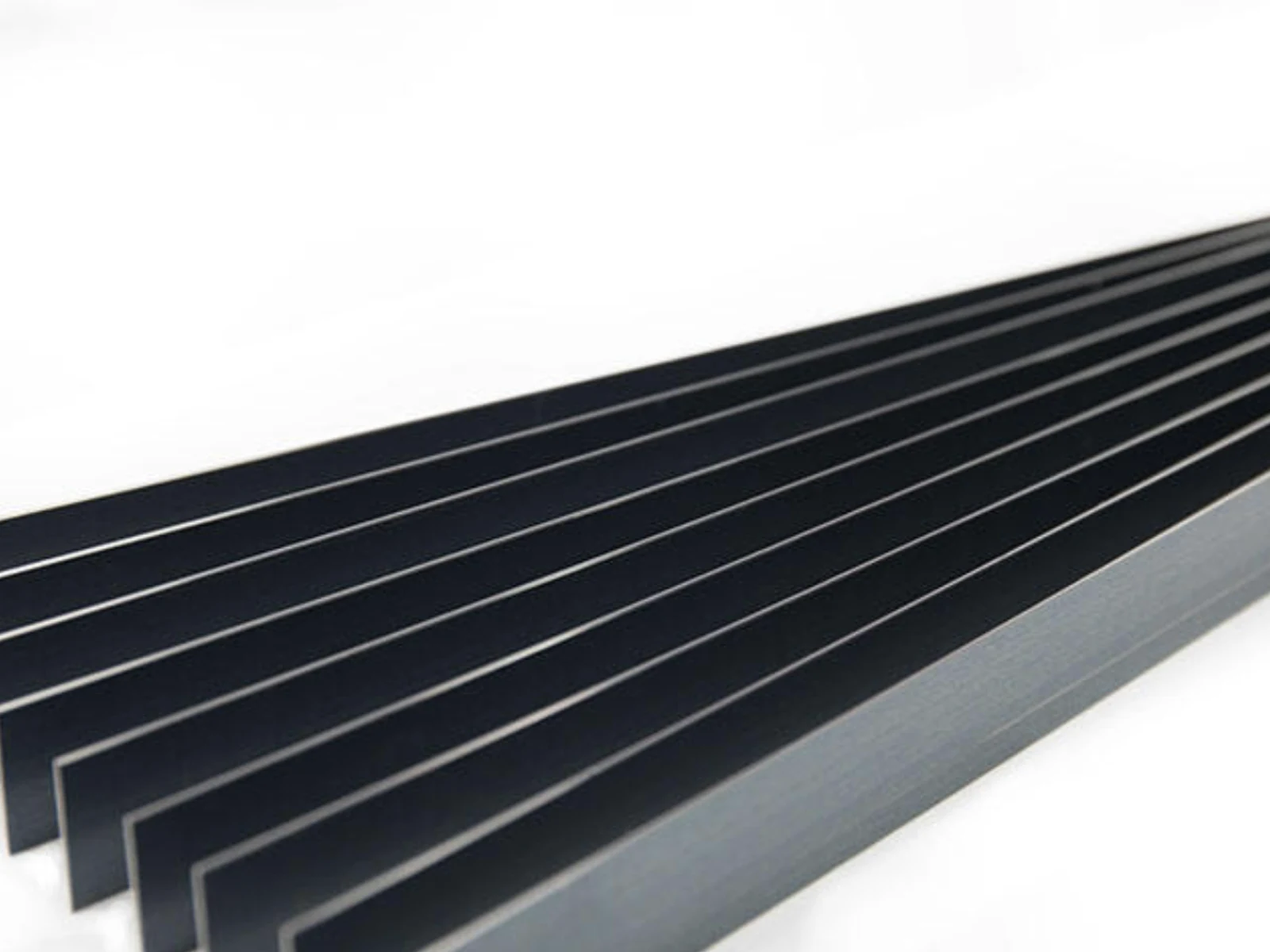
AP-SR Steel Rule Cutting Blade for Die Boards
Hardened steel rule for cutting and creasing die boards — consistent bevel, straight running, long edge life.
View productRelated Articles
View all
Technical Knowledge · Aug 26, 2026
The Complete Foil-Substrate Compatibility Matrix (2026)
A field-tested compatibility matrix covering 12 substrate types across 9 foil categories, with temperature ranges, dwell times, pressure notes and the failure modes that show up on real production floors.
Technical Knowledge · Apr 10, 2026
Self-Adhesive Label Material: A Buyer's Guide
Choose the perfect self-adhesive label material for your product with this comprehensive guide, ensuring durability and optimal performance. Learn what to consider for your labels today.

Technical Knowledge · Sep 1, 2026
Toner Reactive Foil: The Complete Guide to Foil Transfer Printing (2026)
How toner reactive foil actually works, which foils transfer cleanly and why, equipment from pouch laminators to dedicated foil machines, sheet versus roll economics, and a supplier-side troubleshooting guide for craft makers, small businesses and print shops.
Ready to source foil stamping and die-cutting from one supplier?
From stamping foils to post-press machines and die-cutting consumables — get factory-direct pricing and free samples.