
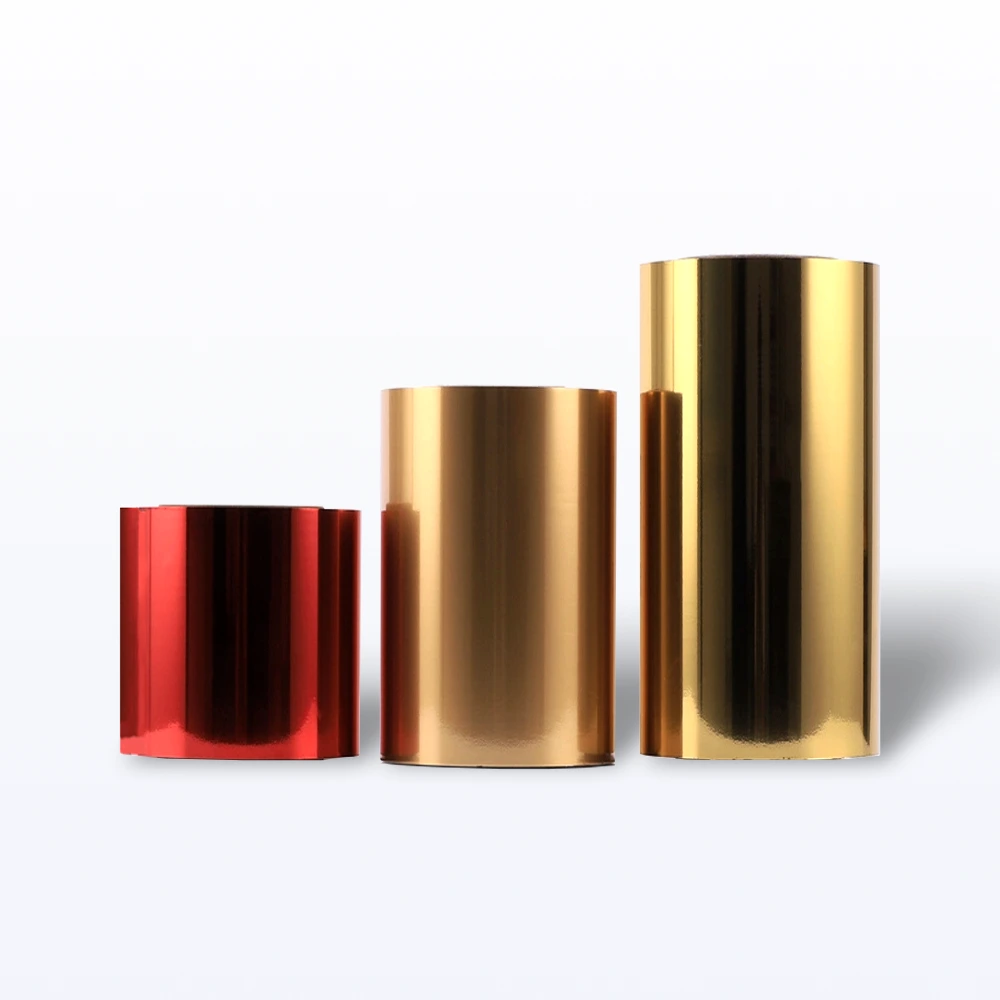
A field-tested compatibility matrix covering 12 substrate types across 9 foil categories, with temperature ranges, dwell times, pressure notes and the failure modes that show up on real production floors.
Table of Contents
- The matrix
- Hot stamping foil compatibility
- Cold foil compatibility
- Reading the matrix: what the ratings mean in practice
- The A-rated combinations
- The B-rated combinations
- The C-rated combinations
- The D-rated combinations
- The F-rated combinations
- The five failure modes I see most often
- The parameters most suppliers will not publish
- How to use this matrix in practice
- What this matrix does not cover
- Frequently Asked Questions
By Gavin Gao — 15+ years in hot stamping foil, cold foil and post-press machinery. Reach me at gavin@allinpacks.com or on LinkedIn.
Every foil manufacturer publishes a technical data sheet. Almost none of them tell you what actually happens when their foil meets your substrate on a real press at production speed.
The gap between a data sheet that says "suitable for coated paper" and a production operator watching foil refuse to release cleanly at 2am on a Wednesday is where most of the real knowledge in this industry lives. That knowledge sits with individual operators, press technicians and the handful of supplier-side people who have spent enough hours on converter production floors to have seen the failure modes firsthand.
This article centralises some of that knowledge into a single reference. The matrix below covers 12 substrate types against 9 foil categories, with the parameter windows I have seen hold up in production — not laboratory conditions, not data-sheet ideals, but the ranges that survive a running press when the operator needs a starting point that will not waste the first 500 metres of substrate.
Two caveats before the matrix.
First, these are starting points, not guaranteed settings. Every press, every foil batch and every substrate shipment shifts the working window by roughly 5-15 degrees Celsius on temperature and 10-20 percent on dwell time. The matrix gives you a centre point to aim at; your combination needs tuning around that centre.
Second, my experience skews toward Chinese-manufactured foil (particularly Wenzhou-cluster and Jiangsu production), Japanese and Korean substrates common in Asian converter markets, and European substrates encountered through customer technical support. If you run a European foil brand on a North American substrate I have not tested, the matrix still gives a reasonable starting point, but expect more variance than for combinations I have physically run.
The matrix
Compatibility ratings use a five-level system:
- A — Excellent. Wide process window, forgiving of parameter variation, low waste rates in production.
- B — Good. Reliable in production but requires tighter parameter control. Expect 3-8 percent waste during setup.
- C — Workable. Narrow process window, experienced operator and specific tuning essential. Expect 8-15 percent setup waste.
- D — Difficult. Achievable but high risk. Frequent adhesion or release failures. Not recommended for production runs unless no alternative exists.
- F — Incompatible. Do not attempt. The physics of the interaction make reliable decoration impractical.
Temperature ranges are die-face temperature in degrees Celsius. Dwell time is in seconds at the nip point. Pressure is relative (L = light, M = medium, H = heavy) because absolute pressure depends entirely on press configuration and die area.
Hot stamping foil compatibility
| Substrate | Std. metallic (gold/silver) | Matte metallic | Pigment (opaque colour) | Holographic hot | Security OVD |
|---|---|---|---|---|---|
| C1S coated paper (250-350gsm) | A · 105-115°C · 0.3-0.5s · M | A · 100-110°C · 0.3-0.5s · M | A · 110-120°C · 0.4-0.6s · M | B · 105-115°C · 0.3-0.4s · M | B · 110-120°C · 0.3-0.5s · M-H |
| C2S coated paper (250-350gsm) | A · 105-115°C · 0.3-0.5s · M | A · 100-110°C · 0.3-0.5s · M | A · 110-120°C · 0.4-0.6s · M | B · 105-115°C · 0.3-0.4s · M | B · 110-120°C · 0.3-0.5s · M-H |
| Uncoated paper (120-300gsm) | B · 110-125°C · 0.4-0.7s · M-H | B · 108-120°C · 0.4-0.6s · M-H | B · 115-130°C · 0.5-0.8s · H | C · 110-120°C · 0.4-0.6s · M-H | C · 115-125°C · 0.4-0.6s · H |
| Kraft paper (150-400gsm) | C · 115-130°C · 0.5-0.8s · H | C · 112-125°C · 0.5-0.7s · H | C · 120-135°C · 0.6-0.9s · H | D · 115-125°C · 0.5-0.7s · H | D · 120-130°C · 0.5-0.7s · H |
| Textured / embossed paper | C · 110-120°C · 0.5-0.8s · H | C · 108-118°C · 0.5-0.7s · H | D · 115-125°C · 0.6-0.9s · H | D · 110-120°C · 0.5-0.7s · H | F |
| UV-coated / varnished paper | D · 120-140°C · 0.6-1.0s · H | D · 118-135°C · 0.6-0.9s · H | D · 125-140°C · 0.7-1.0s · H | F | F |
| PP film (BOPP / cast PP) | B · 95-110°C · 0.3-0.5s · L-M | B · 93-108°C · 0.3-0.5s · L-M | B · 100-115°C · 0.4-0.6s · M | C · 95-108°C · 0.3-0.5s · L-M | C · 100-110°C · 0.3-0.5s · M |
| PET film (12-50μm) | B · 100-115°C · 0.3-0.5s · M | B · 98-112°C · 0.3-0.5s · M | C · 105-120°C · 0.4-0.6s · M | C · 100-112°C · 0.3-0.5s · M | C · 105-115°C · 0.3-0.5s · M |
| PE film (LDPE / HDPE) | D · 85-100°C · 0.2-0.4s · L | D · 83-98°C · 0.2-0.4s · L | D · 90-105°C · 0.3-0.5s · L-M | F | F |
| Synthetic paper (Yupo / Teslin) | B · 90-105°C · 0.3-0.5s · L-M | B · 88-103°C · 0.3-0.5s · L-M | C · 95-110°C · 0.4-0.6s · M | C · 90-105°C · 0.3-0.5s · L-M | D · 95-108°C · 0.3-0.5s · M |
| Metallic board / foil laminate | C · 115-130°C · 0.4-0.6s · M-H | C · 112-125°C · 0.4-0.6s · M-H | B · 115-130°C · 0.5-0.7s · M-H | D · 115-125°C · 0.4-0.6s · M-H | D · 118-128°C · 0.4-0.6s · H |
| Corrugated board (E/F flute) | C · 120-135°C · 0.6-1.0s · H | C · 118-130°C · 0.6-0.9s · H | C · 125-140°C · 0.7-1.0s · H | D · 120-130°C · 0.6-0.8s · H | F |
Standard gold and silver rows map to premium metallic gold hot stamping foil, the matte column to matte silver hot stamping foil, the holographic column to holographic rainbow foil and the OVD column to anti-counterfeit security foil. Machine-side, the parameter windows assume a well-maintained flatbed such as the XG1080G fully automatic hot stamping machine or an equivalent hot foil blocking machine.
Cold foil compatibility
| Substrate | Std. metallic cold foil | Holographic cold foil | Pattern-registered cold foil | Tinted / specialty metallic |
|---|---|---|---|---|
| C1S coated paper (250-350gsm) | A · standard UV adhesive · M cure | A · standard UV adhesive · M cure | B · controlled adhesive deposit · H cure | A · standard UV adhesive · M cure |
| C2S coated paper (250-350gsm) | A · standard UV adhesive · M cure | A · standard UV adhesive · M cure | B · controlled adhesive deposit · H cure | A · standard UV adhesive · M cure |
| Uncoated paper (120-300gsm) | C · primer coat required · H cure | C · primer coat required · H cure | D · primer + controlled deposit · H cure | C · primer coat required · H cure |
| Kraft paper (150-400gsm) | D · heavy primer · H cure · porosity issues | D · heavy primer · H cure | F | D · heavy primer · H cure |
| Textured / embossed paper | D · fill primer · H cure · partial coverage | F | F | D · fill primer required · H cure |
| UV-coated / varnished paper | C · surface prep critical · adhesion test mandatory | D · delamination risk on thick UV layers | F | C · surface prep critical |
| PP film (BOPP) — corona treated | A · standard UV adhesive · M cure | B · standard UV adhesive · M-H cure | C · fine adhesive control needed | B · standard UV adhesive · M cure |
| PP film (BOPP) — untreated | F | F | F | F |
| PET film (corona treated) | A · standard UV adhesive · M cure | B · standard UV adhesive · M cure | B · fine adhesive control needed | A · standard UV adhesive · M cure |
| PE film (LDPE / HDPE) | D · specialist adhesive · surface treatment critical | F | F | D · specialist adhesive required |
| Synthetic paper (Yupo / Teslin) | B · lower adhesive viscosity · M cure | B · lower adhesive viscosity · M-H cure | C · adhesive compatibility test essential | B · lower viscosity · M cure |
| Self-adhesive label stock (coated face) | A · standard UV adhesive · M cure | A · standard UV adhesive · M cure | B · controlled deposit · M-H cure | A · standard UV adhesive · M cure |
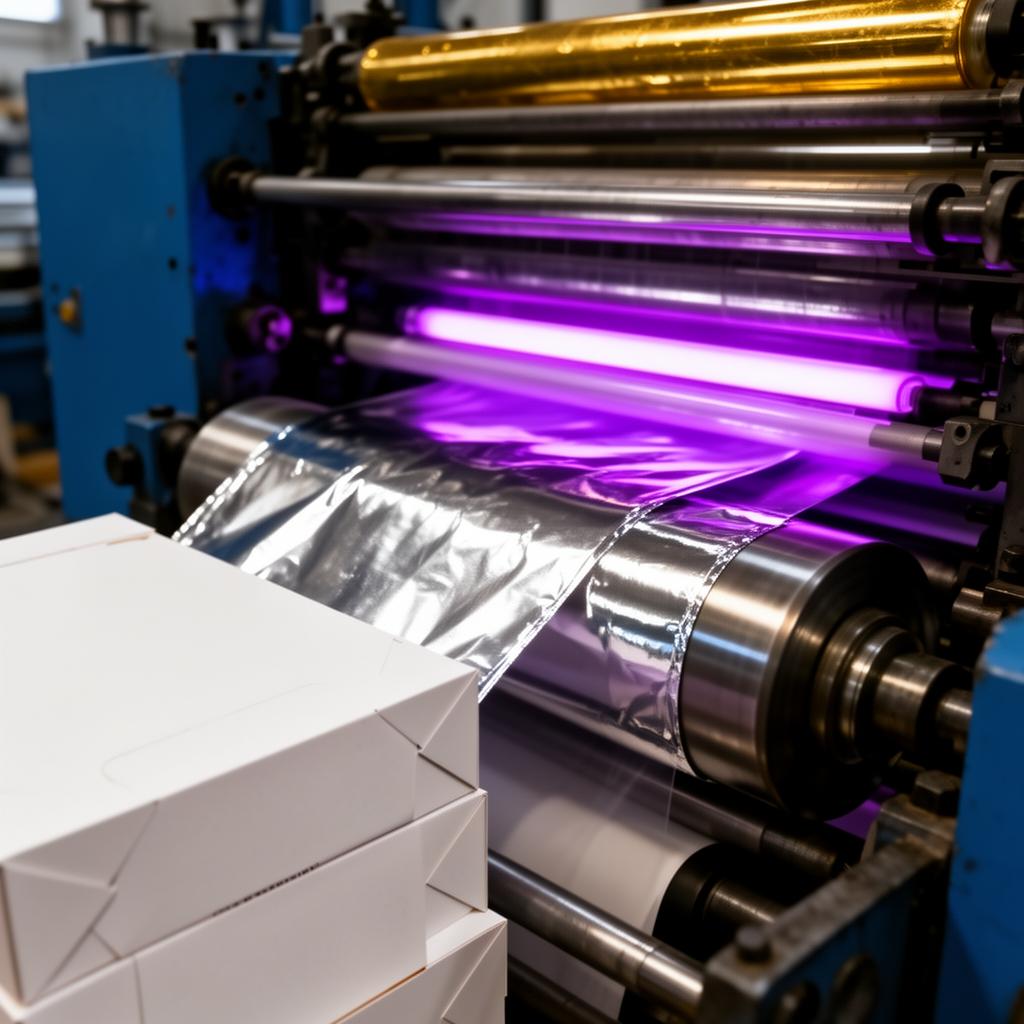
The cold foil rows assume cold stamping foil running against a matched UV adhesive, and the label-stock row assumes coated face stock such as gloss white self-adhesive label paper or synthetic PP/PET self-adhesive label material.
Reading the matrix: what the ratings mean in practice
The A-rated combinations
These are the ones where you can reasonably expect setup in under 15 minutes and waste rates below 3 percent. Standard metallic hot foil on C1S coated paper is the textbook example. The window is wide enough that overshooting temperature by 5 degrees Celsius or dwell by 0.1 seconds still gives acceptable results. If you have problems on an A-rated combination, the foil-substrate match is almost certainly not the cause — look at silicone rubber hardness, die levelness or pressure distribution.
Standard metallic cold foil on corona-treated BOPP is the cold foil equivalent. The UV adhesive interaction with treated polypropylene is well-characterised chemistry, and any competent cold foil should perform here without drama.
The B-rated combinations
Reliable but less forgiving. Standard metallic hot foil on uncoated paper works well, but the paper's absorption means higher temperature, longer dwell and heavier pressure than coated stock. An operator who loads uncoated stock and runs the coated-paper recipe gets partial adhesion and patchy coverage.
For cold foil, B usually means adhesive viscosity or cure intensity needs deliberate attention. Holographic cold foil on PET works, but the cure window is tighter than on paper — undercure fails the crease test, overcure can yellow the holographic effect.
The C-rated combinations
This is where the interesting problems start. C means genuinely achievable, but the window is narrow enough that operator experience decides between acceptable output and expensive waste.
Hot stamping on kraft paper is a C I meet constantly in customer trials. The rough absorbent surface needs 115-130 degrees Celsius instead of 105-115, longer dwell and heavy pressure for full coverage — and even then, the highest-porosity grades stay patchy. The signature failure is an orange-peel texture: the foil transfers and adheres, but follows the microscopic surface contour rather than bridging it.
Cold foil on uncoated paper trips converters up regularly. Uncoated paper absorbs UV adhesive before cure, so the deposit that works on coated stock leaves an inadequate bond thickness. The fix is a barrier primer applied inline or offline before the cold foil station, and most converters learn this only after wasting a few hundred metres of foil and substrate.
The D-rated combinations
Achievable but high risk. Hot stamping on PE film is the canonical case. Low surface energy plus heat sensitivity leaves a very narrow window — low enough to avoid distortion (LDPE softens near 110 degrees Celsius, lower under pressure) but high enough to activate the adhesive layer. That practical window is often only 10-15 degrees Celsius, less than the normal temperature variation across many stamping dies.
When a customer asks to hot stamp PE film, my first answer is always: can you use cold foil on corona-treated PE instead? That removes the heat problem entirely, at the cost of specialist adhesive formulation and critical surface treatment.
The F-rated combinations
Do not attempt. Security OVD hot foil on textured paper is an F because the registration precision that OVD features demand is physically incompatible with the surface variation of textured stock. Cold foil on untreated BOPP is an F because the adhesive has nothing to bond to: untreated BOPP sits around 30 dynes per centimetre and most UV cold foil adhesives need at least 38 to wet properly. Corona treatment raises the surface to 42-48 dynes per centimetre, which is exactly why the treated version is an A and the untreated version is an F.
The five failure modes I see most often
In roughly descending frequency across customer trials and production support calls over the past five years:
1. Temperature overshoot on film substrates. Operators running hot stamping on BOPP or PET with their paper settings. The gap between coated-paper parameters (105-115°C) and film parameters (95-110°C) looks small, but 10 degrees too high on thin film produces wrinkling, curling and sometimes permanent dimensional change. Roughly 25 percent of the hot stamping failure calls I take.
2. Inadequate corona treatment on cold foil substrates. Treatment level decays after application — a roll treated to 44 dynes per centimetre at the extrusion plant may test at 38 by the time it reaches the converter four weeks later, especially in humid storage. Converters who do not re-test at point of use get intermittent cold foil adhesion failure that looks random but is a storage-age problem. About 20 percent of cold foil failure calls.
3. Silicone rubber hardness mismatch. Coated paper wants 70-80 Shore A, films 60-70 Shore A, textured paper 50-60 Shore A. A 75 Shore A rubber on textured stock creates hard contact points that mark through and foil voids in recessed areas; the soft rubber on coated paper gives mushy edges and poor fine-detail definition. About 15 percent of hot stamping failures.
4. UV cure intensity mismatch on cold foil. Mercury lamp and LED-UV systems need different adhesive formulations and cure doses. An adhesive optimised for mercury UV may undercure under LED-UV at the same nominal intensity because the spectral output differs. Converters migrating to LED-UV should verify adhesive compatibility with the foil supplier before running production. About 15 percent of cold foil failures.
5. Humidity-related adhesion failure. Both hot and cold foil degrade when substrate moisture content runs high. Paper stored above 60 percent relative humidity absorbs moisture that interferes with hot foil adhesive activation and cold foil UV cure. The signature is inconsistency: the same foil on the same substrate runs perfectly Monday and fails Thursday after a humid weekend. Around 10 percent of failures, concentrated in tropical and subtropical environments — Southeast Asia, coastal China, Central America.
The parameters most suppliers will not publish
Minimum adhesion build time. Most hot foil data sheets give a temperature range but never say how quickly the adhesive reaches working bond strength after the stamping cycle. On fast presses where foil separates from the substrate within 0.1-0.2 seconds of the nip, the adhesive must reach separation-resistant strength inside that window. Some formulations do; others need longer and fail on fast presses even when temperature and dwell look correct. If your waste rate climbs when you speed the press up, this is usually why.
Shelf-life sensitivity of release-layer performance. Fresh foil releases cleanly. Foil that has sat in a warehouse for ten months may release too easily (poor adhesion) or too reluctantly (tearing, partial transfer). Good release-layer chemistry drifts minimally over 12-18 months; cheaper formulations can shift meaningfully in 6-8 months, particularly in warm humid storage. This is one of the hidden cost differentials between mid-tier and commodity Chinese foil — identical on day one, different at month eight.
Cross-web tension tolerance for cold foil. Cold foil applied inline on a flexo press absorbs cross-web tension variation without wrinkling, telescoping or tracking drift. The acceptable range depends on carrier thickness, metallisation method and release-layer stiffness, and is almost never published. Narrow-web converters (below 350mm) are more exposed than wide-web operators because the same absolute variation is a larger share of total web tension. If your cold foil wrinkles or tracks poorly despite good adhesion, this is the parameter to raise with your supplier.
How to use this matrix in practice
Scenario 1: quoting a new job. Look up substrate and foil category. A or B, quote with confidence. C, quote with a trial-sample caveat before production commitment. D, quote only after physical trials. F, propose an alternative decoration route to your customer.
Scenario 2: troubleshooting a production failure. Compare your press settings against the matrix cell. If temperature is off by more than 5 degrees Celsius or dwell by more than 0.1 seconds, move to the matrix centre point and retry. If your settings are already inside the range, work the five failure modes in order — temperature overshoot, corona treatment, rubber hardness, UV cure, humidity. That sequence resolves roughly 85 percent of the calls I take.
Scenario 3: evaluating a new foil supplier. Request samples and test against the matrix on your most common substrate. A-rated combinations should work without drama from any competent producer; failure there means the foil is below specification and the evaluation should stop. If A-rated works but C-rated does not, the foil is within normal specification but may not suit your application mix — a compatibility mismatch, not a quality failure. Send us your substrate and we will run the trial before you commit to a production order.
What this matrix does not cover
Digital toner-reactive foil compatibility is a different evaluation framework entirely. Toner-reactive foil bonds to the toner layer rather than the substrate, so compatibility depends on the digital press platform, toner chemistry and fusing temperature rather than substrate type. Our toner reactive foil guide covers that route separately.
Embossing-and-foil combined processes — where one die applies both foil and a dimensional emboss — have parameter interactions a flat-stamping matrix cannot capture. Emboss depth and sharpness affect foil coverage, and foil thickness and release behaviour affect emboss definition. Equipment such as the TYM-1060 automatic embossing and debossing machine deserves its own analysis.
Multi-layer foil-over-foil applications are increasingly common in premium packaging, but the release interaction between two foil layers is chemically distinct from foil on paper or foil on film.
I may write dedicated pieces on each of these if there is enough interest.
Reviewed by Gavin Gao, Technical Director at All-in Pack. Gavin has more than fifteen years of technical experience in hot stamping foil, cold foil and post-press machinery, with specific depth in foil-substrate interaction dynamics, converter process optimisation and production-floor troubleshooting across Asian and European converter markets.
For supplier-level comparisons of Chinese foil producers, see Top 10 Chinese Hot Stamping Foil Manufacturers Compared and Top 10 Chinese Cold Foil Manufacturers Compared. For market-level analysis, see Cold Foil Global Market Analysis 2026.
The full 30-page report on Chinese foil export flows (2021-H1 2026), built on GACC customs data, is available free at allinpacks.com/reports/china-foil-export-2026.
Reach me directly at gavin@allinpacks.com or on LinkedIn.
Frequently Asked Questions
Quick answers about foil substrate compatibility.
Companion Products
Specs and samples for the products discussed in this article.
Related Articles
View all
Technical Knowledge · Oct 18, 2026
Creasing Matrix Selection & Calculation Guide (2026): Formulas, Types and Cracking Fixes
How to size a creasing matrix from board caliper and rule thickness, when to choose PVC, resin, fibre, reverse-bend or coil matrix, and a step-by-step fix list for cracked, weak or off-register creases in die-cutting.
Technical Knowledge · Sep 1, 2026
Toner Reactive Foil: The Complete Guide to Foil Transfer Printing (2026)
How toner reactive foil actually works, which foils transfer cleanly and why, equipment from pouch laminators to dedicated foil machines, sheet versus roll economics, and a supplier-side troubleshooting guide for craft makers, small businesses and print shops.
Technical Knowledge · Aug 25, 2026
Holographic Foil Printing: The Complete Technical Guide (2026)
How holographic foil printing actually works — hot stamping, cold foil and transfer sheets compared, the four holographic foil families, security OVD requirements, honest limitations, and a step-by-step way to choose the right method for your run length.
Ready to source foil stamping and die-cutting from one supplier?
From stamping foils to post-press machines and die-cutting consumables — get factory-direct pricing and free samples.