
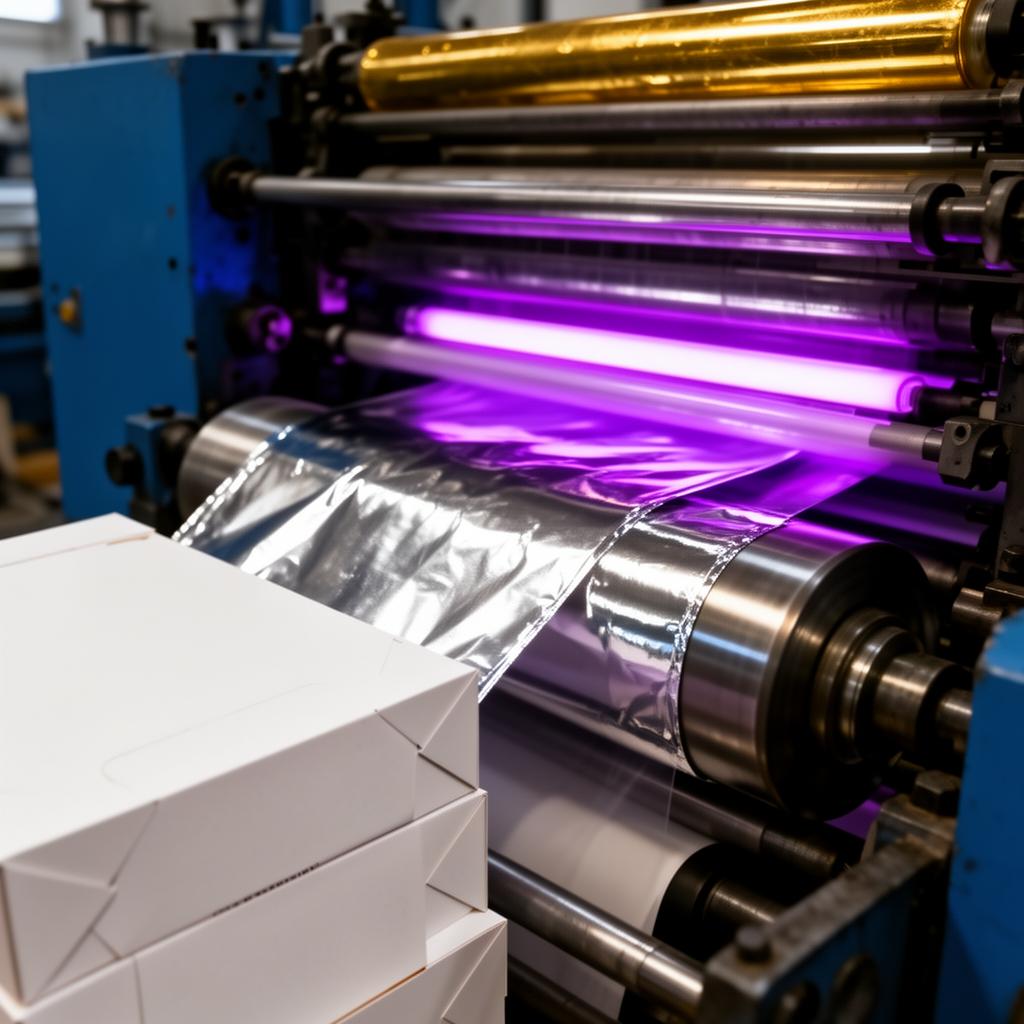
A cold foil supplier's honest comparison of the ten most relevant Chinese cold foil producers in 2026 — grouped by specialty across volume flexo, pattern-registered, holographic and integrated supply, with application-based routing guidance.
Table of Contents
- How I selected these ten
- Group A · Volume flexo cold foil producers
- 1. Wenzhou Dajin Packing Material
- 2. Wenzhou Fuxing Packaging Material
- 3. Zhejiang Yushi Packing Material
- Group B · Pattern-registered and specialty cold foil
- 4. Wenzhou Tiansheng
- 5. Zhejiang Zhongjin Laser Anti-counterfeiting Technology
- 6. K Laser Technology (Chinese operations)
- Group C · Global brand Chinese operations
- 7. Crown Roll Leaf (China Branch)
- 8. Foilco (China operations)
- Group D · Integrated cold foil suppliers
- 9. All-in Pack (my own company)
- Group E · Regional producers worth knowing
- 10. Wenzhou Huayuan Packing Material
- Decision framework: routing by application
- What this list deliberately excludes
- Closing thoughts
- Frequently Asked Questions
By Gavin Gao — 15+ years in hot stamping foil, cold foil and post-press machinery. Reach me at gavin@allinpacks.com or on LinkedIn.
I published a broader comparison of the top Chinese hot stamping foil manufacturers earlier this year, and the most common follow-up question was some variation of: "OK, but who should I actually buy cold foil from?"
Fair question. The cold foil supplier landscape in China is genuinely different from the hot stamping foil landscape, and the overlap between the two is less than most buyers expect. Several producers who are excellent on hot foil are mediocre on cold foil, and a few specialists who barely register in the hot foil world are the best names to know for cold foil specifically.
The difference comes down to process chemistry. Cold foil doesn't use heat and dwell time to activate an adhesive layer the way hot stamping does. Instead, UV-curable adhesive gets printed onto the substrate through a flexo or offset plate, the foil web contacts the wet adhesive, UV light cures it, and the foil carrier peels away leaving metallised decoration behind. That process chain puts completely different demands on the foil construction — the release layer, the metallisation deposit, the carrier tension tolerance, the adhesive compatibility window. A producer who has spent twenty years perfecting release-layer formulation for hot stamping dies doesn't automatically know how to engineer a release that works cleanly against a UV adhesive at 150 metres per minute on a flexo press.
I've been involved in cold foil supply directly since about 2016, first through machinery installations where we were integrating cold foil units onto customer presses, and then progressively through foil supply as customers kept asking us to source the foil alongside the equipment. Over that period I've evaluated cold foil from probably fifteen different Chinese producers, visited most of their production facilities at least once, and sat through enough converter trials to have a fairly calibrated sense of who performs at what level.
The usual disclaimers apply. I run All-in Pack, which is one of the ten companies below. I've tried to describe our own cold foil operation honestly and in the same terms I use for competitors. I've placed us in the group I think we actually belong in. Read that section critically anyway.
How I selected these ten
Same three filters I used for the hot foil comparison, applied specifically to cold foil production:
Six years of continuous cold foil production. Not six years of existence as a company — six years of actually producing cold foil at commercial scale. Several large Chinese foil producers "offer" cold foil in their catalogues but outsource it from smaller specialists. This list is about the actual production base.
Documented cold foil export activity to at least two continents. Cold foil is a more export-weighted product than hot stamping foil in China because domestic Chinese cold foil demand, while growing, is still a fraction of the domestic hot foil market. Producers who only sell domestically haven't been tested against the more demanding quality expectations of Southeast Asian, European and Latin American converter markets.
Verifiable cold foil-specific coating capacity. Cold foil coating requires different line configuration than hot foil coating — different tension control, different metallising parameters, different release-layer application. Producers who run cold foil through hot foil lines as a sideline product generally produce inconsistent results. I've tried to include only producers who have dedicated or at least properly configured cold foil coating capability.
Group A · Volume flexo cold foil producers
These three are the companies I'd shortlist for a converter running standard bright metallic cold foil — silver, gold, copper — at volume on inline flexo presses. This is the bread-and-butter segment of Chinese cold foil production, and these are the producers whose standard-grade product I've personally evaluated most extensively.
1. Wenzhou Dajin Packing Material
Dajin has built the strongest position of any Chinese producer in the standard flexo cold foil segment. Their volume production of bright silver and bright gold cold foil for inline flexo application is, by my evaluation, the most price-competitive in the Wenzhou cluster at specification levels that meet most mainstream converter requirements.
I've run Dajin standard silver cold foil through three different flexo press configurations (Mark Andy, Nilpeter and a Chinese-built Weigang unit) across different converter facilities, and the release behaviour has been acceptably consistent across all three. That's not a trivial statement — release consistency across different press configurations is where many Chinese cold foil producers fall apart, because the nip pressure, web speed and UV adhesive formulation vary enough between press brands that a foil tuned for one doesn't automatically work on another.
Where Dajin is genuinely strong: standard bright metallic finishes at FOB pricing that typically runs 45-55% below equivalent European specification. For converters running bright silver or gold cold foil at volumes above 2,000 square metres per month where the application is mainstream labels, folding cartons or packaging decoration, Dajin is a defensible primary source.
Where Dajin is less strong: custom colour matching, pattern-registered holographic cold foil, and technical support outside Chinese business hours. Their strength is volume production of standard finishes, and I wouldn't stretch them beyond that. If your application needs a specific Pantone metallic match or registration precision on patterned holographic cold foil, look further down this list.
Best fit for: high-volume converters running standard bright metallic flexo cold foil who need Chinese pricing economics and can accept the support trade-offs that come with them.
2. Wenzhou Fuxing Packaging Material
Fuxing has been running since 2002 and added dedicated cold foil coating capacity roughly seven or eight years ago. Their cold foil production sits in the mid-tier — not the cheapest, not the most technically advanced, but reliably competent across a range of standard metallic finishes.
What I'd specifically note about Fuxing's cold foil: their adhesive compatibility range is broader than Dajin's. In my testing, Fuxing cold foil has performed acceptably against a wider range of UV adhesive brands and viscosity settings than most Wenzhou producers, which matters for converters who don't want to be locked into a single adhesive supplier. This is a subtle differentiator that most buyers never think to test for, but it shows up as reduced waste rates when a converter switches adhesive batches or adjusts viscosity seasonally.
Production lead time on standard cold foil SKUs is typically shorter at Fuxing than at Dajin, because Dajin's larger order book creates a longer queue. For converters with urgent requirements, that queue difference can be decisive.
Where Fuxing is less strong: holographic cold foil (they offer it but their pattern variety is limited compared to specialists), and their export documentation speed has been mixed in my experience — shipments sometimes wait an extra 2-3 days at port versus Dajin or Yushi.
Best fit for: mid-volume converters who value adhesive compatibility flexibility and shorter lead times over absolute lowest pricing.
3. Zhejiang Yushi Packing Material
Yushi is the largest full-range Chinese foil producer, and their cold foil product line is competent though it's not the segment where they lead the market. I've included them in Group A because their cold foil volume production is reliable and their quality consistency across production batches is among the tightest I've measured from any Chinese producer.
The reason to consider Yushi for cold foil specifically, rather than a more cold-foil-focused specialist, is if you're already buying hot stamping foil from them and want to consolidate cold foil under the same supplier code. Single-vendor procurement has real operational value (consolidated documentation, single quality system audit, unified payment terms), and Yushi is one of very few Chinese producers who can credibly deliver both hot and cold foil at scale.
Where Yushi's cold foil is less competitive: pricing sits noticeably above Dajin and Fuxing for standard bright metallic finishes, because Yushi's overhead structure reflects their larger organisation. On standard silver or gold cold foil where specification isn't meaningfully different, you're paying a 15-25% premium for the Yushi name and the consolidation convenience. Whether that premium is worth it depends entirely on how much you value single-vendor simplification.
Best fit for: buyers already sourcing hot foil from Yushi who want to consolidate cold foil under the same supplier relationship, and buyers who prioritise batch-to-batch consistency over lowest price.
Group B · Pattern-registered and specialty cold foil
Cold foil becomes a genuinely different product when it carries a registered pattern — a holographic element, a custom design, or a fine detail that needs to align precisely with the underlying print on the substrate. The technical challenge shifts from release-layer consistency (Group A's game) to registration precision and pattern fidelity. Different producers, different evaluation criteria.
4. Wenzhou Tiansheng
Tiansheng is the Chinese producer I'd put at the top of any shortlist for pattern-registered cold foil. Their investment in mechanical registration control for cold foil application is, as far as I can tell, the deepest in the Wenzhou cluster. The practical result is that their pattern-registered holographic cold foil — the kind where a small foil detail has to land within ±0.3mm of a target position on a moving substrate at production speed — consistently outperforms other Wenzhou producers I've tested.
I want to be specific about what "outperforms" means here, because it's easy to make vague claims about registration precision. In converter trials I've observed directly, Tiansheng pattern-registered cold foil maintained ±0.3mm cross-web and ±0.5mm machine-direction registration at speeds up to 120m/min on a well-maintained Nilpeter FA-4 press. At 150m/min the registration opened up to roughly ±0.5mm cross-web and ±0.8mm MD, which is still within most commercial tolerance windows. Competing Wenzhou producers on the same press with comparable adhesive setup were running roughly 1.5-2× wider registration variance at both speed points.
Their standard bright metallic cold foil (non-patterned) is unremarkable — competent but not price-competitive against Dajin or Fuxing. Don't buy standard silver cold foil from Tiansheng. Buy it from Group A and buy your pattern work from Tiansheng.
Best fit for: converters producing pattern-registered decorative cold foil applications, particularly holographic patterns that need to align with underlying print. The clear choice in the Chinese market for registration-critical cold foil work.
5. Zhejiang Zhongjin Laser Anti-counterfeiting Technology
Zhongjin's core business is security foil — registered holographic OVDs with anti-counterfeiting features. Their cold foil application of that security capability is a smaller but growing part of their business, and it sits in a segment where very few Chinese producers compete credibly.
The specific value proposition: Zhongjin can produce cold foil with custom-registered security holographic elements — the kind that carry micro-text, covert machine-readable features or unique moving-pattern elements — applied inline through a standard cold foil process. This means a converter can add genuine security decoration to a pharmaceutical carton or a premium spirits label without a separate offline holographic application step. It's technically demanding and the foil pricing reflects that (typically 4-7× standard cold foil pricing).
I have less depth on Zhongjin's standard cold foil grades (their focus is clearly the security segment), and I wouldn't recommend them for commodity bright metallic cold foil where their pricing doesn't compete. But for converters serving brand protection, pharmaceutical anti-counterfeit or premium security decoration requirements through inline cold foil, Zhongjin is the Chinese producer I'd evaluate first.
Best fit for: converters with security-grade holographic cold foil requirements — pharmaceutical, premium spirits and anti-counterfeit brand protection applications.
6. K Laser Technology (Chinese operations)
K Laser is Taiwan-headquartered with mainland Chinese production, primarily around Wuxi and Suzhou. Their cold foil product line centres on holographic pattern variety — they maintain one of the largest stock holographic pattern libraries of any Asian producer, and their custom origination turnaround for bespoke cold foil patterns is faster than most competitors.
Where K Laser fills a gap that the other producers on this list don't cover well is the "premium decorative holographic cold foil that isn't security-grade" segment. Think craft spirits labels with custom holographic backgrounds, cosmetics packaging with branded holographic effects, premium confectionery wrapping with seasonal holographic patterns. These applications need more pattern sophistication than Dajin or Fuxing can offer but don't need (or want to pay for) Zhongjin's security-grade features.
K Laser's mainland Chinese pricing on standard holographic cold foil sits roughly 30-40% above Wenzhou-cluster producers but substantially below Kurz or Crown Roll Leaf pricing for comparable pattern quality. That positions them as the mid-market choice for holographic cold foil where the decorator wants brand-name assurance without full European pricing.
Best fit for: decorative holographic cold foil applications where pattern variety and brand-name reliability matter more than absolute lowest cost, but where full security-grade features aren't needed.
Group C · Global brand Chinese operations
Two companies that aren't Chinese-owned but produce cold foil in China, serving distinct market positions.
7. Crown Roll Leaf (China Branch)
Crown Roll Leaf's Chinese cold foil production targets the quality tier just below Kurz and just above the best Chinese domestic producers. Their cold foil release consistency and adhesive interaction behaviour reflect global process specification standards that Wenzhou-cluster producers generally haven't matched.
The practical question is whether that quality increment justifies the pricing premium, which is substantial — Crown Roll Leaf China Branch cold foil typically prices within 20-30% of full European import pricing, versus 40-60% savings on domestic Chinese cold foil.
For converters serving brand customers who specify "non-Chinese-domestic origin" cold foil (this requirement has become more common in luxury cosmetics and premium spirits since 2023), Crown Roll Leaf's China Branch product threads the needle: manufactured in China (with associated logistics advantages for Asian converters) but carrying a global brand specification that satisfies brand-owner supply chain requirements. This is a niche, but it's a commercially real one.
Best fit for: converters serving brand customers with origin or specification requirements that domestic Chinese cold foil can't satisfy, but who want Asian manufacturing logistics.
8. Foilco (China operations)
Foilco's cold foil presence in China is smaller than their hot foil operation, and I'm less confident characterising their current cold foil product range than any other company on this list. What I can verify from converter contacts is that Foilco cold foil supplied into cosmetics packaging applications has tested well on adhesion and colour vibrancy, and their metallic colour range extends further into specialty tones (rose gold, champagne, tinted silvers) than most Chinese domestic producers offer.
The caveat I flagged on Foilco's corporate structure in my hot foil comparison applies here too — I've had inconsistent information about which entity controls which production line.
For the specific application of colour-critical specialty metallic cold foil in cosmetics and luxury packaging, Foilco is worth evaluating. For standard bright metallic cold foil at volume pricing, they're not competitive with Group A.
Best fit for: cosmetics and luxury packaging converters needing specialty metallic tones in cold foil that domestic Chinese producers don't stock.
Group D · Integrated cold foil suppliers
9. All-in Pack (my own company)
I'll be direct about our cold foil positioning since I know it best, and also since I know where we're weak.
All-in Pack supplies cold stamping foil through our Aifoils brand, primarily to converters who are already buying other products from us — hot foil, self-adhesive label stock, or post-press machinery. Our cold foil product range covers standard bright metallic finishes (silver, gold, copper, and a limited range of tinted metallics) on 12μm and 15μm PET carriers. We source some of our cold foil base film from the same Wenzhou-cluster producers I've described in Group A, and we add value through quality selection, export documentation consolidation and multi-product logistics integration.
That last point is where our cold foil proposition actually lives. A converter buying cold foil from Dajin, hot foil from Yushi, label stock from a Guangdong label material producer and a laminator from a Shanghai equipment manufacturer is managing four supplier relationships, four sets of export documents, four quality systems and four shipping schedules. We compress that into one. Whether that integration is worth a mid-tier pricing position (above Dajin, roughly comparable to Fuxing) depends on how much operational overhead a buyer wants to carry.
Where we're explicitly not the right choice: buyers who need only cold foil at the absolute lowest per-square-metre cost. Dajin will beat us on standard bright silver. Buyers who need pattern-registered holographic cold foil at registration precision beyond ±0.5mm. Tiansheng will beat us on that. Buyers who need security-grade OVD cold foil. Zhongjin is the call.
We're the right choice when the cold foil purchase is part of a broader procurement need and the buyer values consolidated supply over segment-by-segment price optimisation. That's a specific buyer, not every buyer. If that sounds like your situation, tell us what you're running and we'll quote against your actual press and adhesive setup.
Best fit for: multi-category buyers sourcing cold foil alongside hot foil, label materials or finishing equipment, who want consolidated documentation and logistics under one supplier.
Group E · Regional producers worth knowing
10. Wenzhou Huayuan Packing Material
Huayuan's cold foil production is a smaller part of their overall foil business (which leans more heavily toward hot stamping foil), but their cold foil output has been consistent enough that I've kept them on my working shortlist as a credible second source for standard metallic cold foil grades.
I don't have deep personal trial data on Huayuan's cold foil — my evaluation is based on physical sample inspection and feedback from two converter contacts in Southeast Asia who use Huayuan cold foil as a secondary source alongside a Dajin or Fuxing primary supply. The feedback has been positive on basic quality consistency, with the caveat that Huayuan's cold foil production volumes are small enough that lead times can be unpredictable during peak seasons.
If your primary Group A supplier has a capacity constraint, a quality issue on a specific batch, or a lead time conflict, Huayuan is a reasonable fallback before widening the search to producers I haven't evaluated.
Best fit for: second-source cold foil supply for standard metallic finishes, as a backup to a Group A primary supplier.
Decision framework: routing by application
Same principle as my hot foil comparison — pick your cold foil producer based on the application, not the catalogue.
If you're running standard bright metallic cold foil at high volume on flexo presses, start with Dajin (cost leader) or Fuxing (broader adhesive compatibility). If batch consistency and vendor consolidation matter more than price, consider Yushi.
If you need pattern-registered holographic cold foil with tight registration, there's only one answer: Tiansheng. Full stop.
If you need security-grade holographic cold foil for pharmaceutical or anti-counterfeit applications, go to Zhongjin. Don't try to substitute commodity holographic cold foil for this — the feature set is fundamentally different.
If you need decorative holographic cold foil (not security-grade) with strong pattern variety, evaluate K Laser.
If you need specialty metallic tones (rose gold, champagne, tinted effects) for cosmetics packaging, look at Foilco or Crown Roll Leaf China Branch.
If you need cold foil as part of a multi-product procurement (foil + labels + equipment), look at All-in Pack, understanding that you're paying for integration, not for segment-leading cold foil at the lowest unit price.
If your Group A primary source has a capacity or quality issue and you need a quick backup, look at Huayuan.
One routing I want to flag that doesn't have a good Chinese answer yet: offset cold foil (Kurz DM-JETLINER equivalent). None of the Chinese producers on this list has a genuinely competitive offset cold foil product at the quality level that European and North American offset converters expect. The offset cold foil segment in China is roughly five years behind the flexo cold foil segment in terms of product maturity. If you're an offset converter evaluating Chinese cold foil, temper your expectations against your flexo cold foil experience — the technology transfer hasn't caught up.
What this list deliberately excludes
Trading companies that resell cold foil from the producers above without adding meaningful technical value. Some are genuinely useful as procurement intermediaries for small buyers, but they're not the production base, and for cold foil specifically (where adhesive compatibility testing requires producer-level cooperation) a direct manufacturer relationship usually produces better technical outcomes.
Producers where cold foil is an afterthought. Several large Chinese foil companies list cold foil in their catalogues but produce it intermittently on lines primarily configured for hot foil. In my evaluation, the quality variance from these producers is too wide to recommend, even if individual batches can be excellent. Consistency is what this list selects for.
Non-Chinese Asian producers. Korean (particularly from the Incheon and Cheonan clusters), Taiwanese and Japanese cold foil producers are viable alternatives to Chinese supply and in some segments are technically superior. I've excluded them because this list is specifically about Chinese production, not about the full Asian supply landscape.
Closing thoughts
Cold foil is still a younger product category than hot stamping foil, and the Chinese cold foil supply base is evolving faster than most suppliers on this list would probably like. Producer quality rankings can shift meaningfully over 18-24 month windows as individual companies invest in new coating lines or lose key process engineers.
The one trend I'd flag as most consequential for cold foil suppliers globally: the converters I talk to in Vietnam, Thailand and Indonesia are increasingly willing to do structured head-to-head cold foil testing against samples from three or four Chinese suppliers simultaneously, rather than simply re-ordering from an incumbent. That willingness to test is driving quality convergence among the top Chinese producers and is compressing the quality gap between Chinese and European cold foil at the standard-grade level. For Chinese suppliers, that's good news on market share. For margin, it's a different story.
And the same request I made in my hot foil comparison: if your lived experience with any of these producers' cold foil contradicts what I've written — particularly if you're running their product on your own press and seeing different results than I've described — I'd genuinely like to hear it.
Reviewed by Gavin Gao, Technical Director at All-in Pack. Gavin has more than fifteen years of technical experience in hot stamping foil, cold foil and post-press machinery, covering cold foil adhesive interaction dynamics, inline flexo integration and converter-side process optimisation across multiple global markets.
For broader cold foil market context, see our Cold Foil Global Market Analysis 2026, which covers global market sizing, regional demand distribution, equipment landscape and 2026 trend outlook.
For the companion hot foil comparison, see The Real Top 10 Chinese Hot Stamping Foil Manufacturers, Compared.
Our full report on Chinese foil export flows (2021-H1 2026), built on official GACC customs data, is available free at allinpacks.com/reports/china-foil-export-2026.
Reach me directly at gavin@allinpacks.com or on LinkedIn.
Frequently Asked Questions
Quick answers about cold foil.
Companion Products
Specs and samples for the products discussed in this article.
Related Articles
View all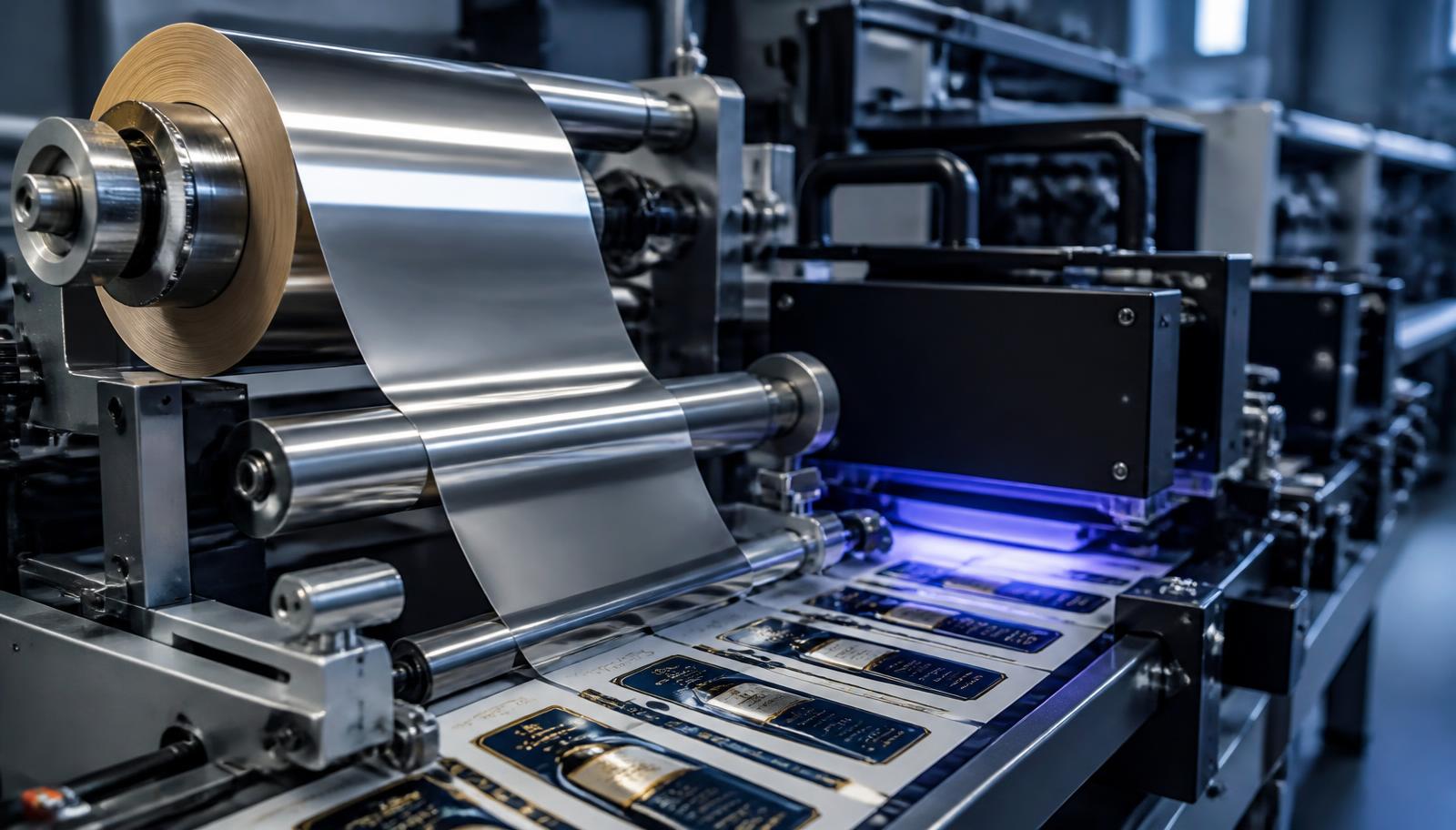
Industry News · Aug 24, 2026
Cold Foil Global Market Analysis 2026: What the Numbers Don't Tell You
A supplier-side read of the global cold foil market in 2026: market size, end-use verticals, regional demand, equipment concentration and where the segment is actually heading — with the confidence levels stated honestly.
Industry News · Aug 21, 2026
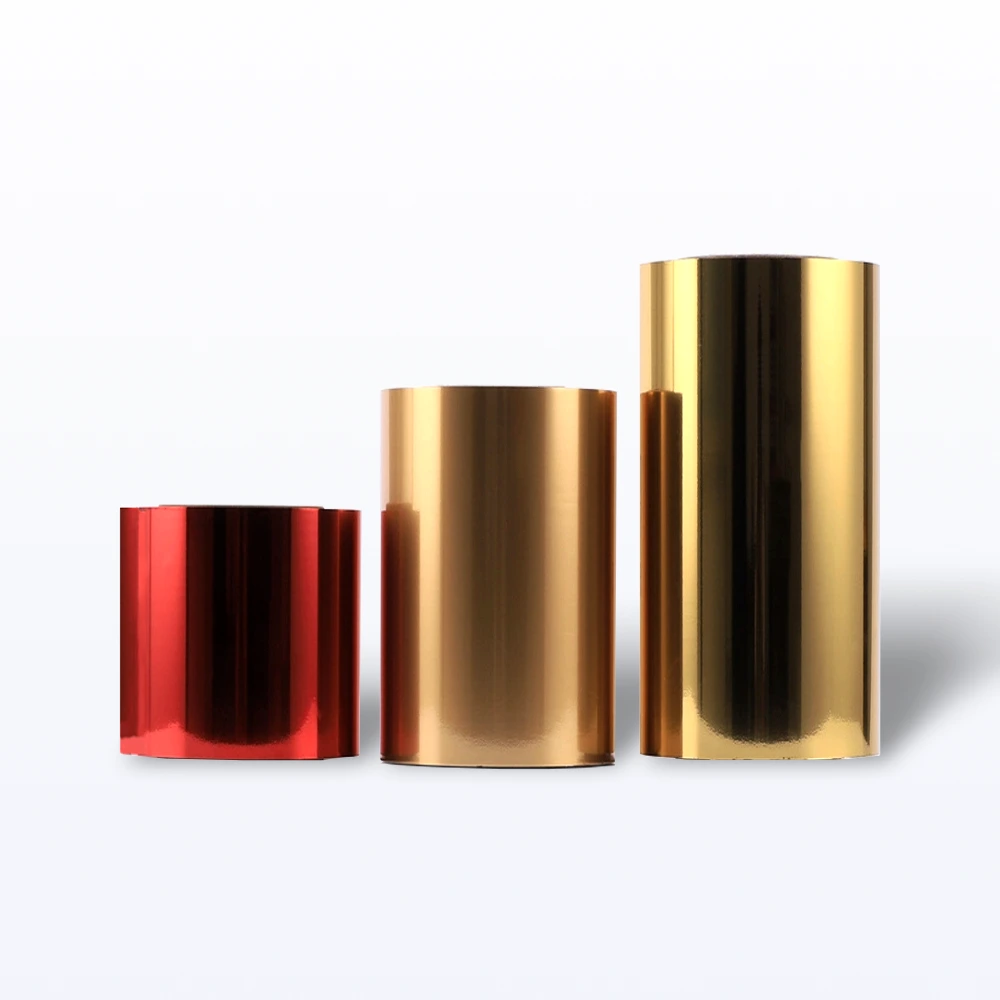
The Real Top 10 Chinese Hot Stamping Foil Manufacturers, Compared (2026)
An insider's honest comparison of the ten most relevant Chinese hot stamping foil manufacturers in 2026 — specialty area, typical customer, pricing position and where each one actually fits.
Industry News · Aug 27, 2026
How to Audit a Chinese Foil Factory: A Buyer's Checklist
A practical factory audit checklist for buyers evaluating Chinese hot stamping and cold foil manufacturers, built from 40+ factory walk-throughs across Wenzhou, Suqian, Guangdong and the Yangtze delta over 15 years.
Ready to source foil stamping and die-cutting from one supplier?
From stamping foils to post-press machines and die-cutting consumables — get factory-direct pricing and free samples.