
How holographic foil printing actually works — hot stamping, cold foil and transfer sheets compared, the four holographic foil families, security OVD requirements, honest limitations, and a step-by-step way to choose the right method for your run length.
Table of Contents
- What holographic foil printing actually is
- Three ways holographic foil gets applied
- Hot stamping
- Cold foil
- Transfer sheets and overlays
- The four holographic pattern families
- The limitations nobody advertises
- How holographic wrapping paper is made
- Choosing by application
- Rolls, sheets or overlay film
- A five-step decision sequence
- Frequently Asked Questions
Holographic foil printing is one of those topics where the gap between what people search for and what the internet actually explains is enormous. Half the results are craft bloggers who used a laminator and a sheet of transfer film. The other half are equipment manufacturers describing industrial processes in language that assumes you already know what you are looking at.
This guide bridges that gap: how the material is built, the three ways it gets applied, the four pattern families worth knowing, and the limitations most marketing material skips.
What holographic foil printing actually is
It is the transfer of a thin metallised layer — carrying a holographic pattern embossed into its surface — onto paper, board, plastic film or leather. The effect comes from microscopic surface structures that diffract light rather than simply reflecting it.
That is the key distinction from standard metallic foil. Gold and silver stamping foil reflects light uniformly in one colour. Holographic foil splits white light into its component wavelengths and returns them at different angles, producing the rainbow shift. The structures responsible are typically 0.5 to 2.0 micrometres deep, arranged as anything from simple linear gratings to complex 2D/3D images.
The foil itself is a stack, usually built on a 12–19 μm PET carrier:
| Layer | Function |
|---|---|
| Carrier (PET film) | Mechanical strength, handles web tension |
| Release layer | Lets the decorative layers separate after transfer |
| Embossed layer | Holds the holographic micro-structures |
| Metallisation | Vacuum-deposited aluminium, ~30–50 nm thick |
| Adhesive | Bonds to the substrate under heat or UV cure |
After application the carrier and release layer peel away. Only the embossed layer, metallisation and adhesive stay on the substrate.
Three ways holographic foil gets applied
Hot stamping
A heated die presses the foil against the substrate; heat activates the adhesive. The die carries only the shape of the decoration — the holographic pattern comes from the foil, never from the die.
Typical settings on coated paper are 100–120 °C with 0.3–0.5 second dwell on a flatbed. That is a narrower window than standard metallic foil, because excess heat softens the embossed structures and washes the effect out. Hot stamping gives the sharpest edges and the widest substrate range, which is why it dominates folding cartons, book covers and premium business cards. Its limit is that foil lands only in discrete die-shaped patches. See the hot stamping process guide for machine and die selection, or the XG1080G automatic stamping machine for a production-scale example.
Cold foil
A UV-curable adhesive is printed through a flexo or offset plate, the foil web contacts the wet adhesive, a UV lamp cures it, and the carrier peels away. Speeds of 50–200 m/min inline with the press make this the method of choice for wine, spirits and cosmetics labels where holographic is one element of a multi-colour design.
Edges are marginally softer than hot stamping because the adhesive spreads a little before cure. Below roughly 4-point type, hot stamping still wins. The cold foil printing guide covers the inline workflow, and cold stamping foil lists the available release and opacity grades. If cost is the deciding factor, the cold foil cost breakdown has the arithmetic.
Transfer sheets and overlays
Print your artwork on a laser printer, lay a holographic transfer sheet over it, run it through a laminator. The foil bonds to the toner and releases everywhere else. Results are better than the simplicity suggests, though they cannot match industrial edge quality, adhesion or speed. The same principle drives digital toner-reactive foil, explained further in the toner-reactive foil guide.
The four holographic pattern families
Rainbow holographic (generic). Repeating gratings, dot matrices or geometric shapes producing a broad-spectrum shift. Stock product, no origination cost, typically 20–40 percent above standard metallic foil. This is holographic rainbow foil and it covers most decorative work.
Custom registered holographic. A brand-specific image originated as a holographic master and repeated at precise intervals along the web, with the press registering each repeat. Master origination runs roughly USD 3,000–15,000 depending on complexity — laser or e-beam recording, electroforming a metal shim, then embossing during foil production. Per-unit foil sits two to four times generic.
Security holographic (OVD). Micro-text, covert machine-readable features, kinetic effects, multi-channel images, tamper-evident construction. Used on banknotes, tax stamps, pharmaceutical packs and documents, and demanding ±0.1 mm registration or better. Typically five to eight times standard metallic foil. See anti-counterfeit security foil and the security foil guide.
Transparent holographic. Very thin or absent metallisation, using a high-refractive-index coating instead of aluminium so underlying artwork shows through. Increasingly common on cosmetics and premium beverage labels; the transparent foil guide covers the trade-offs.
The limitations nobody advertises
Substrate sensitivity. The effect needs a smooth, coated surface. On uncoated or textured stock the micro-structures transfer unevenly and the result looks muted or patchy. A primer coat fixes it and adds cost. Check the foil-substrate compatibility matrix before committing.
Heat sensitivity. Above roughly 130 °C the embossed thermoplastic layer starts to deform and brilliance drops. Temperature control matters more here than with plain metallic foil.
No colour specification. Holographic colour is physics, not pigment. You cannot order "holographic green" the way you order metallic green, which complicates brand guidelines that demand colour consistency. The metallic foil colour chart guide explains why reference numbers do not transfer between suppliers either.
Registration. Registered patterns are only as good as the press. Below ±0.1 mm capability, custom holographic will show visible drift against the printed design.
Cost. The embossing step is real manufacturing complexity. When budget is tight, plain metallic foil often wins even where holographic would look better.
Post-processing conflicts. Heavy UV varnish over holographic dulls the effect. Aggressive die-cutting through foil areas can lift edges if adhesion is marginal. Lamination works but alters the optics. Plan the finishing sequence before, not after.
How holographic wrapping paper is made
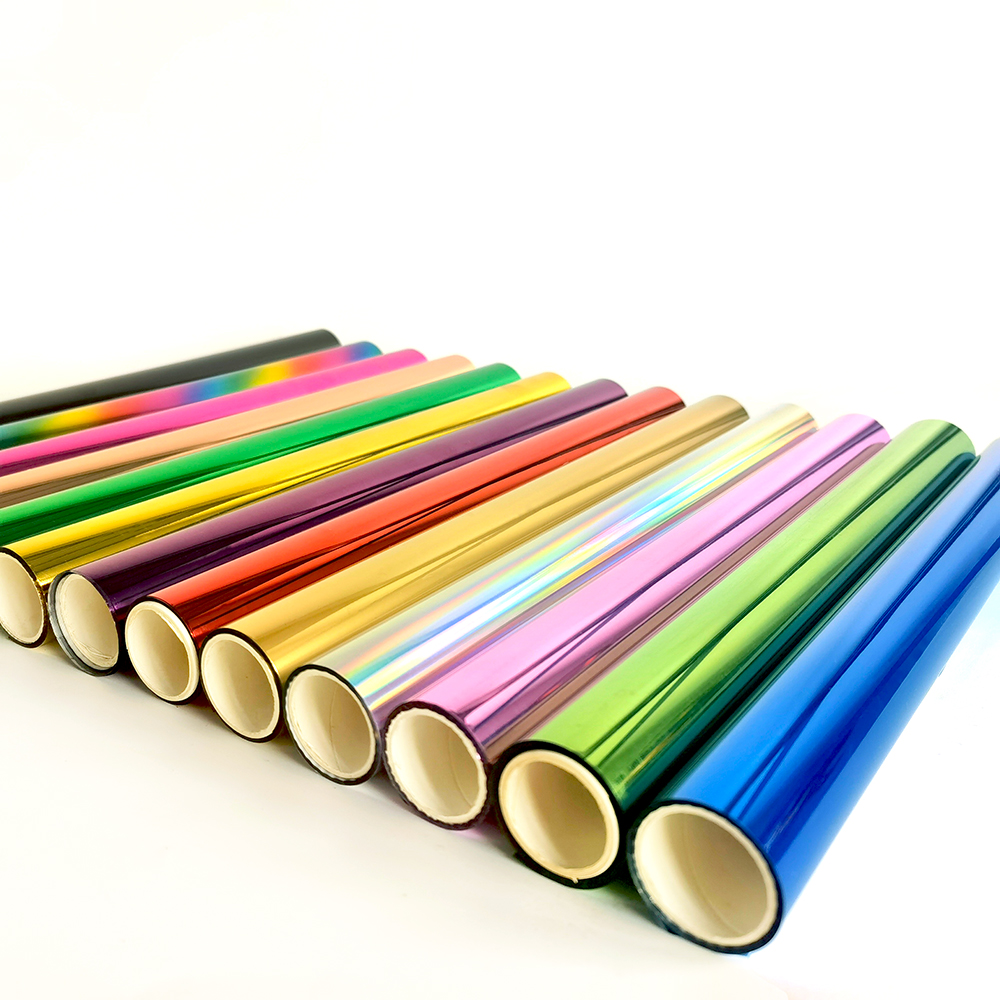
Worth understanding because gift wrap is the highest-volume holographic application, and it is not stamped at all. A wide web of pre-embossed, pre-metallised holographic film — usually 800–1200 mm BOPP or PET — is laminated to a paper backing, slit and wound. Full-surface coverage by lamination rather than selective transfer by stamping. Patterns are the simplest and cheapest to originate, amortised over millions of metres, which is how a roll retails for a few dollars.
Choosing by application
Business cards and postcards. Offset or digital for the base, hot stamping for the holographic element. The "raised" look on premium cards comes from higher pressure and longer dwell, or from a combination die that embosses and foils in one stroke. Under 500 pieces: transfer sheets. 500–5,000: semi-automatic hot stamping. Above 5,000: automatic stamping or inline cold foil.
Flyers and promotional print. Stock at 130–200 gsm distorts more easily under heat, so temperature control is critical to avoid curl on lightweight coated sheets. Full-bleed holographic is better done by lamination; spot elements by stamping or cold foil.
Security applications. Pharmaceutical authentication, tax stamps, certificates, high-value goods. Requirements diverge sharply from decorative work: custom origination with covert features, tamper-evident construction, tight registration, sometimes serialisation. Supplier custody control over masters matters more here than in any other foil category — the factory audit checklist covers what to verify on site. For live examples, see holographic foil applications in luxury and anti-counterfeit packaging.
Rolls, sheets or overlay film
- Rolls — 60 to 1200 mm wide, the standard format for production stamping machines and inline cold foil units. Match the width to your foil feed.
- Transfer sheets — pre-cut A4 or letter, for laminator, heat-press and laser-toner work.
- Overlay film — self-adhesive or heat-activated, for full-surface coverage over finished prints, holographic sticker stock and ID card overlays.
A five-step decision sequence
- Define coverage. Spot decoration points to stamping or cold foil; full coverage points to lamination or overlay film.
- Determine volume. Under 100: transfer sheets. 100–1,000: semi-automatic stamping. 1,000–10,000: automatic stamping. Above 10,000: inline cold foil.
- Choose the pattern family. Generic is stock. Custom registered means paying origination before the first piece exists. Security OVD is a different supply chain.
- Specify the substrate. Smooth coated stock gives the best result. Anything textured, uncoated or non-paper needs discussion with the foil supplier first.
- Request physical samples. Holographic effects cannot be judged on screen. Evaluate real foil on your actual substrate at your actual press settings.
If you are still shortlisting suppliers, the comparison of Chinese hot stamping foil manufacturers covers capacity and pricing structure. To get matched samples on your own stock, tell us your substrate and run length.
Frequently Asked Questions
Quick answers about holographic foil.
Companion Products
Specs and samples for the products discussed in this article.
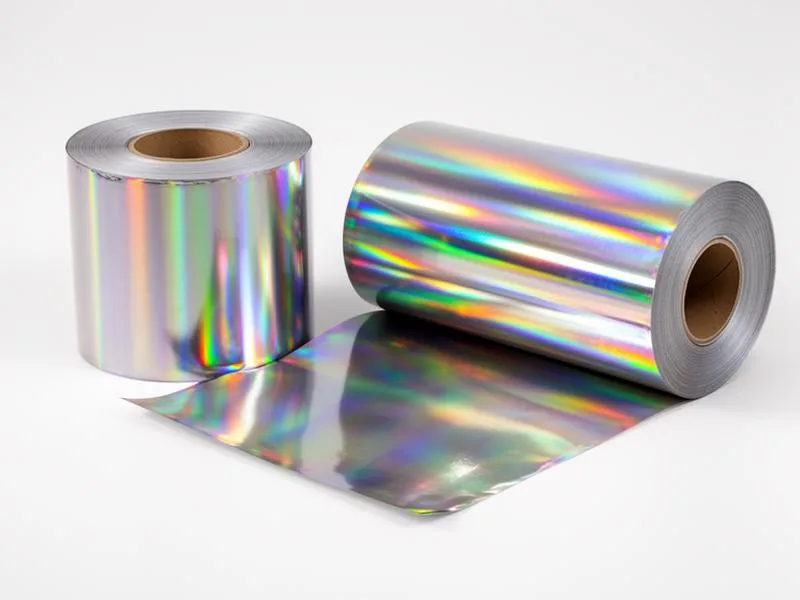
Holographic Rainbow Foil
Rainbow holographic foil with multi-dimensional laser patterns — 15 µm PET, 30–640 mm widths, stamps at 110–140 °C for security and premium packaging.
View product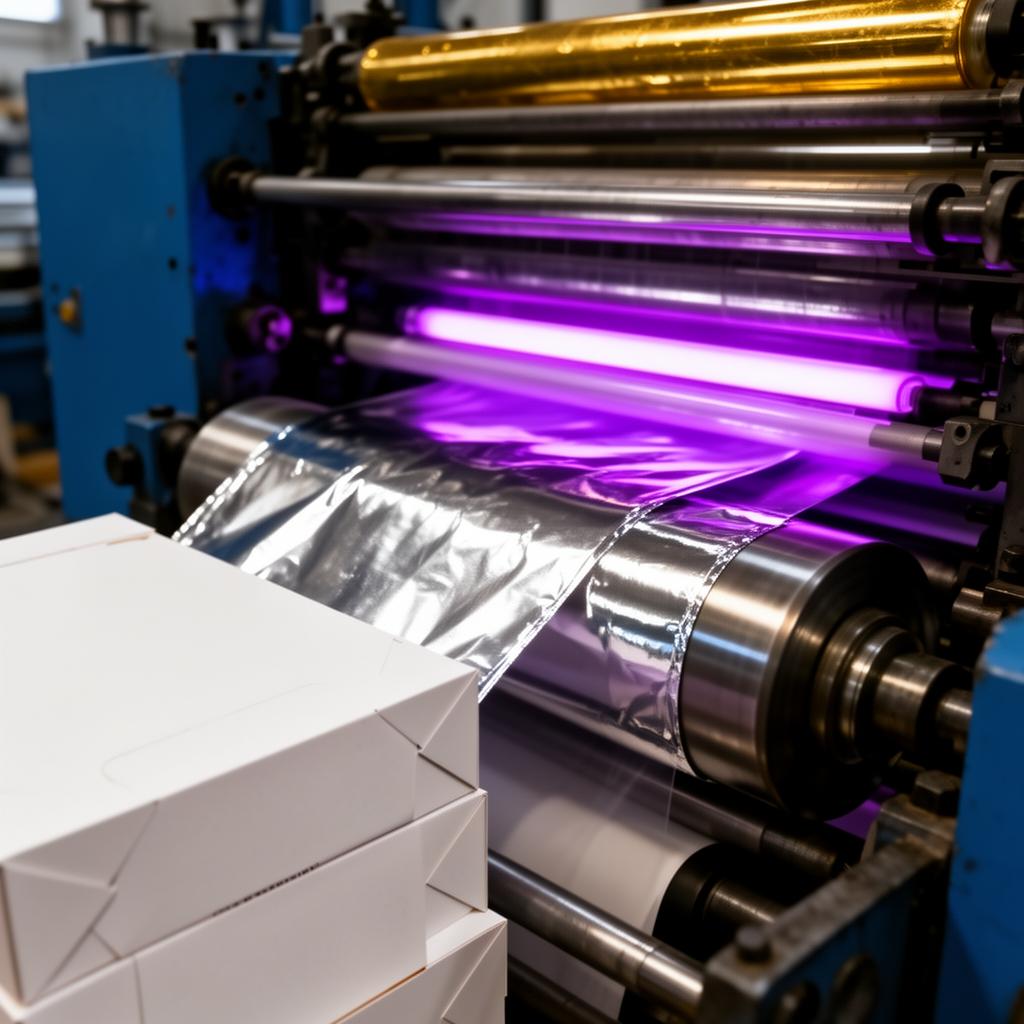
Cold Stamping Foil
Cold stamping foil for inline UV flexo and offset presses — no heat, no dies, up to 150 m/min with metallic, holographic and pigmented finishes.
View product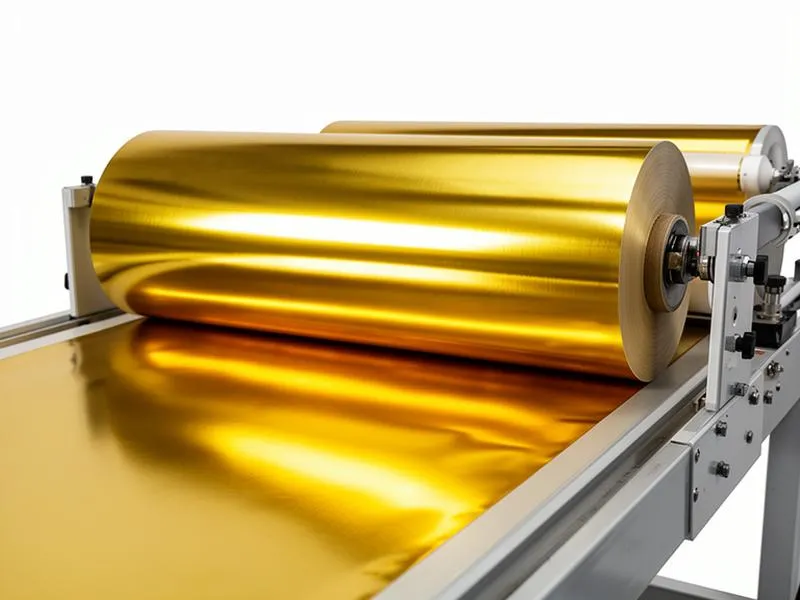
Premium Metallic Gold Hot Stamping Foil
Ultra-bright metallic gold foil with mirror-like reflection for premium packaging and label applications.
View productRelated Articles
View all
Technical Knowledge · Jul 28, 2026
Scratch-Off Foil for Hot Stamping: A Complete Buyer's Guide for Lottery, Card & Label Manufacturers
How scratch-off foil works, where it is used, and what B2B buyers must check before ordering — release consistency, opacity, substrate adhesion, press compatibility and batch-to-batch colour control.
Technical Knowledge · Sep 1, 2026
Toner Reactive Foil: The Complete Guide to Foil Transfer Printing (2026)
How toner reactive foil actually works, which foils transfer cleanly and why, equipment from pouch laminators to dedicated foil machines, sheet versus roll economics, and a supplier-side troubleshooting guide for craft makers, small businesses and print shops.
Industry News · Apr 16, 2026
Holographic Foil Trends: Luxury & Anti-Counterfeit
Explore the growth of holographic foil in luxury packaging and anti-counterfeit applications. Learn how it protects brands and boosts aesthetic appeal.
Ready to source foil stamping and die-cutting from one supplier?
From stamping foils to post-press machines and die-cutting consumables — get factory-direct pricing and free samples.