
What metallic foil actually is in packaging and print, the foil families worth knowing, how colour charts and reference numbers work, and honest per-square-metre and per-impression cost ranges for 2026.
Table of Contents
"Metallic foil" is one of those terms that means three different things depending on who is asking. A packaging buyer means a transferable decoration film. A hobbyist means craft foil sheets. Someone else means kitchen foil. This guide is about the first one: the foil used to put real metallic surfaces on cartons, labels, covers and cards, what the families are, how colour references work, and what it actually costs.
What metallic foil actually is
A metallic foil is not metal on a roll. It is a stack of very thin layers on a polyester carrier:
| Layer | Function |
|---|---|
| Polyester carrier (12–25 µm) | Support; stays behind and is discarded |
| Release layer | Controls when the decoration lets go of the carrier |
| Colour / lacquer layer | Gives the shade and the gloss or matt character |
| Vacuum-metallised aluminium | The reflective layer, a few hundred angstroms thick |
| Adhesive layer | Bonds to the substrate under heat or UV cure |
Under a heated die, or under a UV-cured adhesive in the cold process, everything except the carrier moves onto the sheet. That is why the finish is a mirror rather than a metallic-looking print — you are looking at an actual continuous metal layer, not flakes suspended in ink.
This is also why foil is substrate-specific: the adhesive is formulated per substrate family, and our foil-substrate compatibility matrix maps which category belongs where.
The metallic foil families
Bright gold and silver. The workhorses, covering most carton, label and cover work. See premium metallic gold hot stamping foil for the standard bright series.
Matt metallics. Same metallised layer with a diffusing lacquer on top, for a soft brushed look that photographs better under retail lighting than high gloss. Matte silver hot stamping foil is the reference product here.
Coloured metallics. Red, blue, green, copper, rose gold and so on — the aluminium layer stays the same, the tinted lacquer creates the colour. Shade consistency between batches is the thing to specify.
Pigment foils. No metallised layer at all: opaque solid colours, white and black. Useful on dark board where a metallic would look wrong, and cheaper than true metallics.
Holographic. Embossed diffraction pattern under the metal layer. Covered in depth in our holographic foil applications guide, with product detail at holographic rainbow foil.
Cold foil. Same metallic result achieved with a printed UV adhesive rather than a heated die, so it runs inline on a press with no tooling. Cold stamping foil is the material; the process trade-offs are in our hot foil vs cold foil vs digital foil comparison.
Digital / toner-reactive. Bonds to laser toner with no die and no press, for short runs and variable data. See digital toner-reactive foil.
Specialty. Anti-counterfeit security foil, scratch-off foil, fluorescent foil, washable metallic foil and textile heat transfer foil all exist because a standard grade fails in those applications.
How foil colour charts really work
There is no industry-wide colour standard for foil, the way Pantone works for ink. Every manufacturer maintains its own numbered series, and the numbers do not cross-reference. A supplier's "gold 220" and another supplier's "gold 220" are unrelated shades that happen to share a number.
That has three practical consequences:
- A PDF catalogue is a starting point, not a specification. Screen rendering cannot represent a mirror surface, and neither can printed catalogue pages, which are themselves foiled samples printed on one specific stock.
- Foil colour changes with the substrate under it. The same gold on white coated board, on brown kraft and on black board reads as three different shades, because the metallised layer is thin enough to be influenced by what is beneath it.
- Match physically, on your stock. Ask for a sample card stamped on the actual board or label face you will run. Any serious supplier will do this before an order.
When you specify a foil for repeat production, record four things and keep them with the job: supplier, series and reference number, substrate, and the stamping parameters that produced the approved sample. That record is what protects the shade across reprints.
What metallic foil costs in 2026
Indicative mill-level ranges. Actual quotes depend on width, roll length, volume and destination, so treat these as a sanity check rather than a price list.
| Foil family | Typical cost (USD/m²) | Notes |
|---|---|---|
| Standard bright gold / silver | 0.06 – 0.14 | Highest volume, most competitive |
| Pigment (opaque colours) | 0.05 – 0.12 | No metallised layer |
| Matt and coloured metallics | 0.08 – 0.18 | Tinted lacquer adds cost |
| Cold foil | 0.10 – 0.20 | Plus UV adhesive and curing |
| Holographic | 0.15 – 0.35 | Embossed shim tooling amortised |
| Digital toner-reactive | 0.20 – 0.45 | Small formats, short runs |
| Security / custom hologram | Quote | Origination cost dominates |
Per impression, not per square metre
Square-metre pricing misleads buyers because coverage is usually tiny. A logo of 40 × 25mm is 0.001 m², so at 0.10 USD/m² the foil content is one hundredth of a cent. Foil waste — the unused width of the roll and the advance between impressions — is what actually determines consumption, and a well-set foil-saving system on a modern press can cut usage 30 to 50 percent on sparse layouts.
What drives your real per-piece cost, in order: foil advance settings and roll width selection, die area, machine speed and labour, then the foil price itself.
What drives the material price
- Aluminium layer and metallising quality — thin, uneven deposition is the most common way cheap foil disappoints on dark stock.
- Release system engineering — high-release foil for fine type and low-release for large flood areas are different products; a single "universal" grade compromises both.
- Roll width and length — non-standard widths mean a slitting operation; standard widths from stock are cheaper. Converters running their own slitting on an AF-1350 high-speed slitting machine buy master rolls and cut to job width.
- Order volume and custom shades — a custom colour needs a dedicated coating run, which is why MOQs jump.
Equipment, briefly
Metallic foil needs a way to apply it, and the machine tier dictates what is economic:
- Manual bench press for leather, stationery and samples
- Semi-automatic press for label and small carton work
- Fully automatic press such as the XG1080G for volume carton production
- Inline cold foil unit on an existing press, no tooling per design
The full specification checklist is in our guide to choosing an automatic hot stamping machine, and the process-versus-process decision is in the hot stamping vs heat transfer vs screen printing guide.
Common buying mistakes
Ordering by catalogue number alone. Numbers are supplier-internal. Order against an approved physical sample.
Buying one grade for everything. Fine type and large flood areas need opposite release characteristics. Two grades in stock usually costs less than the waste from forcing one.
Ignoring the substrate. Varnished, laminated and uncoated stocks each behave differently, and the same foil can pass on one and fail on the next.
Judging price per kilogram. Foil is sold and consumed by area. Compare per square metre, then compare per impression at your actual coverage.
Skipping storage discipline. Foil left near a heater or in an unconditioned warehouse for a season will transfer patchily even though the roll looks perfect.
Getting the right foil specified
Send us the substrate, the artwork type, the shade you are targeting and your monthly volume, and we will send stamped samples on your stock with the parameters that produced them. Browse the full hot stamping foil range or request a colour sample card.
Frequently Asked Questions
Quick answers about metallic foil.
Companion Products
Specs and samples for the products discussed in this article.
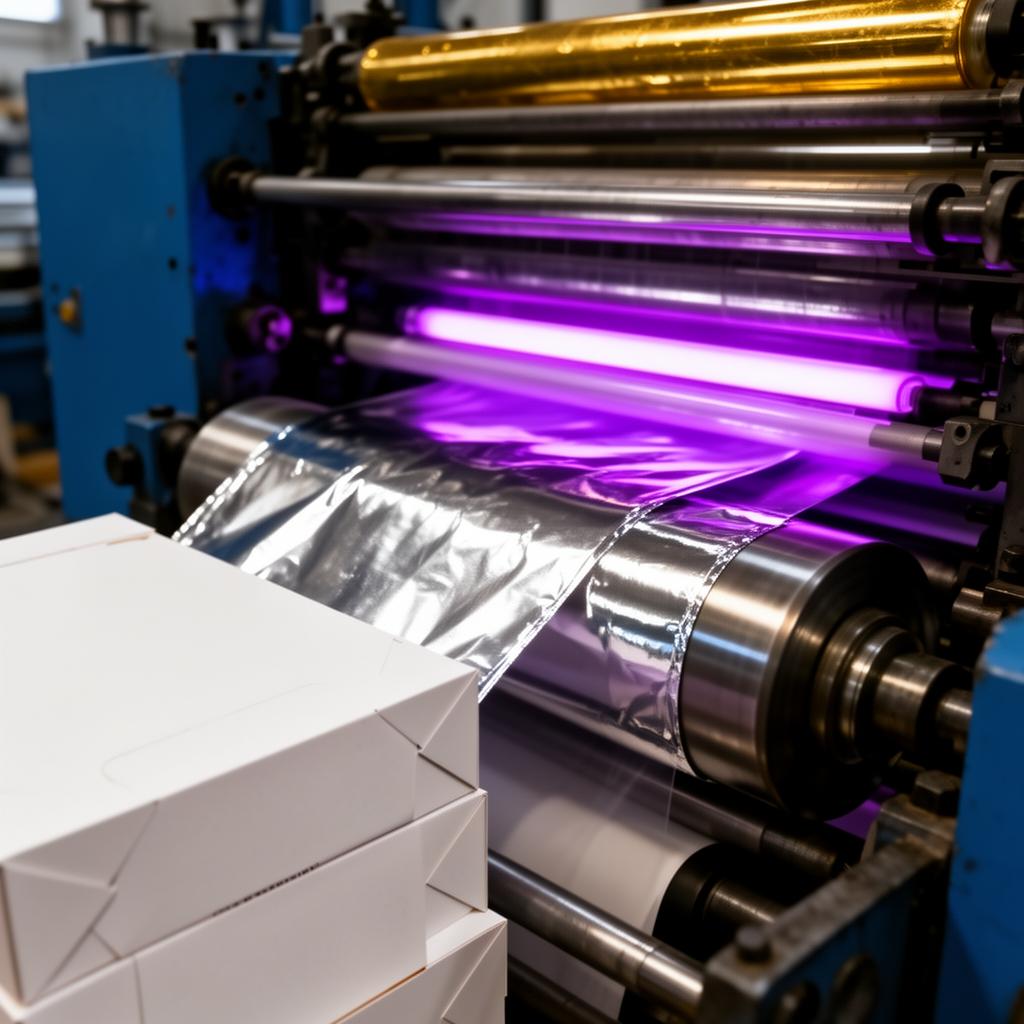
Cold Stamping Foil
Cold stamping foil for inline UV flexo and offset presses — no heat, no dies, up to 150 m/min with metallic, holographic and pigmented finishes.
View product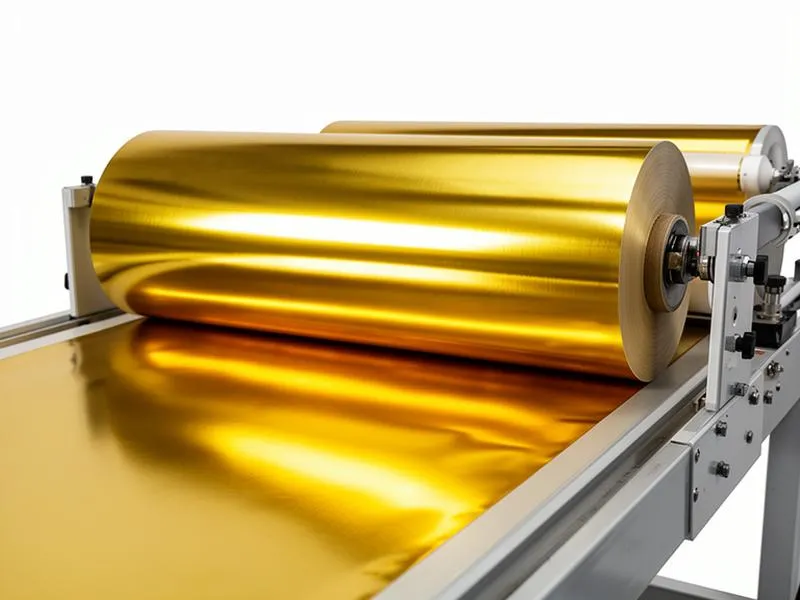
Premium Metallic Gold Hot Stamping Foil
Ultra-bright metallic gold foil with mirror-like reflection for premium packaging and label applications.
View productRelated Articles
View all
Technical Knowledge · Apr 20, 2026
Hot Stamping Foil for Paper Packaging: Buyer's Guide
Choose hot stamping foil for paper packaging with confidence. This guide helps buyers match foil to substrates and optimize stamping for luxury cartons.
Industry News · Aug 21, 2026
The Real Top 10 Chinese Hot Stamping Foil Manufacturers, Compared (2026)
An insider's honest comparison of the ten most relevant Chinese hot stamping foil manufacturers in 2026 — specialty area, typical customer, pricing position and where each one actually fits.
Technical Knowledge · Jul 28, 2026
Scratch-Off Foil for Hot Stamping: A Complete Buyer's Guide for Lottery, Card & Label Manufacturers
How scratch-off foil works, where it is used, and what B2B buyers must check before ordering — release consistency, opacity, substrate adhesion, press compatibility and batch-to-batch colour control.
Ready to source foil stamping and die-cutting from one supplier?
From stamping foils to post-press machines and die-cutting consumables — get factory-direct pricing and free samples.