
A practical comparison of hot stamping machines, heat transfer presses and screen printing for decorating paper, board, plastic and textiles: substrate limits, per-piece cost, machine tiers from manual bench presses to fully automatic lines, and the questions buyers get wrong.
Table of Contents
- The 40-second answer
- How each process works
- Hot stamping
- Heat transfer
- Screen printing
- Choose by substrate and volume
- Machine tiers and what they really cost
- Per-piece cost, honestly
- Five things buyers get wrong
- Moving from heat transfer to hot stamping
- Getting a specification-matched recommendation
- Frequently Asked Questions
Buyers searching for a "hot stamping machine" and buyers searching for a "heat transfer machine" often want the same thing — a decorated product — but the two processes are not interchangeable. Add screen printing to the comparison and the decision gets muddier still. This guide sets out what each machine actually does, what it costs per piece, and how to pick one without buying equipment your work does not need.
The 40-second answer
| Hot stamping | Heat transfer | Screen printing | |
|---|---|---|---|
| What transfers | Metallic or pigment foil from a carrier | A printed film or sublimation dye | Ink pushed through a mesh |
| Best substrates | Paper, board, leather, coated plastics | Textiles, mugs, polyester-coated goods | Textiles, plastics, flat rigid goods |
| Setup per design | Metal die required | None (print the transfer) | Screen per colour required |
| Economic run length | Repeat runs, any size | 1 to a few hundred | 100+ of one design |
| Per-piece cost trend | Low and flat after die | Flat, never falls much | Falls sharply with volume |
| Finish | True metallic gloss | Matte to semi-gloss print | Thick, opaque ink layer |
| Entry machine cost | 300 USD (manual bench) | 200–800 USD (clamshell) | 300–1,500 USD (basic kit) |
If you decorate paper and packaging, hot stamping is the process. If you decorate garments in small batches, heat transfer. If you decorate garments in bulk with few colours, screen printing.
How each process works
Hot stamping
A heated metal die presses a hot stamping foil against the substrate. Heat softens the foil's release layer and activates its adhesive, so the pigment or metallised layer separates from its polyester carrier and bonds only where the die touched. Typical parameters on paper and board are 110–150 °C, dwell of 0.2 to 1 second, and pressure set by area rather than a fixed number.
No ink is printed, which is why the finish is a true mirror metallic rather than a metallic-looking ink. It also means every design needs its own die — see our guide to hot foil stamping dies for tooling choices.
Heat transfer
Artwork is printed onto a carrier — transfer paper, vinyl or sublimation paper — then a flat heated platen presses it onto the product at roughly 150–200 °C for 10 to 60 seconds. Sublimation dye turns to gas and dyes polyester fibres; vinyl and film transfers sit on top of the fabric as a thin layer.
The advantage is that no tooling exists at all: every piece can carry different artwork, which is why personalisation shops live on it. The trade-off is that the per-piece cost of the transfer sheet never falls with volume.
Screen printing
Ink is forced through a stencilled mesh onto the substrate, one screen per colour, then cured with heat. Screen making is the fixed cost; ink is cheap. Past roughly a hundred identical pieces, screen printing beats heat transfer on cost per piece and gives a heavier, more durable ink deposit.
Choose by substrate and volume
| Your product | Under 100 pcs | 100–2,000 pcs | 2,000+ pcs |
|---|---|---|---|
| Folding cartons, boxes | Digital foil | Hot stamping | Hot stamping (automatic) |
| Labels, self-adhesive | Digital foil | Hot or cold foil | Cold foil inline |
| Business cards, invitations | Manual hot stamping | Manual/semi-auto hot stamping | Semi-auto hot stamping |
| Leather goods, notebooks | Manual hot stamping | Manual hot stamping | Semi-auto hot stamping |
| Cotton garments | Heat transfer | Heat transfer | Screen printing |
| Polyester sportswear | Sublimation | Sublimation | Screen printing |
| Fabric with metallic accents | Heat transfer | Textile foil | Textile foil |
Digital foil is the exception worth knowing about: toner-reactive foil bonds to laser toner with no die at all, so short runs and variable data get a metallic finish without tooling. Our hot foil vs cold foil vs digital foil comparison covers where each one stops making sense.
Machine tiers and what they really cost
Prices below are indicative landed ranges for 2026, not quotations. Ask for a specification-matched quote before budgeting.
Manual bench-top hot foil stamping machine — roughly 300 to 3,000 USD. A hand-lever or pneumatic press with a heated plate, typically 100 × 130mm to 200 × 300mm stamping area. Output is 100 to 400 impressions per hour depending on the operator. Right for leather goods, stationery, small-batch invitations and sample work. The machines sold on consumer marketplaces sit at the bottom of this range; temperature stability, not price, is what separates them.
Semi-automatic hot stamping press — roughly 8,000 to 15,000 USD. Powered platen, foil advance and often automatic sheet feed with manual alignment. Realistic output is 1,000 to 2,500 sheets per hour with one to two operators. This is the tier most converters underestimate: it handles the majority of label and small carton work without automatic-press capital.
Fully automatic press — roughly 78,000 to 90,000 USD landed. Automatic feeding, registration, stamping and delivery under PLC control, single-operator running. The XG1080G fully automatic hot stamping machine is the reference point we supply: 1060 × 740mm maximum sheet, ±0.075mm registration, 160-tonne pressure and six independent heating zones. Our field review of the XG1080G covers sustained throughput versus rated speed, and the buyer's guide to automatic machines walks through the specification checklist.
Heat transfer press — roughly 200 to 800 USD for a clamshell or swing-away platen; screen printing starter kit — roughly 300 to 1,500 USD for a manual carousel, screens, emulsion and exposure.
Per-piece cost, honestly
The comparison that matters is total cost across the run, not machine price. For a single-colour decoration on 1,000 pieces:
- Hot stamping: a magnesium die is typically 30 to 120 USD depending on size and detail, foil consumption on a small logo is fractions of a cent per impression, and labour depends on the machine tier. The die is spread across every reprint, so repeat orders get progressively cheaper.
- Heat transfer: no tooling, but each transfer sheet costs money on every single piece and pressing is slow, at 10 to 60 seconds each. Cost per piece is essentially flat forever.
- Screen printing: screen and setup are typically 20 to 60 USD per colour, then ink is pennies. Multi-colour artwork multiplies that setup.
Five things buyers get wrong
"Heat transfer paper works with any printer." It does not. Sublimation requires sublimation ink; inkjet transfer paper requires inks matched to its coating. Ordinary office ink dries into the paper instead of releasing from it, so transfers come out pale and wash off.
"A hot stamping machine can print full-colour images." It cannot. Hot stamping transfers a solid foil layer where the die touches — it is a one-tone-per-pass process. Gradients and photographs need transfer or digital printing.
"Bigger tonnage means better quality." Pressure has to match stamping area. Excess force on a small die crushes the substrate and squeezes foil outward, producing halos. What matters is stable temperature and even platen parallelism.
"Any foil works on any material." Foil adhesive systems are formulated per substrate family. Paper foil on polypropylene, or paper foil on cotton, will fail. Our foil-substrate compatibility matrix maps which category goes where.
"I can skip the test run." Fibre blend, coating, varnish and even storage humidity change transfer behaviour. Test on the exact production substrate, from the same batch, before committing.
Moving from heat transfer to hot stamping
Shops that outgrow transfer usually make the same four adjustments:
- Tooling becomes a planning item. Dies take days to produce, so artwork has to be locked earlier than transfer work requires.
- Parameters shift from time to pressure. Transfer thinking is "how many seconds"; stamping thinking is temperature, dwell and pressure balanced together. Change one variable at a time.
- Substrate specification tightens. Coated and varnished stocks behave very differently from uncoated. Ask your supplier which foil series matches the exact board.
- Waste moves to the front of the run. Expect a makeready allowance of 20 to 50 sheets while registration and temperature settle, and price it into the job.
Getting a specification-matched recommendation
Tell us the substrate, sheet or garment size, artwork type, monthly volume and the finish you are targeting, and we will tell you which of these three processes fits — including when the answer is that you do not need a new machine. Browse the full post-press equipment range or send us your job details with a sample specification.
Frequently Asked Questions
Quick answers about hot stamping machine.
Companion Products
Specs and samples for the products discussed in this article.
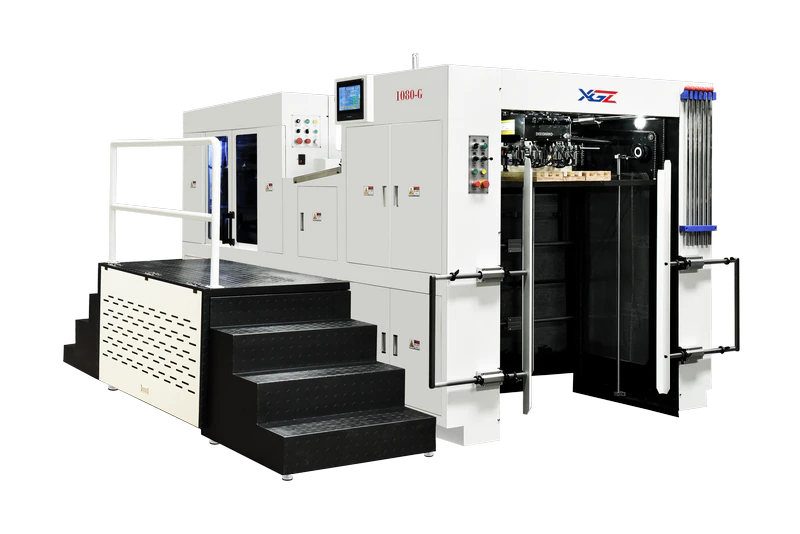
XG1080G Fully Automatic Hot Foil Blocking Machine (Hot Stamping Press)
Industrial hot foil blocking machine (also called a hot stamping press) with 5,500 sheets/hour throughput, 1060×740 mm max sheet size, 160-ton stamping pressure and ±2°C PLC temperature control — for paperboard, luxury packaging, book covers and security printing.
View product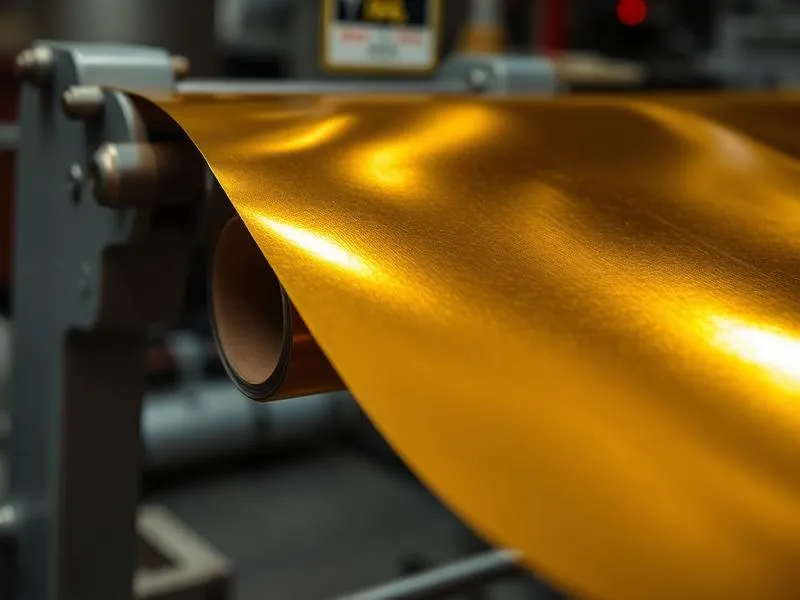
Textile Heat Transfer Foil
Textile heat transfer foil for cotton, polyester, nylon and blends. 15µm PET, 130–160°C heat press, 3–5 bar, 50+ wash cycles at 40°C. Metallic, matte, holographic. MOQ 30 rolls.
View productRelated Articles
View allTechnical Knowledge · Aug 28, 2026
XG1080G Fully Automatic Hot Stamping Machine: Field Review
A field review of the XG1080G fully automatic hot stamping machine: 5,000 sheets/hour, plus or minus 0.075mm registration, 160-tonne pressure and 6-zone heating, with real sustained throughput figures, landed-cost budgeting and honest guidance on who should not buy it.

Technical Knowledge · Jan 28, 2026
Automatic Hot Stamping Machine: Buyer's Guide
Choose the best automatic hot stamping machine for your production needs. Learn key specifications and features for optimal selection.
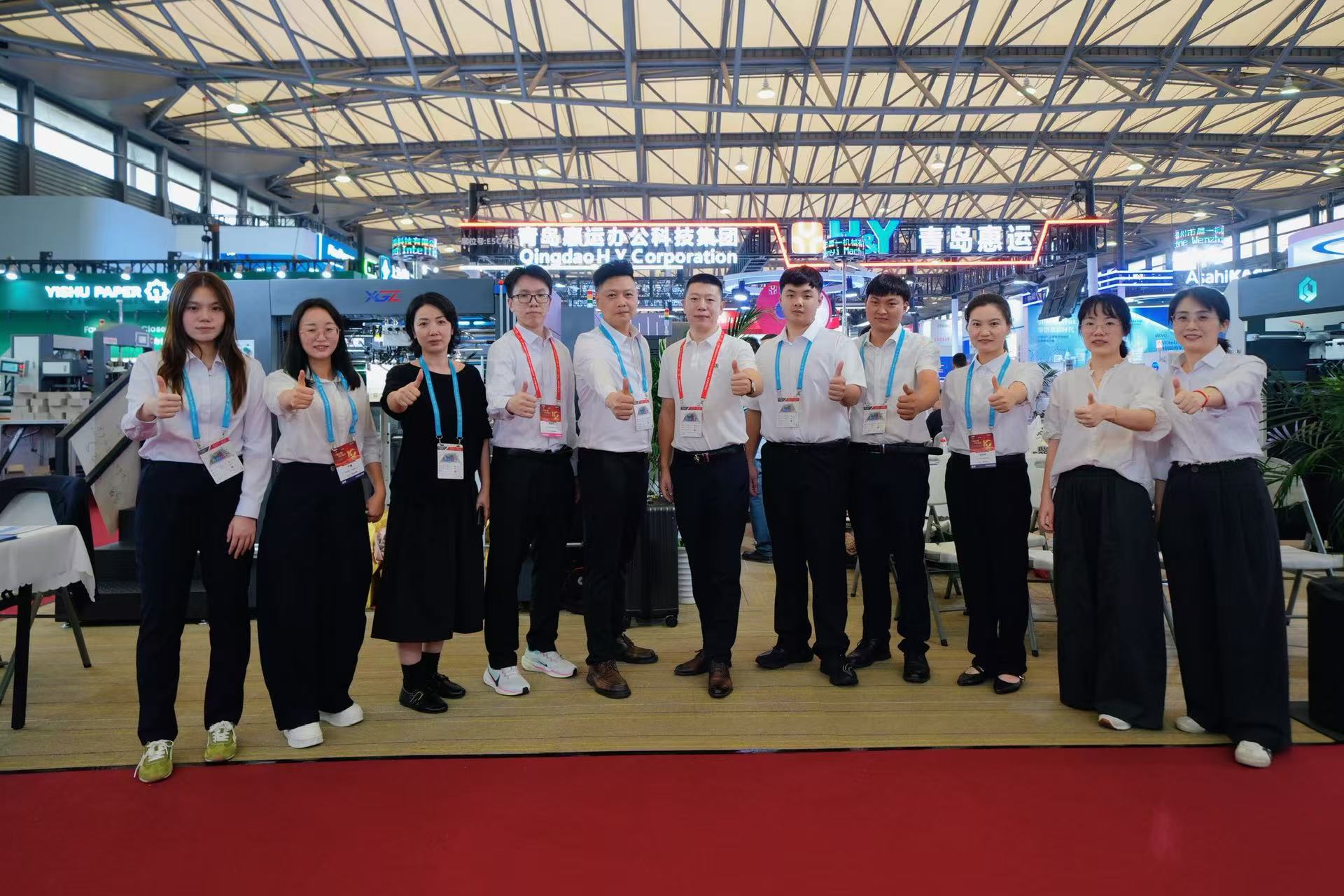
Exhibition Updates · Oct 18, 2026
All in Print China 2026 Recap: XG1080G & XG1080F Hot Foil Stamping Machines at Booth E5C429
All-in Pack showed two fully automatic hot foil stamping machines at All in Print China 2026, Shanghai: the XG1080G and the XG1080F with electric-eye registration for security foiling. 180 inquiries and 15 signed customers at Booth E5C429.
Ready to source foil stamping and die-cutting from one supplier?
From stamping foils to post-press machines and die-cutting consumables — get factory-direct pricing and free samples.