
A field review of the XG1080G fully automatic hot stamping machine: 5,000 sheets/hour, plus or minus 0.075mm registration, 160-tonne pressure and 6-zone heating, with real sustained throughput figures, landed-cost budgeting and honest guidance on who should not buy it.
Table of Contents
- Specifications at a glance
- What these specs mean for your production
- 5,000 sheets per hour, with caveats
- ±0.075mm registration
- 160-tonne maximum pressure
- Six-zone independent heating
- Operational features that matter daily
- Who should buy this machine
- Who should not
- The installed base: 450+ units
- Investment framework
- How All-in Pack supports XG1080G customers
- Common questions from buyers
- Frequently Asked Questions
The XG1080G is a fully automatic flat-to-flat hot stamping machine built by Wenzhou Xinguang Intelligent Technology in Ruian, Zhejiang. We have supplied it through All-in Pack to converters across Southeast Asia, the Middle East, Africa and Latin America for several years, and it is the piece of post-press equipment I get asked about most often.
Rather than repeating brochure language, this is what the machine actually does, where the specifications matter in practice, who should and should not be buying it, and what has come out of supporting installations in more than twenty countries.
Specifications at a glance
| Parameter | Value |
|---|---|
| Maximum sheet size | 1060 × 740mm |
| Minimum sheet size | 400 × 360mm standard; 200 × 160mm custom |
| Maximum foil stamping area | 1000 × 700mm |
| Material thickness range | 100–600 gsm |
| Maximum working speed | 5,000 sheets/hour |
| Registration accuracy | ±0.075mm |
| Maximum pressure | 160 tonnes |
| Heating zones | 6 independently controlled |
| Temperature range | 0–200 °C |
| Foil feeding width | 1000mm |
| Foil feeding groups | 2 |
| Feeding pile height | 1200mm |
| Delivery pile height | 900mm |
| Main motor power | 7.5 kW |
| Vacuum pump power | 3.8 kW |
| Heating power | 6.4 kW |
| Total power consumption | 19.2 kW |
| Machine weight | 6 tonnes |
| Machine dimensions | 3600 × 2800 × 2000mm |
| Control system | PLC with programmable step-skip |
What these specs mean for your production
5,000 sheets per hour, with caveats
The rated maximum is achievable on standard coated paper of 250 to 350 gsm with medium-coverage designs. Sustained throughput in a working shop is 3,500 to 4,500 sheets per hour once stack changes, foil changes and the occasional jam clear are counted. That is roughly 28,000 to 36,000 impressions in an eight-hour shift with one operator, which puts the machine firmly in the high-volume category.
On 400 to 600 gsm folding carton board, speeds fall to 2,500 to 3,500 sheets per hour: the feeder and delivery work harder and dwell has to increase slightly for full transfer on absorbent surfaces. On 100 to 200 gsm stock the machine can approach its rated speed, but the vacuum suction on the multi-functional feeder needs careful adjustment to avoid double feeds, and dialling that in takes an experienced operator.
±0.075mm registration
Seventy-five microns is roughly the width of a human hair, so the press can place a small logo accurately against pre-printed artwork. The system uses double pull gauges with a high-precision fibre optic tracking system, and the figure holds up in production conditions rather than only on a demonstration floor. Older-generation Chinese automatics typically hold ±0.2 to ±0.3mm, which is the real gap.
European flagships from Bobst and GIETZ hold ±0.05mm. The price difference is four to five times for that additional 0.025mm, which most packaging applications do not need. Where they do — security printing, ultra-fine register — buy the European machine.
160-tonne maximum pressure
More force than most converters need for hot stamping foil on paper and board. It matters for large flood-area stamps covering most of the 1000 × 700mm area at once, for thick substrates needing more force to achieve full contact, and for combined foil and emboss work where the die must push into the sheet. Standard label and packaging work uses 80 to 120 tonnes; the headroom exists so heavier substrates later do not force a machine upgrade.
Six-zone independent heating
This is the feature I explain most often. A die with dense foil coverage on one side loses heat faster there, because foil and substrate pull more energy out of the high-coverage area. Without zoning, that side runs cooler through the run and transfer goes uneven. Six zones let you set the affected zones 5 to 10 °C hotter to compensate. On small dies occupying one or two zones, the rest are turned down, so the 6.4 kW heating load is managed rather than run flat out.
Operational features that matter daily
Foil change speed. First installation of a roll takes about five minutes; a mid-production colour or type change takes about two. On a shop running eight to ten foil changes per shift across short runs, the difference between a two-minute and a ten-minute change is over an hour of recovered production per day.
Non-stop stack switching. Two sets of lifting devices in the feeder let the operator load a new stack while the machine keeps running, then switch across without stopping; the delivery side works the same way. On typical short-to-medium runs this removes 15 to 20 stops per shift, each costing 30 to 60 seconds plus two to five sheets of restart waste — 15 to 30 minutes of production and 50 to 100 sheets recovered per shift.
Single-operator running. The PLC handles temperature, pressure, foil feed, registration and cycle timing. The operator loads stacks, watches quality and adjusts on job changes. That is a real labour advantage over semi-automatics that need the same headcount at lower output, and over older automatics that need two people.
Who should buy this machine
- Converters running 5,000 to 35,000 foil-stamped sheets per day on a regular basis.
- Sheet sizes up to 1060 × 740mm, covering B1 and most folding carton and label formats.
- Substrates from 100 to 600 gsm, from light label paper to heavy carton board.
- Work where ±0.075mm registration is sufficient — which covers most packaging and label decoration.
Who should not
- Shops under 2,000 sheets per day. The capital does not pay back at that utilisation; a semi-automatic at 8,000 to 15,000 US dollars fits better.
- Operations stamping tubes, bottles or other non-flat items. This is a flat-to-flat press; you need rotary or fixture-based equipment.
- Buyers without a trained operator. The machine is single-operator by design, but the operator must understand foil–substrate interaction, temperature and pressure tuning and quality judgement. Budget three to five days of on-site training at installation.
The installed base: 450+ units
As of mid-2026 Xinguang has sold more than 450 XG1080G units in the Chinese domestic market alone, plus export volume through channels including ours. That matters for three reasons. The design has been production-validated across hundreds of different shops, so early reliability issues have been engineered out. Spare parts inventory is deep, with 3 to 5 day lead times inside China and 7 to 14 days internationally by express freight. And operator knowledge is widespread in the Wenzhou and wider Zhejiang converter community, so hiring someone with hands-on experience is realistic there.
Investment framework
| Component | Estimated cost |
|---|---|
| XG1080G machine, FOB China | ~$70,000 |
| Sea freight (Asia) | $2,000–4,000 |
| Sea freight (Europe/Americas) | $4,000–8,000 |
| Installation, commissioning, operator training | $3,000–5,000 |
| Initial brass die set, 10–15 designs | $800–2,000 |
| Initial foil inventory, 5–8 standard colours | $1,500–3,000 |
| First-year consumables | $500–1,000 |
| Total landed + operational (Asia) | $78,000–85,000 |
| Total landed + operational (Europe/Americas) | $80,000–90,000 |
These assume standard configuration. Custom options — special-size feeding, honeycomb plate, extra foil rewind/unwind units, electric-eye holographic registration — add to the base price by specification.
How All-in Pack supports XG1080G customers
We supply the machine as part of an equipment-plus-consumables model. Export documentation is consolidated on DDP, CIF or FOB terms, with machine, initial dies and first foil inventory shipping under one document set to simplify clearance. Foil is matched to the machine's operating window and your substrate, which removes the familiar situation where the machine supplier and the foil supplier each blame the other. Xinguang's PLC supports remote diagnostics, and our export team bridges language and time zones between their engineers and your operators. Common wear parts — silicone pads, heating elements, vacuum cups, feed belts — are held in our Wenzhou warehouse and can be consolidated with regular foil orders.
Common questions from buyers
How does it compare with Bobst or GIETZ? Different tier. Those are 250,000 to 500,000 US dollar machines with ±0.05mm registration, 6,000 to 8,000+ sheets per hour and 15 to 20 year construction. The XG1080G delivers 80 to 90 percent of the production capability at roughly 15 to 20 percent of the price, which is the gap it exists to fill.
Expected service life? Ten to fifteen years mechanically with proper maintenance; electronics at seven to ten years. That is a design-life estimate, not yet a field-proven number.
Can it emboss? Yes with combination dies, to roughly 0.3 to 0.5mm depth on 300 to 400 gsm board. Deeper work on heavy stock needs a dedicated press — send us the artwork and depth before assuming.
What if we exceed 5,000 sheets per hour? Run a second shift, or add a second machine: at 3.6 × 2.8m each, two fit in about 8 × 6m including operator access. Beyond that, rotary hot stamping for continuous web is the right category.
Reviewed by Gavin Gao, Technical Director at All-in Pack, covering XG1080G commissioning, operator training and foil–substrate optimisation across Southeast Asia, the Middle East, Africa and Latin America.
For foil selection matched to this machine's operating window, see the Complete Foil-Substrate Compatibility Matrix. For a wider view of machine types and selection criteria, see the Foil Stamping Machine guide and the Hot Foil Blocking Machine guide.
Request a quotation or a factory demonstration — WhatsApp +86 158 5888 9399.
Frequently Asked Questions
Quick answers about XG1080G.
Companion Products
Specs and samples for the products discussed in this article.
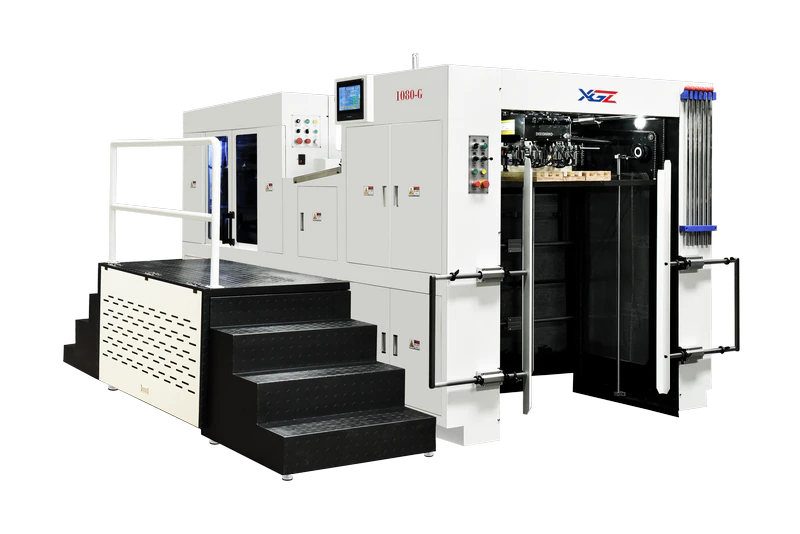
XG1080G Fully Automatic Hot Foil Blocking Machine (Hot Stamping Press)
Industrial hot foil blocking machine (also called a hot stamping press) with 5,500 sheets/hour throughput, 1060×740 mm max sheet size, 160-ton stamping pressure and ±2°C PLC temperature control — for paperboard, luxury packaging, book covers and security printing.
View product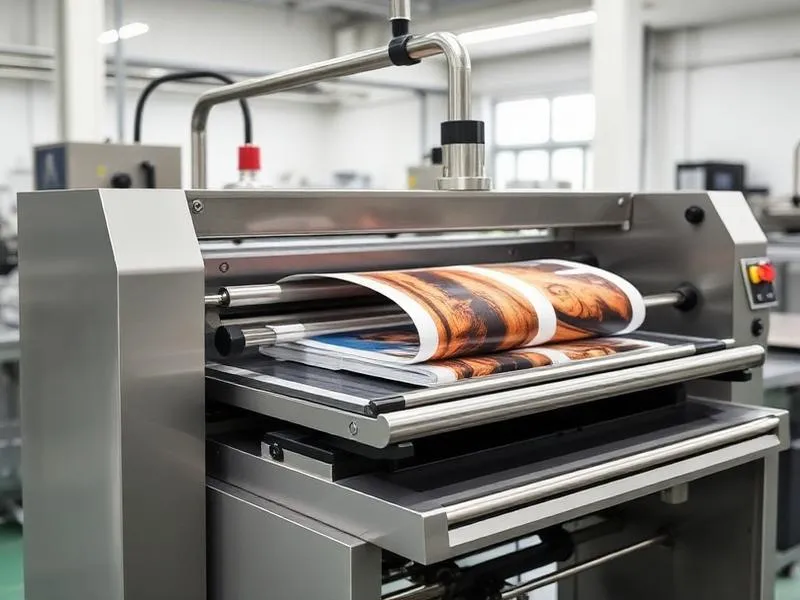
SG-1080 Automatic UV Varnishing Machine
High-speed automatic UV and water-based varnishing machine for print finishing and surface protection.
View product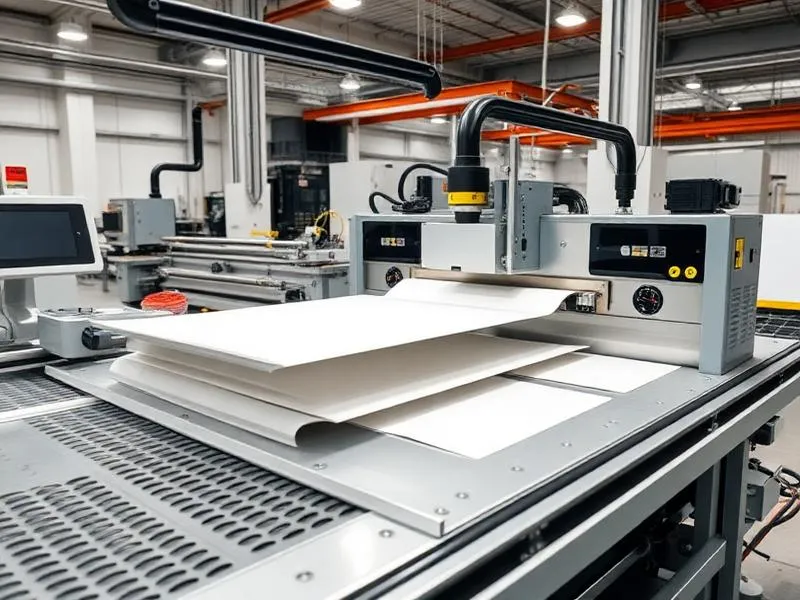
MQ-1060 Automatic Flatbed Die-Cutting Machine
MQ-1060 automatic flatbed die-cutting machine — 7,500 sheets/hour, 300-ton cutting pressure, 1060×740 mm sheets, ±0.1 mm accuracy. For folding cartons, labels and corrugated packaging.
View productRelated Articles
View allTechnical Knowledge · Aug 25, 2026
Hot Stamping vs Heat Transfer vs Screen Printing: Which Machine Fits Your Job
A practical comparison of hot stamping machines, heat transfer presses and screen printing for decorating paper, board, plastic and textiles: substrate limits, per-piece cost, machine tiers from manual bench presses to fully automatic lines, and the questions buyers get wrong.

Technical Knowledge · Jan 28, 2026
Automatic Hot Stamping Machine: Buyer's Guide
Choose the best automatic hot stamping machine for your production needs. Learn key specifications and features for optimal selection.
Exhibition Updates · Oct 18, 2026
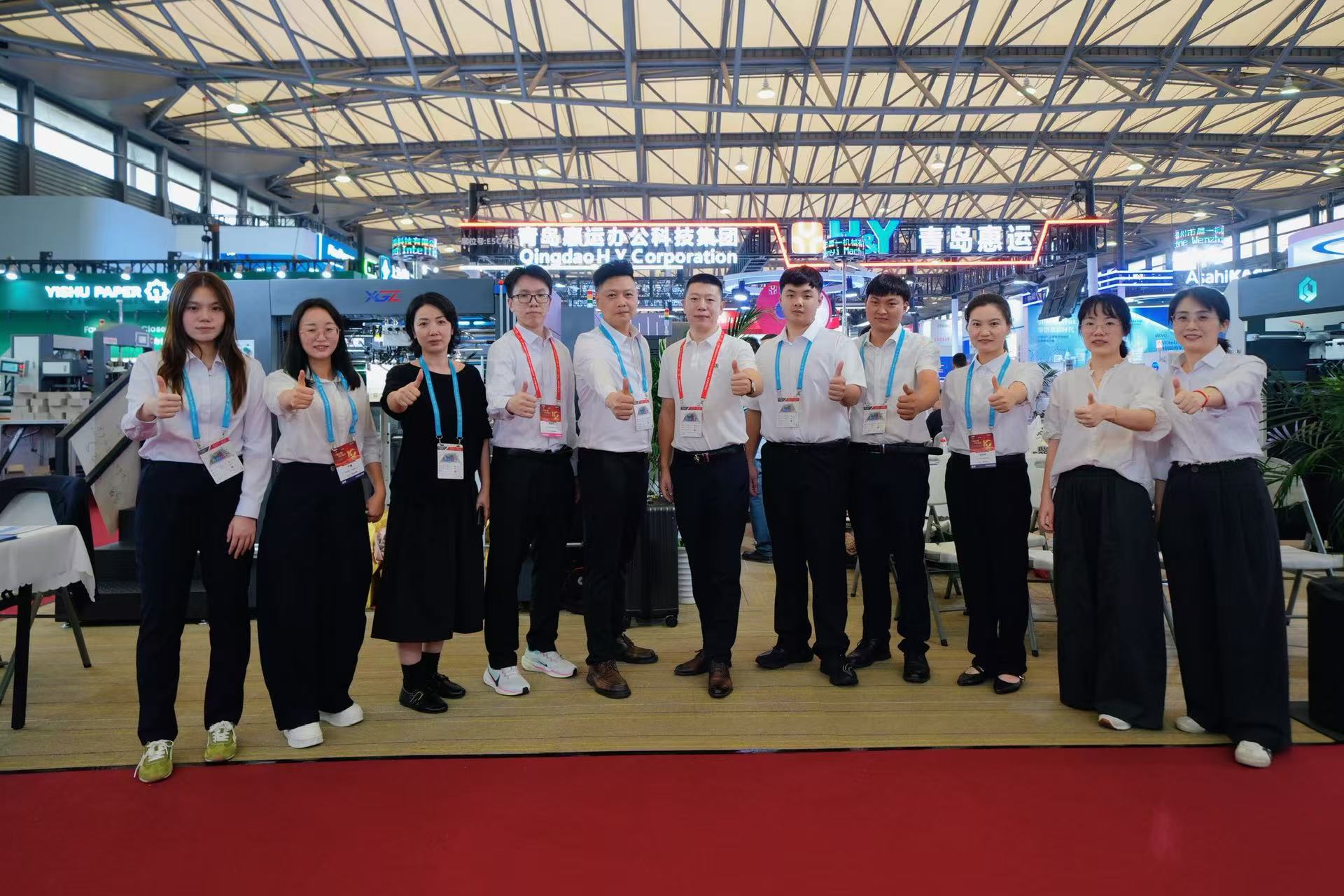
All in Print China 2026 Recap: XG1080G & XG1080F Hot Foil Stamping Machines at Booth E5C429
All-in Pack showed two fully automatic hot foil stamping machines at All in Print China 2026, Shanghai: the XG1080G and the XG1080F with electric-eye registration for security foiling. 180 inquiries and 15 signed customers at Booth E5C429.
Ready to source foil stamping and die-cutting from one supplier?
From stamping foils to post-press machines and die-cutting consumables — get factory-direct pricing and free samples.