
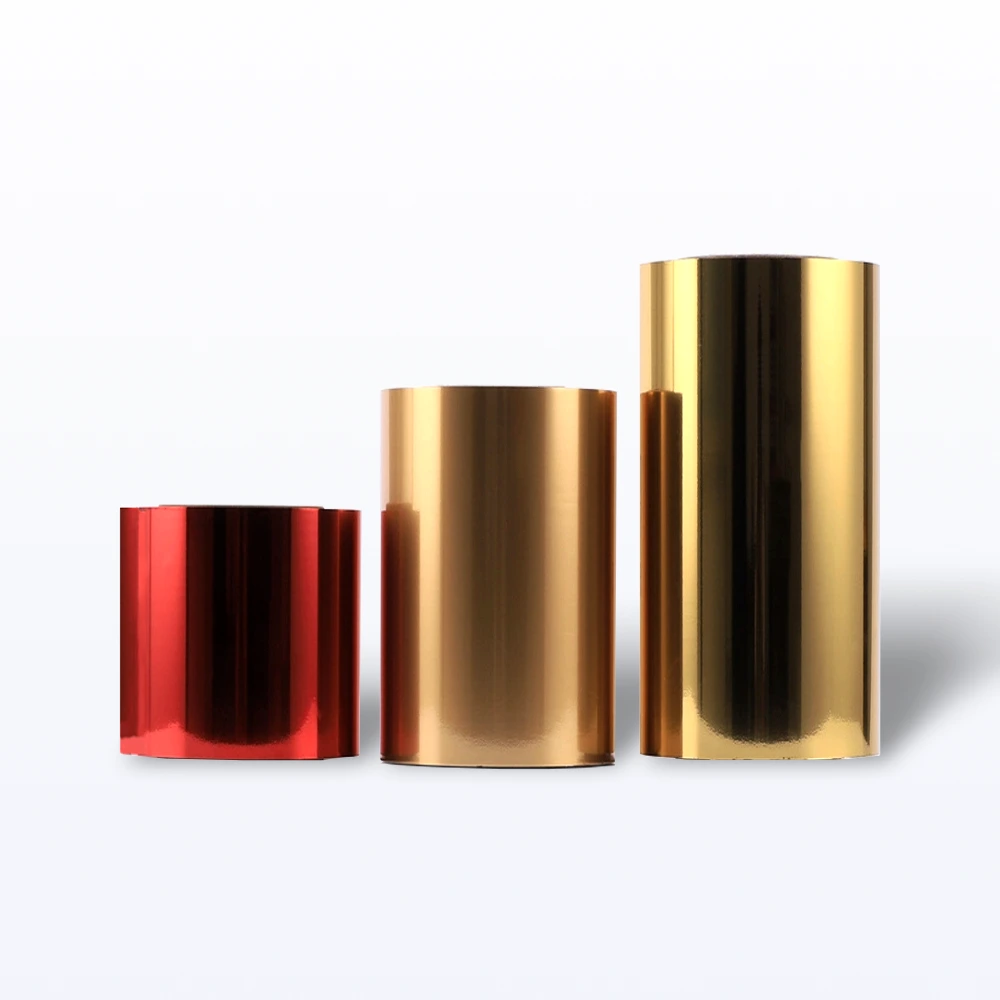
Choose hot stamping foil for paper packaging with confidence. This guide helps buyers match foil to substrates and optimize stamping for luxury cartons.
Table of Contents
- 1. Start With the Substrate, Not the Foil
- 2. Pick the Visual Effect You Need
- 3. The Seven Specifications That Matter on a Foil Tech Sheet
- 4. Coverage Rate: The Spec Buyers Most Often Miss
- 5. Match the Foil to the Equipment
- 6. The Sample Plan Every Buyer Should Run Before First Production
- 7. Sustainability and Compliance in 2026
- 8. Pricing Benchmarks (Indicative, 2026)
- Conclusion
- Frequently Asked Questions
Most stamping-foil rejection problems trace back to a mismatch between the foil grade and the printed substrate — not the press, not the operator. With premium paper packaging volumes growing again in 2026 (FactMR's 2026 secondary luxury packaging report projects steady growth through 2036), getting foil specification right has become a procurement skill, not just a press-room one. This guide takes a packaging buyer through every decision in the order it actually has to be made.
1. Start With the Substrate, Not the Foil
The substrate dictates which adhesive system the foil must carry. Get this wrong and nothing else matters.
- Coated paperboard 200–400 gsm: The 80% case. Almost any "C-grade" universal foil works, including our Premium Metallic Gold Hot Stamping Foil.
- Uncoated kraft / fluted board: Needs a softer adhesive layer that can wet rougher fibre — ask for "K-grade" or kraft-specific foil. Universal foils will look dull and patchy.
- UV-coated or aqueous-coated print: Coatings reduce surface energy. Specify a foil with a high-tack adhesive and ask the supplier for a release test on your exact varnish.
- Soft-touch or Soft-Touch laminated cartons: The trickiest substrate in 2026 packaging. Use a foil graded specifically for soft-touch lamination, otherwise the foil pulls during finger contact within days.
2. Pick the Visual Effect You Need
Paper packaging uses four visual families of foil. Decide which one before talking colour:
- Bright (mirror) metallic: Gold, silver, copper, rose gold — the default for spirits and premium cosmetics. Bright gold and matte silver cover ~70% of all paper-packaging foil volume.
- Pigment / opaque colours: Reds, blues, blacks, whites — used for monochrome logos and limited editions. Lower brightness than metallic but unlimited colour range.
- Holographic / diffractive: Rainbow, sparkle, custom holograms. Covered in detail in our holographic foil applications guide.
- Special effects: Pearlescent, brushed metal, leather grain. Niche but high impact for premium SKUs.
3. The Seven Specifications That Matter on a Foil Tech Sheet
When a foil supplier sends a datasheet, these are the only specifications a packaging buyer needs to read:
- Adhesive grade (e.g. C, K, P) — must match substrate per Section 1.
- Recommended stamping temperature — usually 110–150 °C for paper. Below 100 °C means weak transfer; above 160 °C distorts holographic patterns.
- Recommended dwell time — 0.2 to 0.6 s on a flatbed press. Faster cycles need the lower end.
- Recommended pressure — typically 0.5–2.5 N/mm². Embossed dies need the higher end.
- Maximum coverage area — many foils are rated only for ≤ 30% coverage in a single pass; large solids may require a "high-coverage" grade.
- Roll width and length — match to die width with a 5 mm safety margin each side; standard rolls are 60–610 mm × 120–360 m.
- Light- and rub-fastness — ISO 105-B02 (light) and ISO 11640 (rub) ratings matter on packaging that travels long supply chains.
4. Coverage Rate: The Spec Buyers Most Often Miss
Coverage rate (the percentage of die area that is solid foil) decides whether a "standard" or "high-coverage" grade is needed. A delicate brand logo at 5% coverage uses a totally different foil than a full-area metallic background at 80% coverage. Ask your converter to measure coverage on the die artwork before quoting — it is the single biggest cause of "the foil looks great on the proof but patchy in production" complaints.
5. Match the Foil to the Equipment
Foil performance is a system, not a single component. The same foil grade behaves differently on:
- Manual clamshell presses: Long dwell times, lower pressure — forgiving on most foils.
- Semi-automatic flatbed presses: The volume workhorse for cartons. Use a foil rated for 0.3 s dwell.
- Fully automatic high-speed flatbed presses like the XG1080G running 7,500 sheets/hour: Need foils rated for short dwell + register-controlled foil-saving (intermittent pull).
- Rotary hot stamping (web): Dwell can be under 0.1 s — only specialty rotary-grade foils work.
If you switch press class, requalify the foil. We have seen converters lose two days chasing a "bad foil batch" that was simply the wrong grade for a faster press.
6. The Sample Plan Every Buyer Should Run Before First Production
Before signing off on a foil for a new SKU, run this five-step qualification:
- Stamp a 100-sheet trial on the actual production substrate at production speed.
- Inspect under D65 lighting for brightness and pinholes.
- Cross-cut tape adhesion test (ISO 2409) — no foil should lift.
- Rub test 50 cycles with dry cotton (ISO 11640) — minimal transfer.
- Accelerated aging: 48 h at 50 °C / 80% RH — no edge curl or colour shift.
The full test protocol typically takes one working day in a converter QC lab and is the cheapest insurance against a six-figure recall.
7. Sustainability and Compliance in 2026
Two regulatory items are reshaping foil specification this year:
- EU PPWR (Packaging & Packaging Waste Regulation): Requires recyclability assessments for all packaging by 2030. Hot-stamping foil at typical coverage (<15% of pack area) is recognised as compatible with paper recycling, but high-coverage metallic backgrounds may need to be redesigned. Verify with your foil supplier's CEPI/PTS test results.
- Food-contact migration: For inner packaging, ask for a Declaration of Compliance against EU 10/2011 plastics regulation and Swiss Ordinance on inks.
8. Pricing Benchmarks (Indicative, 2026)
Stamping foil is sold by the square metre of usable foil area. As a rough 2026 reference:
- Standard bright gold/silver: USD 0.08–0.18 / m² in 60 m roll lengths.
- High-coverage or special-substrate grades: USD 0.15–0.35 / m².
- Pigment colours: USD 0.10–0.22 / m².
- Stock holographic: USD 0.20–0.45 / m².
- Custom holograms: priced per project after master-shim cost.
Volume tiers typically kick in at 5,000 m², 20,000 m² and 100,000 m². If your annual demand crosses one of these tiers, consolidating to one supplier usually unlocks 8–15% savings.
Conclusion
Choosing stamping foil for paper packaging is a substrate decision first, an effect decision second, and a tech-sheet decision third — in that order. Get those three right and 90% of production problems disappear. We help packaging buyers shortlist the right grade against their exact substrate, press class and brand brief — request a tailored foil recommendation with your artwork and substrate spec, and we will return matched samples within five working days. Or browse our full stamping foil range to see all grades and effects in one place.
Frequently Asked Questions
Quick answers about hot stamping foil.
Companion Products
Specs and samples for the products discussed in this article.
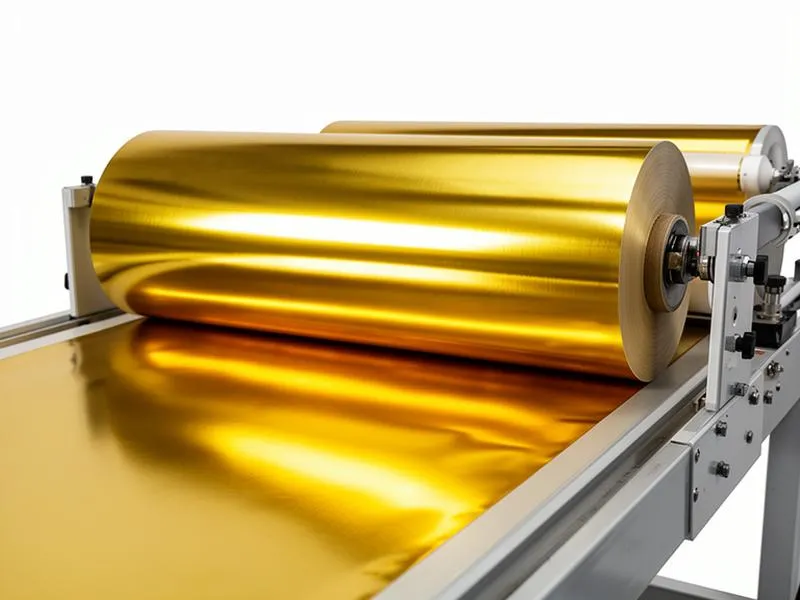
Premium Metallic Gold Hot Stamping Foil
Ultra-bright metallic gold foil with mirror-like reflection for premium packaging and label applications.
View product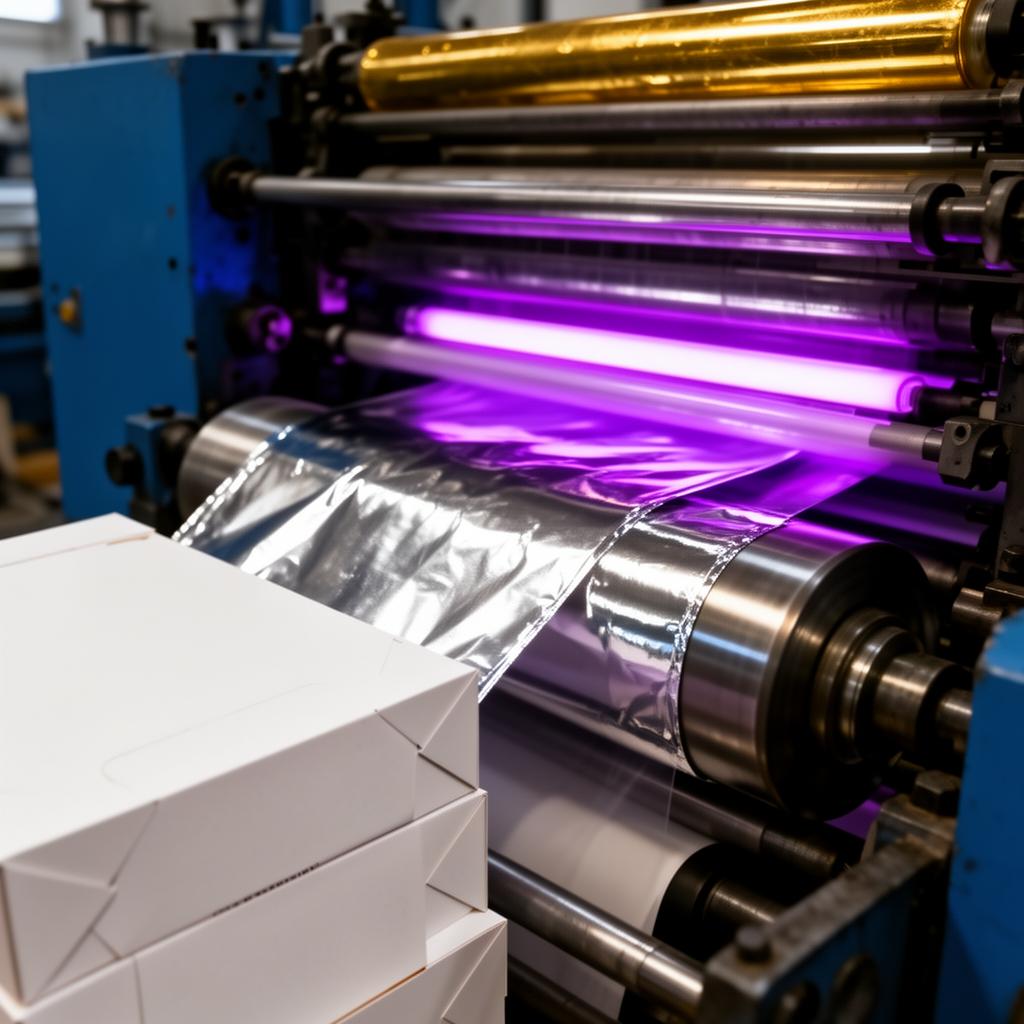
Cold Stamping Foil
Cold stamping foil for inline UV flexo and offset presses — no heat, no dies, up to 150 m/min with metallic, holographic and pigmented finishes.
View product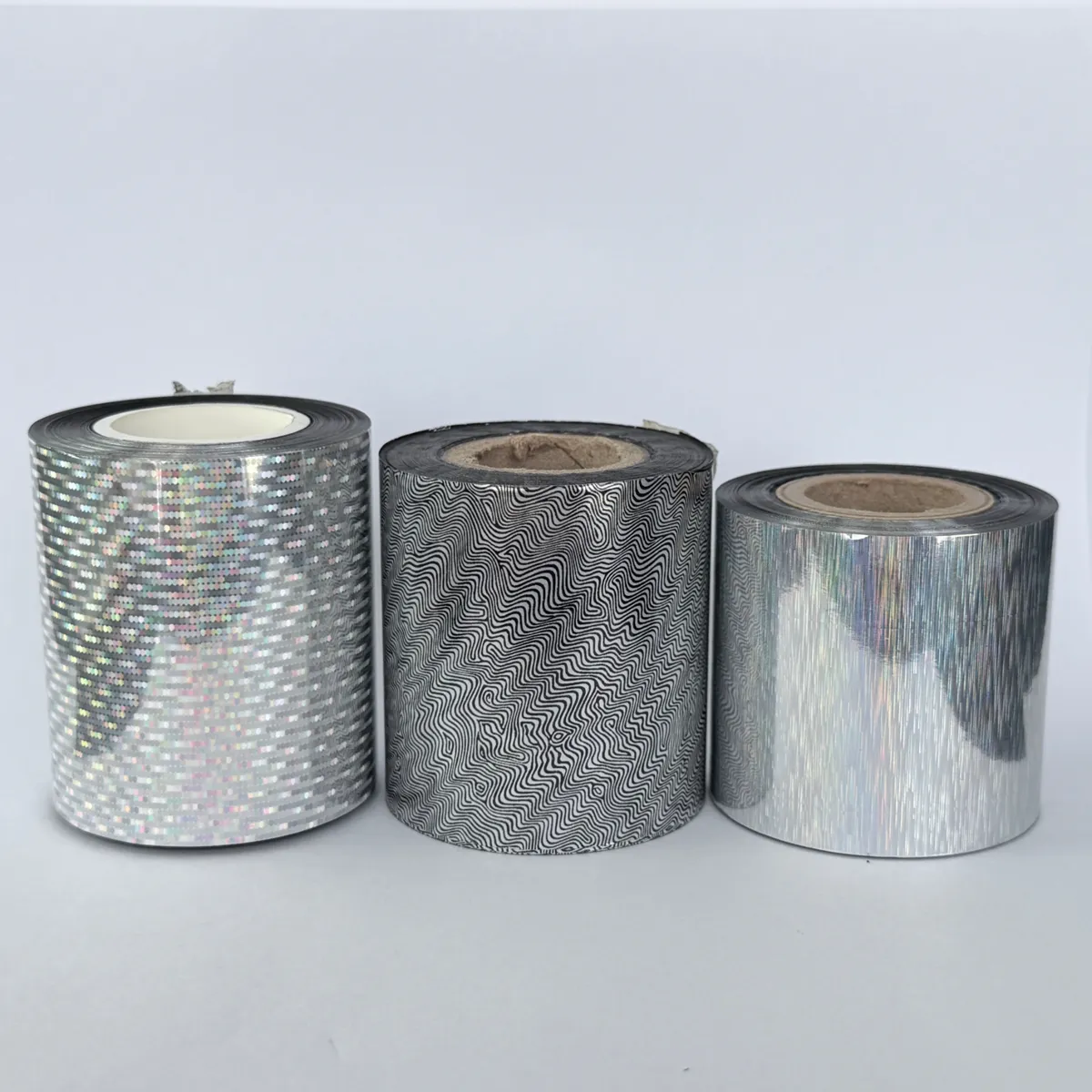
Scratch-Off Foil for Hot Stamping
High-opacity scratch-off foil for lottery tickets, gift cards and security labels — clean removal, no flaking, strong heat-seal bond to paper, cardstock and PVC.
View productRelated Articles
View all
Technical Knowledge · Apr 10, 2026
Self-Adhesive Label Material: A Buyer's Guide
Choose the perfect self-adhesive label material for your product with this comprehensive guide, ensuring durability and optimal performance. Learn what to consider for your labels today.

Technical Knowledge · Jan 28, 2026
Automatic Hot Stamping Machine: Buyer's Guide
Choose the best automatic hot stamping machine for your production needs. Learn key specifications and features for optimal selection.
Technical Knowledge · Jul 28, 2026
Scratch-Off Foil for Hot Stamping: A Complete Buyer's Guide for Lottery, Card & Label Manufacturers
How scratch-off foil works, where it is used, and what B2B buyers must check before ordering — release consistency, opacity, substrate adhesion, press compatibility and batch-to-batch colour control.
Ready to source foil stamping and die-cutting from one supplier?
From stamping foils to post-press machines and die-cutting consumables — get factory-direct pricing and free samples.