
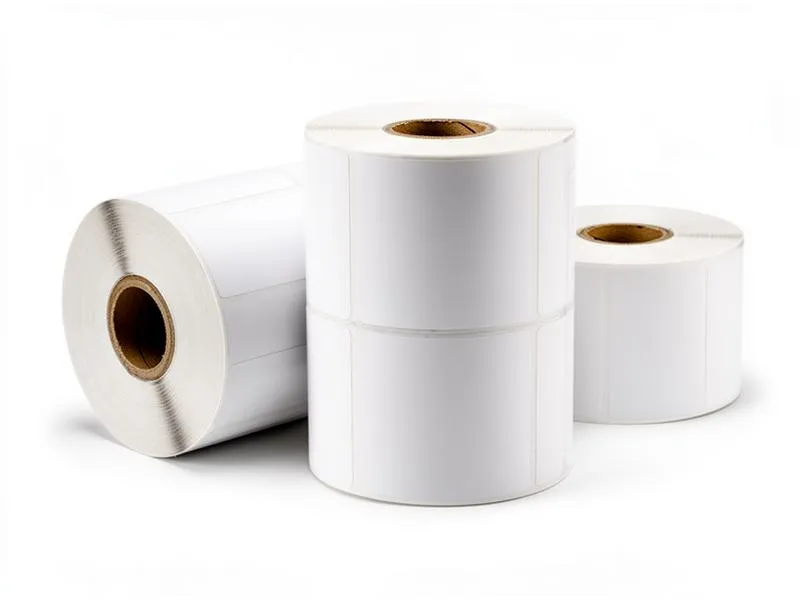
Choose the perfect self-adhesive label material for your product with this comprehensive guide, ensuring durability and optimal performance. Learn what to consider for your labels today.
Table of Contents
Selecting the wrong self-adhesive material is one of the most common — and most expensive — mistakes in packaging. A label that curls in the freezer, peels off a wet bottle, or smudges in a barcode scanner can trigger product recalls, compliance failures and customer churn. This guide walks through the decision framework our technical team uses with every new project.
Step 1: Define the Application Environment
Before discussing materials, answer five questions:
- Surface energy of the substrate — glass and metal (high SE) accept most adhesives; HDPE, PP and silicone (low SE) require specialized formulations.
- Surface texture — smooth, curved, corrugated, powder-coated? Each demands different tack and flow characteristics.
- Temperature range — refrigerated (2–8 °C), frozen (-20 °C), ambient, or hot-fill (up to 85 °C)?
- Moisture exposure — dry storage, condensation, full immersion, ice-bucket?
- Lifetime expectation — single-use logistics label or 5-year asset tag?
The Tag & Label Manufacturers Institute (TLMI) and FINAT publish detailed application guides that cross-reference these variables to recommended constructions.
Step 2: Choose the Facestock
The face material determines printability, durability and aesthetics:
- Coated paper (gloss / matte / semi-gloss): The workhorse for retail product labels, food & beverage, and supermarket pricing. Excellent print quality, low cost. See our Gloss White Self-Adhesive Paper.
- Thermal direct paper: Required for shipping, weighing-scale and logistics labels printed on direct-thermal printers (Zebra, TSC, Toshiba). No ribbon needed but limited shelf life under heat/UV. Browse our Thermal Direct Label Stock.
- Transparent BOPP / PET film: The "no-label look" used in cosmetics, craft beer, and premium beverages. Conformable, water-resistant, premium feel. View our Transparent BOPP Film.
- Synthetic PP / PE / PET: Tear-resistant, chemical-resistant — chosen for industrial, automotive, and outdoor labels. See our Synthetic PP/PET Label.
- Specialty coated matte: For premium wine and spirits where ink absorption and texture matter — try our Matte White Label Paper.
Step 3: Choose the Adhesive
Adhesive selection is where most label failures originate. Five major classes:
- Permanent acrylic (general purpose): Highest tack and shear, intended to stay on for the product's life. Default choice for retail and industrial labels.
- Removable acrylic: Designed to peel cleanly within 6–12 months without residue — ideal for promotional stickers, return labels, glassware that will be re-used. See our Removable Adhesive Material.
- Freezer-grade adhesive: Initial tack down to -40 °C application temperature. Critical for ice-cream, frozen meat, vaccine logistics.
- Wash-off adhesive: Releases in standard PET-bottle recycling caustic wash. Required for closed-loop rPET supply chains.
- Hot-melt rubber: Aggressive tack on low-energy plastics and corrugated. Cost-effective for shipping/logistics, but lower temperature resistance.
Step 4: Choose the Liner
The liner (release backing) seems mundane but drives converting performance:
- Glassine (60–80 gsm): Standard, low cost, good die-cutting. The default for most label projects.
- Filmic PET liner (23–50 µm): Higher die-cut precision, more rolls per core (denser winding), better for high-speed automatic dispensing.
- Recyclable / linerless: Eliminates liner waste entirely — discussed in our 2026 sustainable PSA labels guide.
Step 5: Validate Before You Specify
Even a textbook-correct construction can fail in the field. Always:
- Order an A4 sample sheet and laminate-test on the actual production substrate.
- Run a 24-hour and 7-day adhesion build-up test (PSTC-101 method).
- Test in the worst-case environment your product will see (freeze-thaw cycles, UV chamber, salt spray as relevant).
- Validate print compatibility on your actual press — flexo, offset, digital toner and inkjet have different surface-tension requirements.
Quick Reference: Common Applications & Recommended Constructions
- Beer / wine bottle (returnable): Wet-strength paper + wash-off adhesive + glassine liner
- E-commerce shipping label: Thermal direct paper + permanent hot-melt + glassine liner
- Cosmetics PET bottle (premium): Clear BOPP + clear permanent acrylic + filmic PET liner
- Frozen food (-20 °C): Coated paper + freezer-grade acrylic + glassine liner
- Industrial asset tag (5+ years outdoor): White synthetic PP/PET + permanent acrylic + glassine liner
Conclusion
Specifying self-adhesive labels is a three-way conversation between facestock, adhesive and liner — each chosen for the specific environment your label will live in. Get any one wrong and the whole construction underperforms. For deeper context on category trends, read our Asia-Pacific self-adhesive market analysis, or browse the full Self-Adhesive Materials range.
Need help specifying for a specific application? Request a free technical consultation with our materials team.
Frequently Asked Questions
Quick answers about self-adhesive labels.
Related Articles
View all
Technical Knowledge · Apr 20, 2026
Hot Stamping Foil for Paper Packaging: Buyer's Guide
Choose hot stamping foil for paper packaging with confidence. This guide helps buyers match foil to substrates and optimize stamping for luxury cartons.

Technical Knowledge · Jan 28, 2026
Automatic Hot Stamping Machine: Buyer's Guide
Choose the best automatic hot stamping machine for your production needs. Learn key specifications and features for optimal selection.
Technical Knowledge · Aug 25, 2026
Holographic Foil Printing: The Complete Technical Guide (2026)
How holographic foil printing actually works — hot stamping, cold foil and transfer sheets compared, the four holographic foil families, security OVD requirements, honest limitations, and a step-by-step way to choose the right method for your run length.
Ready to source foil stamping and die-cutting from one supplier?
From stamping foils to post-press machines and die-cutting consumables — get factory-direct pricing and free samples.