
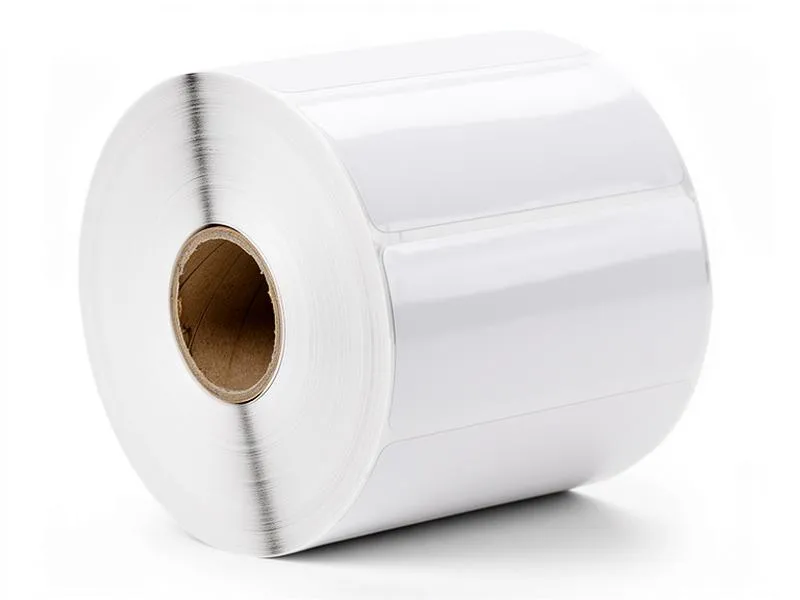
Explore the future of sustainable self-adhesive labels for 2026, featuring recyclable liners, FSC paper, and wash-off adhesives for eco-conscious brands.
Table of Contents
- 1. Why Sustainable PSA Labels Are Trending in 2026
- 2. The Four Pillars of a Sustainable PSA Construction
- 2.1 FSC-Certified Facestock
- 2.2 Recyclable / Wash-Off Adhesives
- 2.3 Thinner / Linerless Constructions
- 2.4 Bio-Based & Compostable Films
- 3. How to Audit Your Current Label Range for Sustainability
- 4. Common Pitfalls to Avoid
- 5. The All-in Pack Sustainable Range
- Conclusion
- Frequently Asked Questions
Sustainability has moved from marketing claim to procurement requirement. According to Future Market Insights, the global self-adhesive labels market is projected to reach USD 104.4 billion by 2035, with eco-certified materials capturing the fastest-growing share. For converters, the question is no longer "should we offer sustainable options" but "which sustainable construction wins each tender?"
1. Why Sustainable PSA Labels Are Trending in 2026
Three forces are reshaping label specifications globally:
- EU Packaging & Packaging Waste Regulation (PPWR): Effective 2026, requires all packaging to be recyclable or reusable by 2030, including labels and adhesives.
- Brand ESG commitments: Unilever, Nestlé, P&G and Coca-Cola have publicly committed to 100% recyclable or reusable packaging by 2025–2030, cascading down to label suppliers.
- Consumer demand: NielsenIQ research shows 78% of global consumers consider sustainability when purchasing — a signal brand owners can't ignore.
For converters, this translates to RFQs that now include certifications (FSC, ISO 14001, EU Ecolabel), recyclability claims (CEFLEX, How2Recycle), and life-cycle assessment data alongside traditional price and lead-time questions.
2. The Four Pillars of a Sustainable PSA Construction
2.1 FSC-Certified Facestock
Forest Stewardship Council chain-of-custody certification has become the baseline for paper-based labels sold into Europe and North America. FSC-certified gloss and matte papers are now standard offerings — see our Gloss White Self-Adhesive Label Paper and Matte White Self-Adhesive Label Paper, both available in FSC variants on request.
2.2 Recyclable / Wash-Off Adhesives
Conventional permanent acrylic adhesives contaminate the PET recycling stream because they don't separate cleanly during caustic washing. Modern wash-off adhesives — typically alkali-soluble acrylics — release at 65–80 °C in standard recycling baths, allowing the PET flake to be recovered as food-grade rPET. The Petcore Europe design guidelines list approved wash-off systems for bottle labeling.
2.3 Thinner / Linerless Constructions
Downgauging is the simplest sustainability win: moving from 60 µm PP to 40 µm PP cuts material use by 33% with no print-quality loss. Linerless labels eliminate the silicone-coated release liner entirely — the single largest source of label waste — and are being adopted aggressively in logistics and produce labeling.
2.4 Bio-Based & Compostable Films
PLA (polylactic acid) and bio-PE facestocks derived from sugarcane or corn starch are entering the market for industrially compostable applications. Volumes are still modest, but growth is accelerating where municipal composting infrastructure exists (Northern Europe, Pacific Northwest USA, Japan).
3. How to Audit Your Current Label Range for Sustainability
- Map every SKU in your current portfolio against four criteria: facestock origin, adhesive recyclability class, liner type, total grammage.
- Classify each construction as Tier 1 (fully recyclable / FSC / wash-off), Tier 2 (partial — e.g. FSC paper but standard adhesive), or Tier 3 (legacy, no claims).
- Identify quick wins — usually swapping non-FSC paper for FSC at a 3–5% premium and qualifying a wash-off adhesive on your top three SKUs.
- Document everything. Brand owners increasingly require Environmental Product Declarations (EPDs) and chain-of-custody numbers on every PO.
4. Common Pitfalls to Avoid
- "Recyclable" without a recycling stream: A bio-PLA label is only compostable if industrial composting exists in the destination market. Otherwise it's landfill.
- Wash-off adhesive on the wrong adherend: Wash-off systems are formulated for PET bottles. Using them on glass or HDPE may cause premature release in humid logistics.
- Greenwashing claims: Don't print "eco-friendly" without a third-party certification to back it. Brand owners are auditing supply-chain claims aggressively.
5. The All-in Pack Sustainable Range
We supply FSC-certified gloss and matte papers, recyclable BOPP films, and wash-off adhesive constructions across our self-adhesive line. Explore the full Self-Adhesive Materials catalog, or read our previous deep-dive on sustainable packaging materials trends for adjacent insights.
Conclusion
Sustainability in self-adhesive labels is no longer a niche — it's the mainstream specification for any converter selling into regulated markets. Converters who qualify FSC-certified facestocks, wash-off adhesives, and downgauged constructions now will win tender after tender through 2026 and beyond. Need samples or technical data sheets? Request our sustainable PSA sample pack.
Frequently Asked Questions
Quick answers about sustainable labels.
Related Articles
View all
Industry News · Jan 15, 2026
Sustainable Packaging: Trends & Materials for 2026
Discover key sustainable packaging material trends and how eco-adhesives are reshaping the industry, offering converters greener solutions.

Industry News · Feb 20, 2026
Self-Adhesive Label Market Asia: Growth Trends to 2026
Explore the growth drivers and opportunities of the self-adhesive label market in Asia, fueled by e-commerce and packaging demands. Find out more about this booming industry.

Industry News · Aug 24, 2026
Cold Foil Global Market Analysis 2026: What the Numbers Don't Tell You
A supplier-side read of the global cold foil market in 2026: market size, end-use verticals, regional demand, equipment concentration and where the segment is actually heading — with the confidence levels stated honestly.
Ready to source foil stamping and die-cutting from one supplier?
From stamping foils to post-press machines and die-cutting consumables — get factory-direct pricing and free samples.