
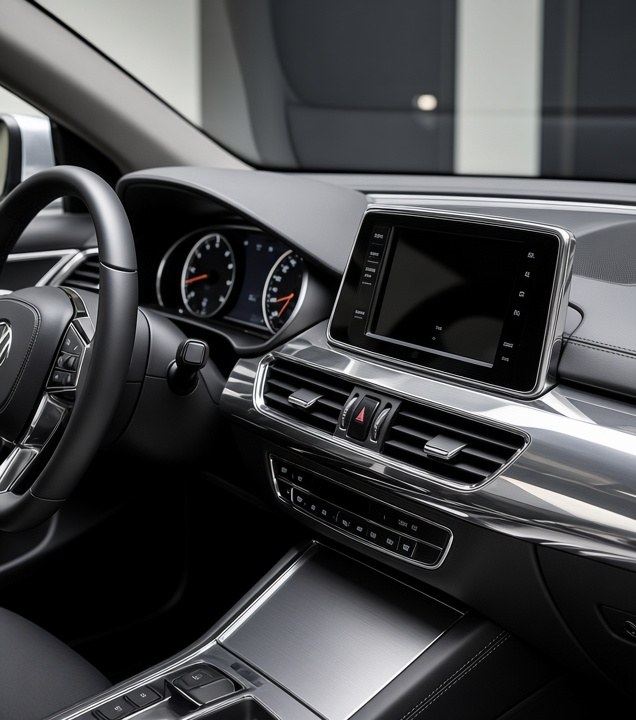
How to fix poor adhesion, flaking, blistering, dull chrome and edge lifting when hot stamping ABS, PC/ABS and PP car grilles and interior trim — with a settings chart, defect matrix and durability test checklist.
Table of Contents
- How hot stamping works on automotive plastics
- Typical parts and materials
- Starting settings by resin
- Troubleshooting matrix: 9 common faults
- Step by step: setting up a new grille or trim job
- Durability tests buyers ask for
- Hot stamping vs other decoration methods
- Where All-in Pack fits
- Frequently Asked Questions
By Gavin Gao — 15+ years in foil stamping and post-press supply at All-in Pack. Reach me at sales@allinpacks.com.
Quick answer: Most hot stamping failures on car grilles and interior trim come from four causes: wrong foil adhesive for the plastic, a contaminated part surface, too little or too much heat at the part, and uneven pressure on curved surfaces. Clean the part, confirm surface energy, match the hot stamping foil to the resin, then tune temperature, pressure and speed one at a time.
The settings below are industry starting points, not guarantees. Every resin, mould finish and foil grade behaves differently, so confirm each change with a test part.
How hot stamping works on automotive plastics
Automotive parts are usually decorated in one of two ways:
- Roll-on hot stamping — a heated silicone roller rolls the foil across a grille bar, rim or trim strip. It suits long, curved and raised features.
- Up-and-down (vertical) hot stamping — a heated silicone pad or metal hot stamping die presses straight down. It suits logos, buttons, bezels and flat trim.
Both rely on the same three variables as paper stamping: temperature, pressure and contact time. Plastics simply have narrower windows, because they soften and deform. For the general theory, see our hot stamping temperature, pressure and dwell time chart.
Typical parts and materials
| Part | Common resin | Usual method | Typical foil |
|---|---|---|---|
| Front grille bars and surrounds | ABS, PC/ABS, ASA | Roll-on | Chrome-effect metallised, black gloss |
| Grille emblems and badges | ABS, PC | Up-and-down | Bright chrome, gold, coloured metallic |
| Interior door and dashboard trim | ABS, PC/ABS, PP | Roll-on or up-and-down | Brushed or matte silver, pigment colours |
| Buttons, knobs, air-vent bezels | ABS, PC, PA | Up-and-down | Bright and matte silver, pigment white |
| Door sill and console strips | PP, TPO, ABS | Roll-on | Brushed aluminium effect, carbon effect |
Starting settings by resin
| Resin | Roll-on roller temperature | Up-and-down die temperature | Speed / dwell | Pretreatment |
|---|---|---|---|---|
| ABS | 180–220 °C | 130–160 °C | 3–8 m/min · 0.5–1.5 s | Clean only |
| PC/ABS | 190–230 °C | 140–170 °C | 3–6 m/min · 0.8–1.5 s | Clean, dry if moisture-sensitive |
| PC | 200–240 °C | 150–180 °C | 2–5 m/min · 1.0–2.0 s | Clean, avoid stress cracking |
| ASA (exterior) | 190–230 °C | 140–170 °C | 3–6 m/min · 0.8–1.5 s | Clean only |
| PP / TPO | 180–220 °C | 140–170 °C | 2–5 m/min · 1.0–2.0 s | Flame or plasma to ≥38 mN/m |
Roller and pad temperatures read higher than the temperature at the part, because silicone loses heat through its thickness. Measure the part surface where possible.
Troubleshooting matrix: 9 common faults
| Fault | Most likely cause | Fix |
|---|---|---|
| Foil does not stick at all | Wrong adhesive for the resin; part too cold | Switch to a resin-matched foil; raise heat 5–10 °C |
| Passes visually, fails tape test | Mould release, silicone or oil on the part; untreated PP | Clean with IPA; stop silicone sprays near moulding; flame-treat PP |
| Flaking at edges | Low edge pressure; foil too brittle; part flash | Raise pressure or use a softer pad; trim flash; use flexible foil |
| Edge lifting on curves | Roller not following the contour; tension too high | Use a profiled or softer roller; reduce foil tension |
| Blistering or bubbles | Overheating; trapped air; moisture in PC | Lower heat; slow speed; dry PC parts before stamping |
| Dull or cloudy chrome | Too hot or too slow; textured mould surface | Lower heat, raise speed; polish mould; use high-gloss automotive foil |
| Part distortion or gloss marks | Heat above resin softening point; too much dwell | Lower temperature, shorten dwell, add part support fixture |
| Patchy coverage | Uneven pad wear; part warp; uneven heating | Replace pad; check part flatness; check heater uniformity |
| Fails abrasion or chemical test | Foil without hard topcoat | Specify an abrasion-resistant automotive-grade foil |
Change only one variable at a time and write down the setting that worked. Most "foil problems" turn out to be part-surface problems. For a general checklist, see why hot stamping foil is not sticking.
Step by step: setting up a new grille or trim job
- Clean the part. Wipe with isopropyl alcohol and keep silicone sprays away from the moulding area.
- Check surface energy. Use dyne pens; aim for about 38 mN/m or higher, and pretreat PP or TPO.
- Choose the foil. Match the adhesive to ABS, PC/ABS, PC or PP, and choose a topcoat that meets the abrasion and chemical tests.
- Fit the tooling. Use a profiled silicone roller for curved grille bars, or a pad or die cut to the logo for flat areas.
- Start cool. Begin at the lower temperature in the chart and raise in 5 °C steps.
- Set pressure and speed. Increase pressure until edges transfer cleanly, then adjust speed until gloss is right.
- Test the part. Run a cross-hatch tape test before production, then send samples for full durability tests.
Durability tests buyers ask for
Automotive buyers rarely accept a part on looks alone. Typical tests include:
- Cross-hatch adhesion with tape.
- Abrasion or rub resistance.
- Heat ageing and thermal cycling between hot and cold.
- Humidity or water immersion.
- Chemical resistance to cleaners, sunscreen and sweat.
- UV exposure and salt spray for exterior grilles.
The pass limits come from each carmaker's material specification. Ask your customer for the exact standard before you choose the foil.
Hot stamping vs other decoration methods
| Method | Look | Tooling | Best for |
|---|---|---|---|
| Hot stamping | Bright chrome, brushed, pigment | Low (roller, pad or die) | Raised bars, logos, trim strips |
| Electroplating | True chrome | High; chemical line | Full chrome grilles |
| Painting / spraying | Any colour | Medium; masks | Full-surface colour |
| In-mould decoration (IMD) | Printed film | High; mould changes | High-volume full-surface trim |
Hot stamping is popular because it gives a chrome or brushed look on selected areas without a plating line, and with low tooling cost.
Where All-in Pack fits
We supply hot stamping foils, including matte silver and premium metallic gold, plus silicone hot stamping pads and brass and magnesium dies. Our hot foil blocking machines are mainly for sheet work such as paper, board and film; for moulded car parts, tell us the part size and shape and we will advise on the right tooling.
Send us your part material, a photo, and the test your customer requires, and we will suggest a foil and starting settings. Request a quote →
Frequently Asked Questions
Quick answers about automotive hot stamping.
Companion Products
Specs and samples for the products discussed in this article.
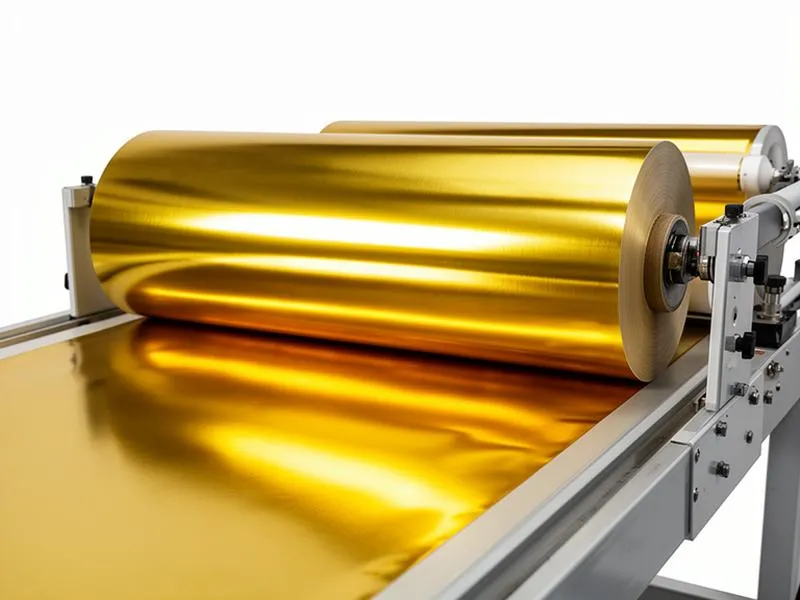
Premium Metallic Gold Hot Stamping Foil
Ultra-bright metallic gold foil with mirror-like reflection for premium packaging and label applications.
View product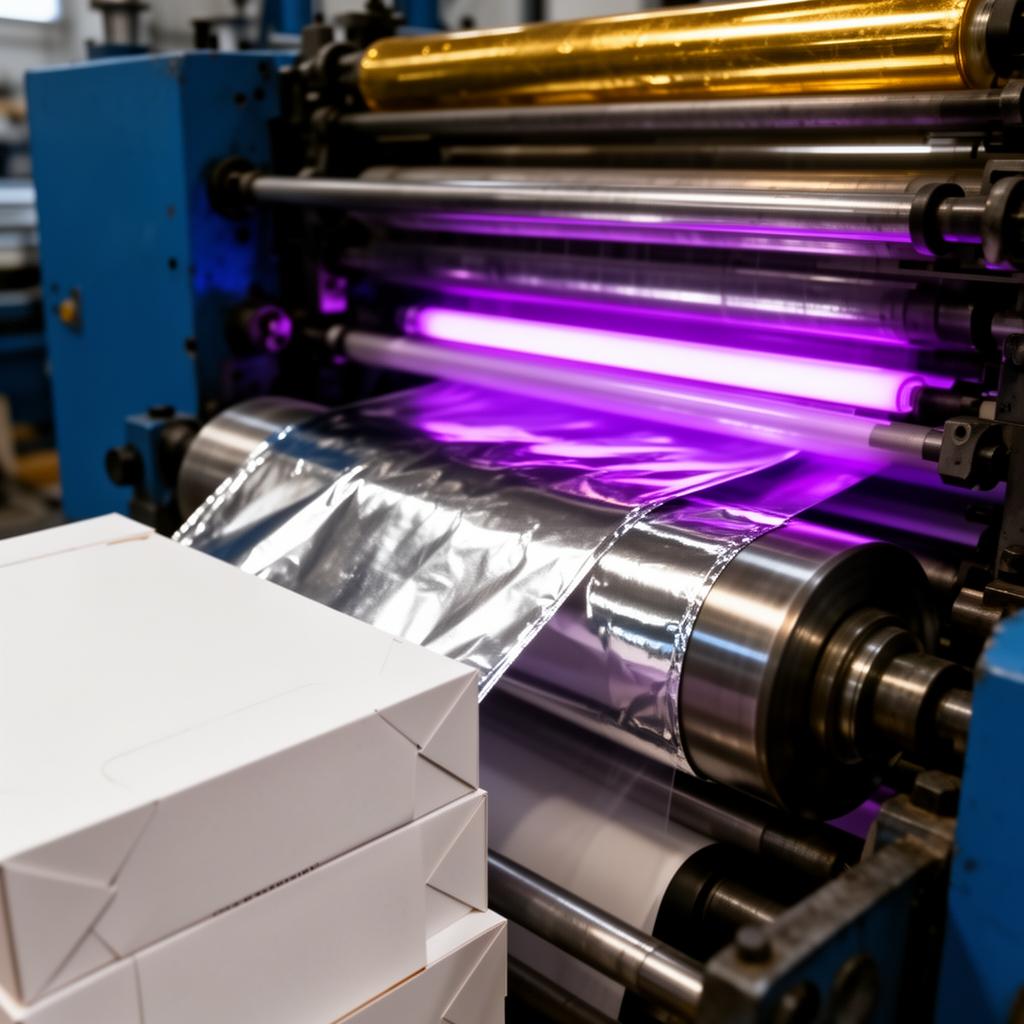
Cold Stamping Foil
Cold stamping foil for inline UV flexo and offset presses — no heat, no dies, up to 150 m/min with metallic, holographic and pigmented finishes.
View product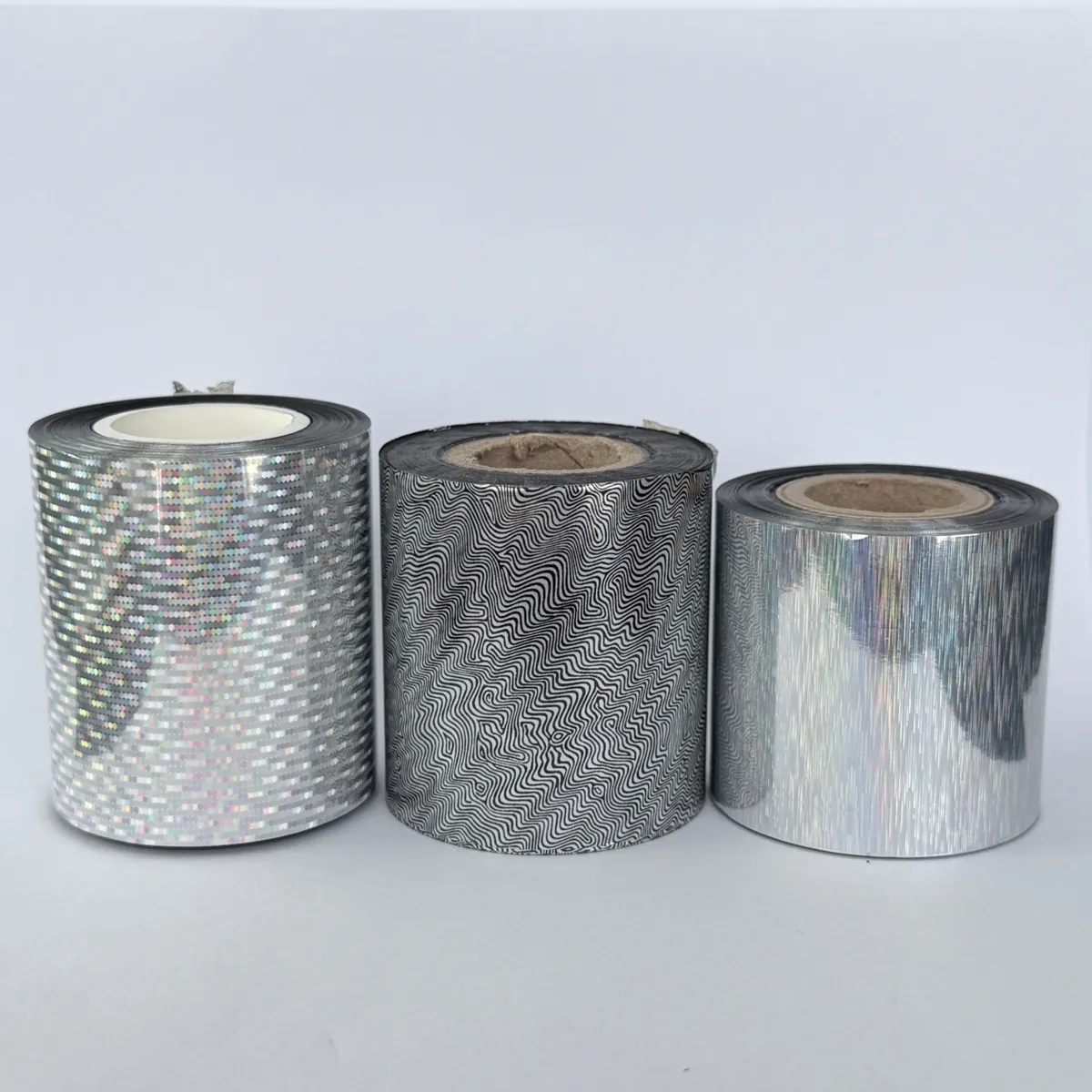
Scratch-Off Foil for Hot Stamping
High-opacity scratch-off foil for lottery tickets, gift cards and security labels — clean removal, no flaking, strong heat-seal bond to paper, cardstock and PVC.
View productRelated Articles
View all
Technical Knowledge · Nov 2, 2026
Home Appliance Panel Hot Stamping: Chrome-Effect Foil, 6-Layer Structure & Defect Fixes (2026)
How to hot stamp washing machine, refrigerator, air conditioner and microwave panels as a plating-free alternative to chrome electroplating — the 6-layer foil structure, aluminium vs chrome metallising, 3 weatherability levels, process settings, an 8-fault fix table and validation tests.
Technical Knowledge · Sep 1, 2026
Toner Reactive Foil: The Complete Guide to Foil Transfer Printing (2026)
How toner reactive foil actually works, which foils transfer cleanly and why, equipment from pouch laminators to dedicated foil machines, sheet versus roll economics, and a supplier-side troubleshooting guide for craft makers, small businesses and print shops.
Technical Knowledge · Apr 10, 2026
Self-Adhesive Label Material: A Buyer's Guide
Choose the perfect self-adhesive label material for your product with this comprehensive guide, ensuring durability and optimal performance. Learn what to consider for your labels today.
Ready to source foil stamping and die-cutting from one supplier?
From stamping foils to post-press machines and die-cutting consumables — get factory-direct pricing and free samples.