
Discover the complete hot stamping process, how it works, and the equipment needed. Achieve premium, high-impact packaging with this guide.
Table of Contents
- How the Hot Stamping Process Works
- The Foil Itself: A Five-Layer Sandwich
- Hot Stamping vs Cold Foil Stamping
- Common Hot Stamping Variants
- Substrate Selection: Where Hot Stamping Shines (and Where It Fails)
- Equipment: From Manual Bench Press to Fully Automatic Lines
- Quality Control & Troubleshooting
- Storage & Shelf Life
- Sustainability & Recyclability
- Choosing the Right Supplier
- Next Steps
- Frequently Asked Questions
Hot stamping is a specialized dry printing process that transfers a thin layer of metallic, pigmented, or holographic stamping foil onto a substrate using heat, pressure, and dwell time. Unlike conventional ink printing, hot stamping deposits a solid film that delivers mirror-like reflection, perfectly opaque pigment, or diffraction effects that ink cannot reproduce — making it the gold standard for luxury packaging, security documents, greeting cards, electronics housings, and premium book covers.
How the Hot Stamping Process Works
A hot stamping cycle has four controllable variables. Mastering their interaction is what separates a clean impression from a fuzzy or pinholed one:
- Temperature — typically 100–160 °C. The heated die softens the foil's release layer so the colored film releases from the PET carrier.
- Pressure — 2–6 kg/cm². Enough to press the foil firmly into the substrate, not so much that you crush fibers or distort fine type.
- Dwell time — 0.3–1.5 seconds. The longer the contact, the more complete the transfer, but excessive dwell burns the adhesive.
- Foil-to-substrate match — paper, plastic, leather, and fabric each require a different foil layer structure. A foil designed for coated paper will fail on PP plastic.
For a deeper machine-level walkthrough, see our Hot Foil Blocking Machine guide.
The Foil Itself: A Five-Layer Sandwich
Every roll of hot stamping foil is a precision-coated composite. From top to bottom:
- PET carrier (12–25 µm) — the polyester film that holds everything in register on the roll.
- Release layer — a wax that softens at the activation temperature and lets the colored layer "let go" cleanly.
- Color / metallic / pigment layer — vacuum-metallized aluminum for gold foils and silver foils, or pigment lacquer for pigment foils, or embossed nano-structures for holographic foils.
- Protective layer — adds scratch and chemical resistance.
- Adhesive (size) layer — activated by heat, bonds to the substrate. The adhesive chemistry must match the surface energy of the target material.
Hot Stamping vs Cold Foil Stamping
The biggest decision a converter makes is hot vs cold. Hot stamping uses heated metal dies and is unbeatable for sharp embossed effects, small fine type, and short-run premium packaging. Cold foil uses a UV adhesive applied by a printing plate, runs inline on offset presses at full press speed, and shines on long-run flexible packaging and labels. We break down throughput, cost-per-impression and quality differences in Cold Foil vs Hot Foil Stamping (2026).
Common Hot Stamping Variants
- Flat stamping — vertical press, flat die against flat substrate. The workhorse for cartons and labels.
- Roll-on stamping — a cylindrical die or roller transfers foil onto a moving web; used on rotary post-press equipment.
- Peripheral stamping — foil is applied around the circumference of cylindrical objects (pens, bottles, cosmetic tubes).
- Combination foil-and-emboss — a single hit applies foil and creates a raised 3D relief, common on luxury wine and spirit labels.
- Digital foil (sleeking) — uses a toner image as the adhesive; ideal for short-run personalization. See our digital foil printing guide.
Substrate Selection: Where Hot Stamping Shines (and Where It Fails)
Hot stamping works on an enormous range of materials, but each has nuances:
- Coated paper & board — the easiest substrate. Use a paper-grade foil.
- Uncoated paper — fibers absorb adhesive; specify a foil with a heavier size layer.
- Plastic (PP, PE, PVC, ABS) — requires plastic-specific foil and often corona treatment for adhesion.
- Leather & synthetic leather — use leather hot stamping foil on dedicated leather embossing machines.
- Textile — heat-transfer foil bonded with a press cycle of 150 °C for 10–15 seconds. See our textile foil guide.
- Electronics housings — use scratch- and chemical-resistant grades; technical specs in this guide.
Equipment: From Manual Bench Press to Fully Automatic Lines
The equipment ladder typically looks like this:
- Manual / pneumatic bench press — entry-level, 300–800 impressions per hour, ideal for stationery and small workshops.
- Semi-automatic flat-bed stamping press — 1,500–3,000 sheets per hour, registered to crop marks.
- Fully automatic hot foil stamping machine — 6,000–8,000 sheets per hour with feeder, registration, foil economizer, and delivery. See our automatic machine selection guide.
- Inline rotary — integrated into label, flexible packaging, or carton lines for non-stop production.
If you are sizing equipment for the first time, our Hot Foil Blocking Machine guide and Cold Foil Machine guide walk through tonnage, die area, and ROI math.
Quality Control & Troubleshooting
The five most common hot stamping defects and what causes them:
- Pinholing / pepper specks — temperature too low or pressure uneven. Map the die surface with thermal paper.
- Fuzzy edges — dwell too long or foil release temperature mismatched to the press. Try a faster-release grade.
- Tail / drag-out — foil pulled before it cools. Add foil-pull delay or lower temperature 5 °C.
- Poor adhesion on plastic — wrong size layer for the resin, or insufficient surface energy. Corona-treat and switch to a plastic-rated foil.
- Scratching after stamping — protective layer too thin or curing incomplete. Verify with the ASTM tape / crockmeter test.
For a full defect atlas, see our hot stamping defects troubleshooting guide.
Storage & Shelf Life
Foil is sensitive to heat, humidity, and light. Store rolls upright in their original packaging at 18–25 °C and 40–60% RH; shelf life is typically 12 months for metallic and 6–9 months for pigment grades. Detailed best practices: foil storage & shelf life.
Sustainability & Recyclability
Modern hot stamping foils use ultra-thin aluminum layers (under 50 nanometers) — well below the EU 5% threshold for paper recycling. The PET carrier is collected on the press and increasingly recycled by foil manufacturers. Compared to metallic inks and laminations, hot stamping uses no solvents and minimal energy per impression.
Choosing the Right Supplier
When sourcing foil internationally, evaluate suppliers on five axes: foil chemistry depth (do they make all five layer grades?), color consistency batch-to-batch (ΔE under 1.5), MOQ flexibility, lead time, and technical support. As a packaging resource integrator with 20,000+ tons annual capacity, All-in Pack supplies foil, label materials, and post-press equipment from a single point of contact — useful when a project needs all three to ship together.
Next Steps
Hot stamping is one of the highest-impact, lowest-cost ways to add perceived value to printed packaging. Whether you are sourcing your first gold foil, scaling up to a fully automatic line, or troubleshooting an existing process, the fundamentals on this page are the same.
Frequently Asked Questions
Quick answers about hot stamping.
Companion Products
Specs and samples for the products discussed in this article.
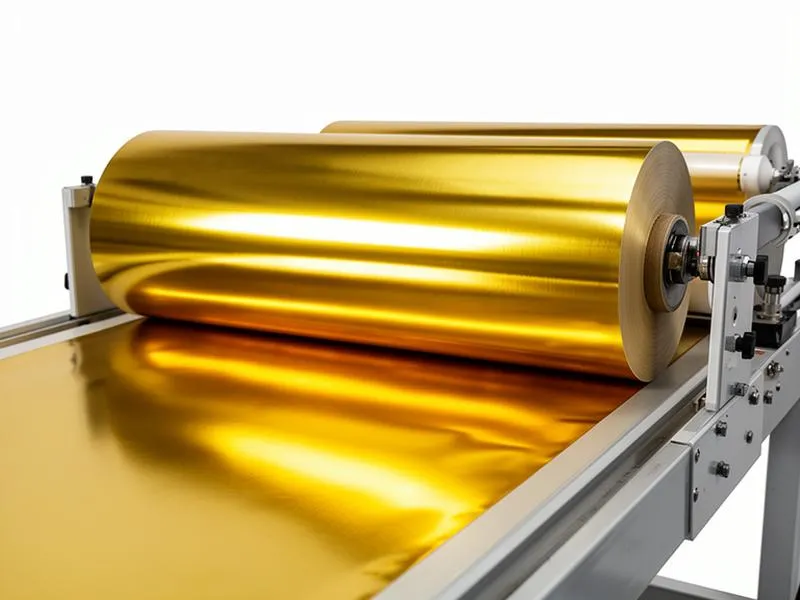
Premium Metallic Gold Hot Stamping Foil
Ultra-bright metallic gold foil with mirror-like reflection for premium packaging and label applications.
View product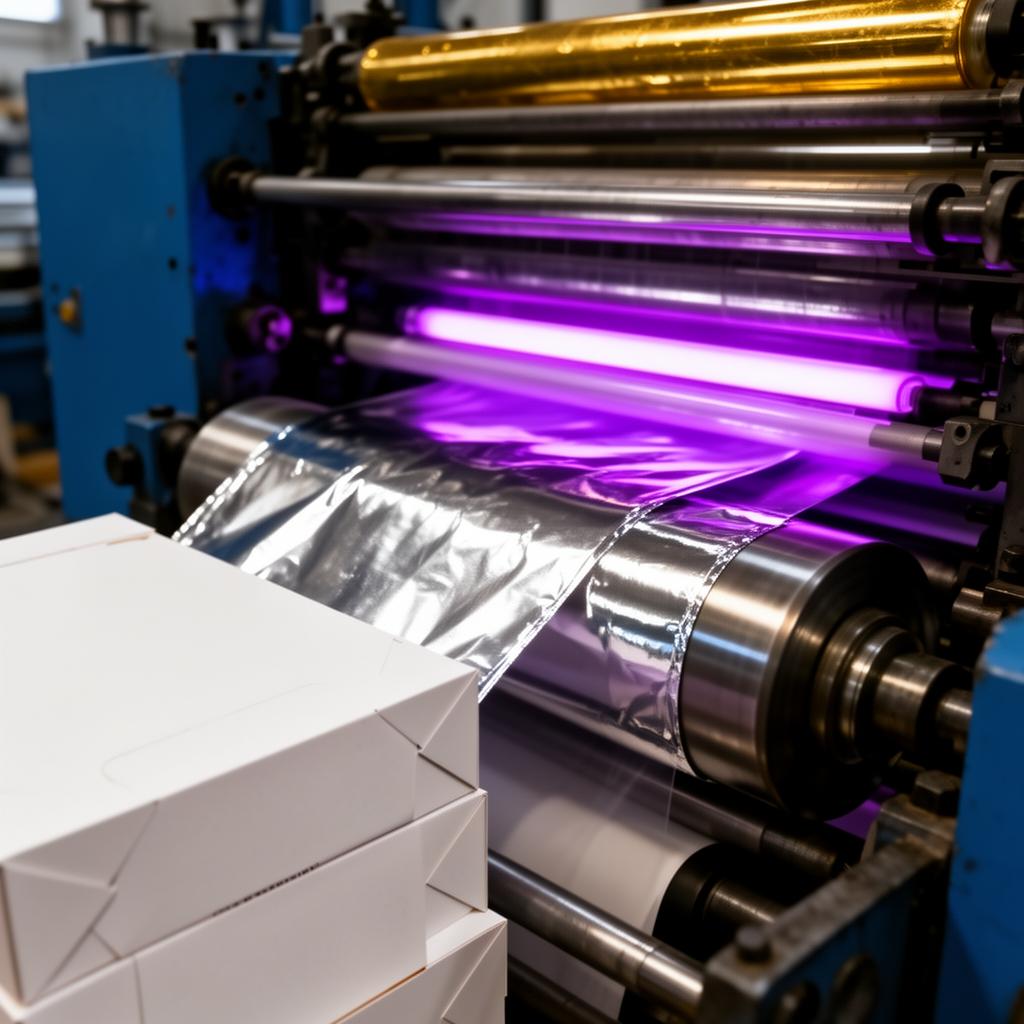
Cold Stamping Foil
Cold stamping foil for inline UV flexo and offset presses — no heat, no dies, up to 150 m/min with metallic, holographic and pigmented finishes.
View product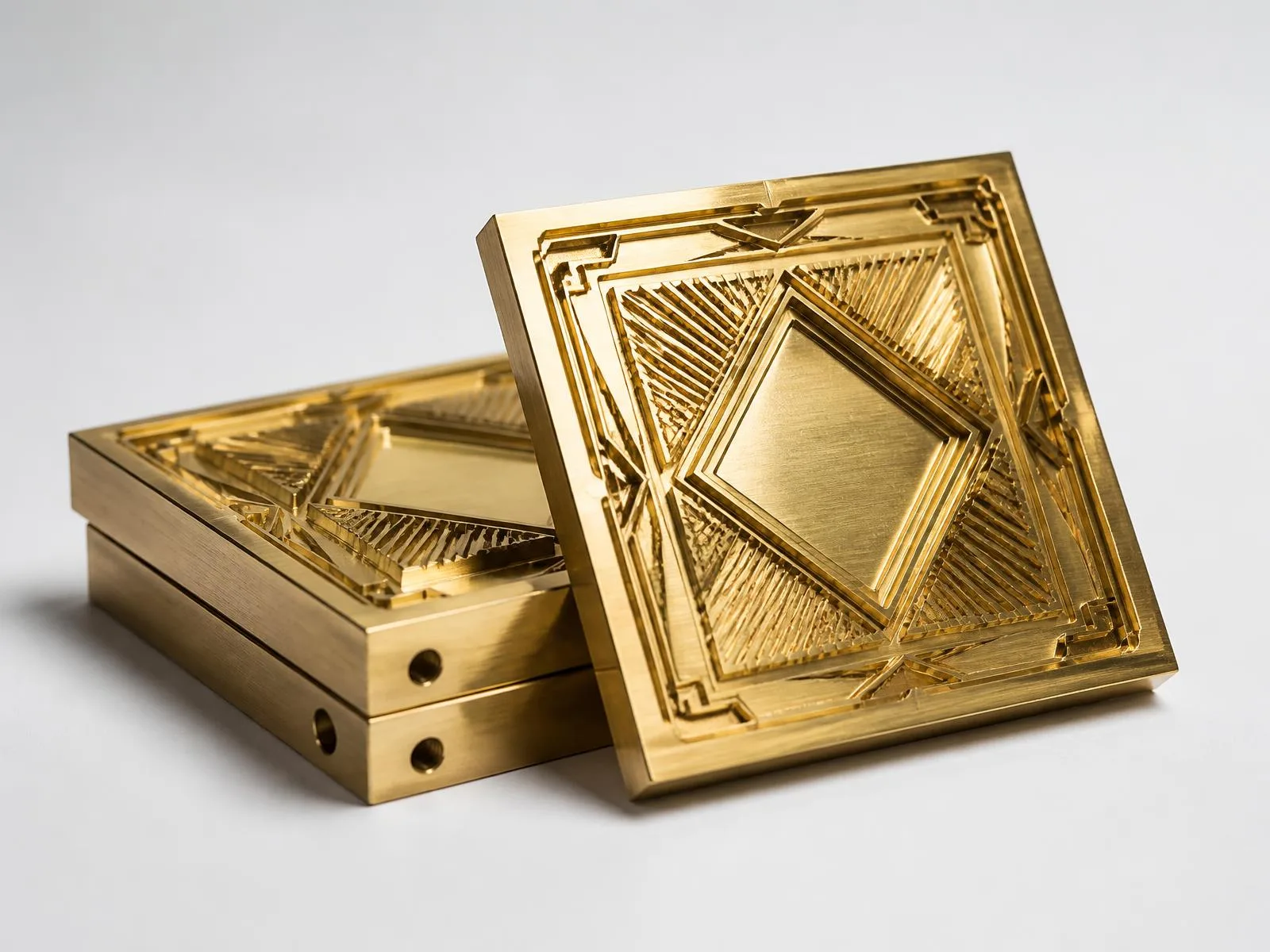
Brass & Magnesium Hot Stamping Dies
Engraved brass and magnesium stamping dies made to your artwork — the tooling that decides foil edge quality.
View productRelated Articles
View allTechnical Knowledge · May 21, 2026
Hot Stamping Foil Adhesion Testing: Guide
Ensure quality with our hot stamping foil adhesion testing guide. Includes ASTM tape pull, crockmeter, and rub methods for various substrates. Gain insights into pass/fail thresholds.
Technical Knowledge · May 21, 2026
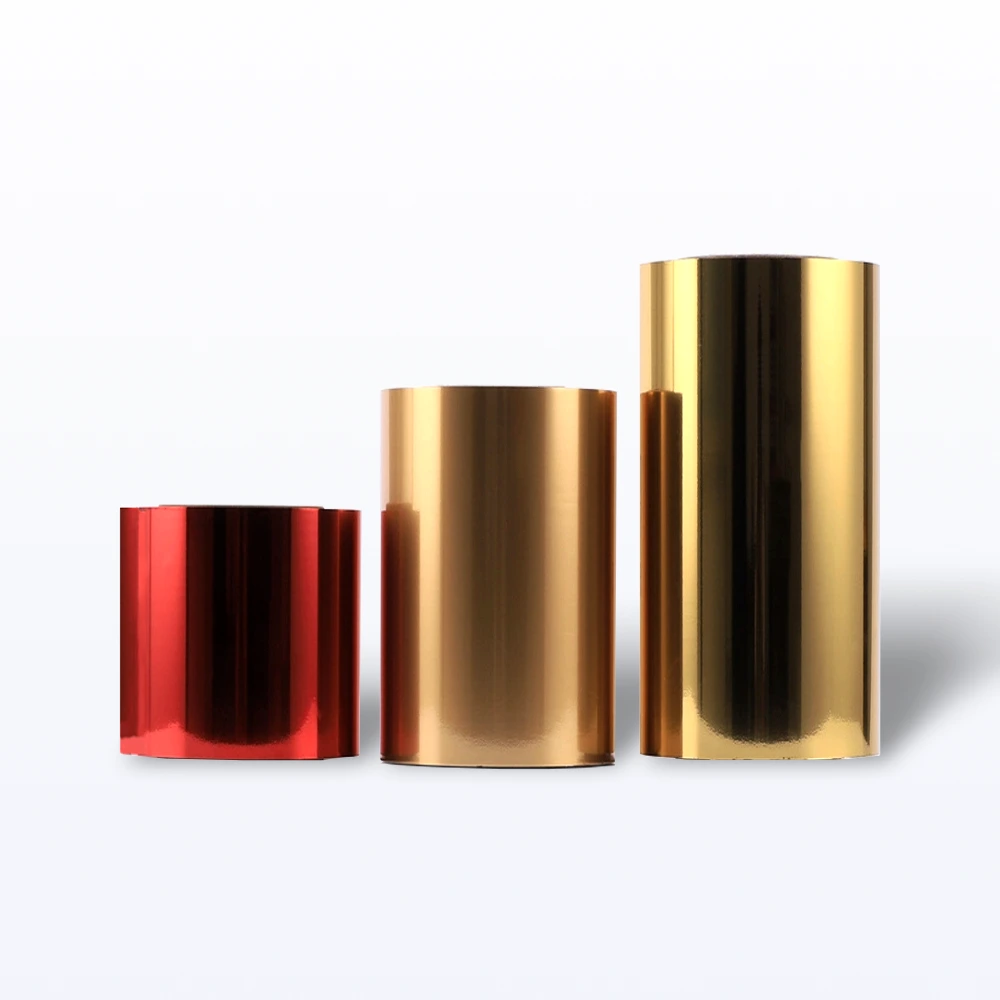
Hot Stamping Foil Defects Troubleshooting Guide
Troubleshoot common hot stamping foil defects like pinholes and ghosting. This guide helps press operators achieve optimal quality and reduce waste.
Technical Knowledge · Jun 1, 2026
Gold Foil Stamping for Luxury Packaging – All You Need
Technical guide to gold foil stamping for luxury packaging. Explore shades, finishes, and how to specify the right gold foil for your brand.
Ready to source foil stamping and die-cutting from one supplier?
From stamping foils to post-press machines and die-cutting consumables — get factory-direct pricing and free samples.