
Achieve durable textile hot stamping results on cotton, polyester, and leather. Our guide ensures 20+ wash-cycle durability and efficient production.
Table of Contents
- The Anatomy of Industrial Textile Hot Stamping Foil
- Technical Specifications: Textile vs. Leather Application
- Applying Foil to Cotton: Maximizing Wash-Fastness
- Polyester and Blended Fabrics: Managing Heat Sensitivity
- Leather Stamping: Precision and Depth
- Deep Embossing vs. Surface Stamping
- Common Challenges and Technical Solutions
- Optimize Your Finishing Line
- Specify Your Project
- Frequently Asked Questions
For high-end apparel manufacturers and luxury leather goods producers, achieving a durable, high-luster finish requires more than just standard films. Selecting the correct textile hot stamping foil is the difference between a premium product that withstands repeated laundering and a low-quality garment that cracks and peels after one wash cycle. In the competitive worlds of fast fashion and industrial upholstery, technical specifications like micron thickness, carrier release layers, and adhesive chemistry determine the ultimate success of the print. This guide provides a deep dive into the engineering behind textile foils, focusing on the distinct requirements of cotton, polyester, and genuine or synthetic leathers to ensure your production line maintains 100% quality standards.
The Anatomy of Industrial Textile Hot Stamping Foil
Unlike standard graphic arts foils, textile hot stamping foil is engineered as a multi-layer composite designed to handle the elasticity and texture of fabrics. A typical high-performance foil consists of a 12-micron to 16-micron PET (Polyethylene Terephthalate) carrier film. Beneath this carrier lies a release layer, a color/lacquer layer, and a specialized heat-activated adhesive layer.
The success of the application depends heavily on the adhesive’s compatibility with the substrate's surface energy. For cotton, the adhesive must penetrate the fibrous peaks, whereas, for polyester and blended synthetics, it must resist the migration of plasticizers. When choosing between different stamping foils, manufacturers must prioritize wash-fastness (ISO 105-C06 standard) to ensure the metallic finish does not oxidize or detach during domestic laundering.
Technical Specifications: Textile vs. Leather Application
Temperature, pressure, and dwell time are the three pillars of hot foil application. For industrial scale-up, using a fully automatic hot stamping machine ensures consistency that manual heat presses cannot match. Below are the standard technical benchmarks for the most common materials in the industry.
| Parameter | 100% Cotton | Polyester / Blends | Genuine / PU Leather |
|---|---|---|---|
| Carrier Film Thickness | 12-15 Microns | 12-16 Microns | 16-19 Microns |
| Stamping Temp (°C) | 150°C - 170°C | 130°C - 150°C | 110°C - 130°C |
| Dwell Time (Seconds) | 0.5 - 1.5s (High Speed) | 0.8 - 2.0s | 1.0 - 3.0s |
| Pressure (kgf/cm²) | 4.0 - 5.5 | 3.0 - 4.5 | 2.0 - 4.0 |
| Peel Method | Cold Peel (Recommended) | Cold or Warm Peel | Cold Peel Only |
Applying Foil to Cotton: Maximizing Wash-Fastness
Cotton is a highly absorbent, porous substrate. When using textile hot stamping foil on 100% cotton or canvas, the primary challenge is the "hairy" nature of the fibers. If the foil adhesive is too thin, it will not bridge the gaps between fibers, leading to a "speckled" appearance after the first wash.
- Screen Printed Underbase: Most industrial applications involve screen printing a clear textile adhesive or plastisol ink first. The foil is then heat-transferred onto this adhesive layer.
- Wash Resistance: High-grade textile heat transfer foil must endure 40°C to 60°C wash cycles. Our foils are tested to withstand 20+ cycles without significant loss of brilliance.
- Soft Hand Feel: To avoid a "stiff" plastic feel, the foil must be thin enough to move with the garment. A 12-micron PET carrier with a soft-resin lacquer is ideal here.
Polyester and Blended Fabrics: Managing Heat Sensitivity
Polyester and synthetic blends are prone to "heat bruising" or scorching if the stamping temperature exceeds 160°C for too long. For these materials, we recommend using a washable metallic foil with a lower activation temperature (around 135°C). This protects the integrity of the synthetic fibers while ensuring a bond that can handle the elasticity of the fabric.
When working with large batches of polyester sportswear, precision is key. Utilizing an XG1080G fully automatic hot stamping machine allows for micro-adjustments in pressure, preventing the "flattening" of the polyester grain which often results in visible rectangles around the stamped design.
Leather Stamping: Precision and Depth
Leather stamping foil requires a different chemical formulation. Whether you are stamping genuine cowhide, lambskin, or high-end PU (Polyurethane), the surface is often treated with oils or waxes that can repel standard adhesives. Leather foils use a high-bond resin designed to bite into these coatings.
Deep Embossing vs. Surface Stamping
In the luxury goods sector, designers often combine foiling with debossing. By using a tym-1060 automatic embossing machine, you can achieve a "sunken" gold or silver effect. This physical indentation protects the foil from surface abrasion, making it ideal for wallets, belts, and luxury handbag branding. The dwell time is typically increased to 2-3 seconds at a lower temperature of 115°C to avoid "burning" the leather's natural oils.
Common Challenges and Technical Solutions
Industrial production environments face three primary issues when implementing textile hot stamping foil:
- Foil Flaking: Often caused by insufficient pressure or an incompatible underbase adhesive. Ensure your line pressure is at least 4.0 kgf/cm².
- Poor Definition (Bridging): If the foil does not release cleanly, check the die temperature. If it is too high, the adhesive melts beyond the die edges. Lowering the temp by 5°C increments usually resolves this.
- Migration: In polyester sublimation prints, the dyes can migrate into the foil, changing its color. Use a "Sublimation-Resistant" foil grade with an integrated barrier layer.
For decorative labels that accompany these garments, manufacturers often switch to synthetic PP or PET self-adhesive labels to ensure the branding on the packaging matches the quality of the foil on the garment.
Optimize Your Finishing Line
To maximize efficiency, the roll size of your foil should match your machinery perfectly. Using an AF-1350 high-speed slitting machine allows operators to customize foil widths from jumbo rolls to specific ribbon sizes, reducing edge waste by up to 15%. This is critical when running high-volume orders of metallic gold or holographic rainbow foil where material costs are significant.
Specify Your Project
Whether you are producing high-stretch athletic wear or luxury leather accessories, selecting the right textile hot stamping foil is the foundation of a high-quality finish. All-in Pack provides industrial-grade foils tested for wash-fastness, durability, and high-speed application. Contact our technical team today to request a 12-micron sample or detailed TDS for your specific fabric substrate at All-in Pack Product Inquiry.
Frequently Asked Questions
Quick answers about textile-foil.
Companion Products
Specs and samples for the products discussed in this article.
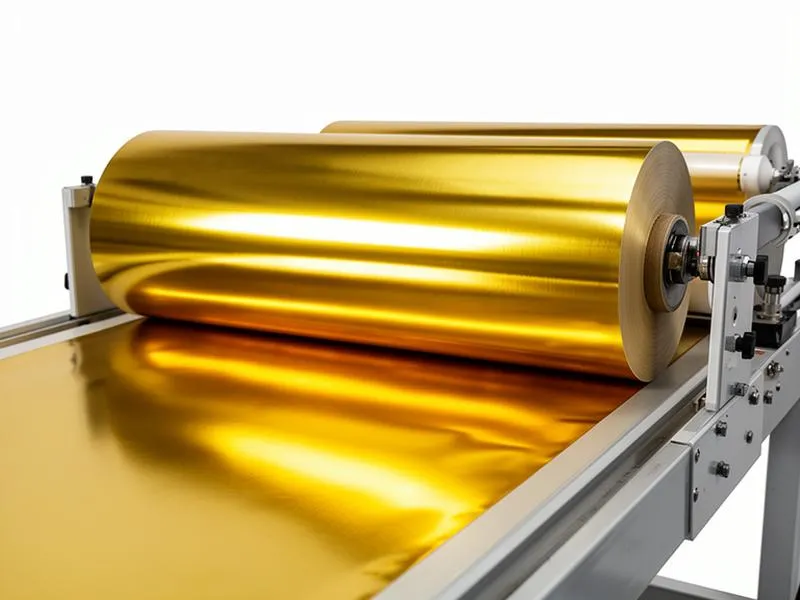
Premium Metallic Gold Hot Stamping Foil
Ultra-bright metallic gold foil with mirror-like reflection for premium packaging and label applications.
View product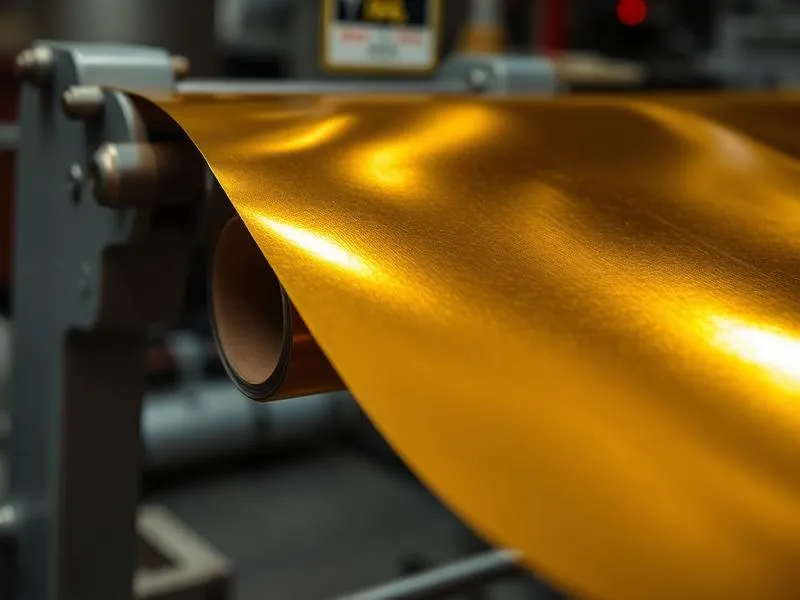
Textile Heat Transfer Foil
Textile heat transfer foil for cotton, polyester, nylon and blends. 15µm PET, 130–160°C heat press, 3–5 bar, 50+ wash cycles at 40°C. Metallic, matte, holographic. MOQ 30 rolls.
View product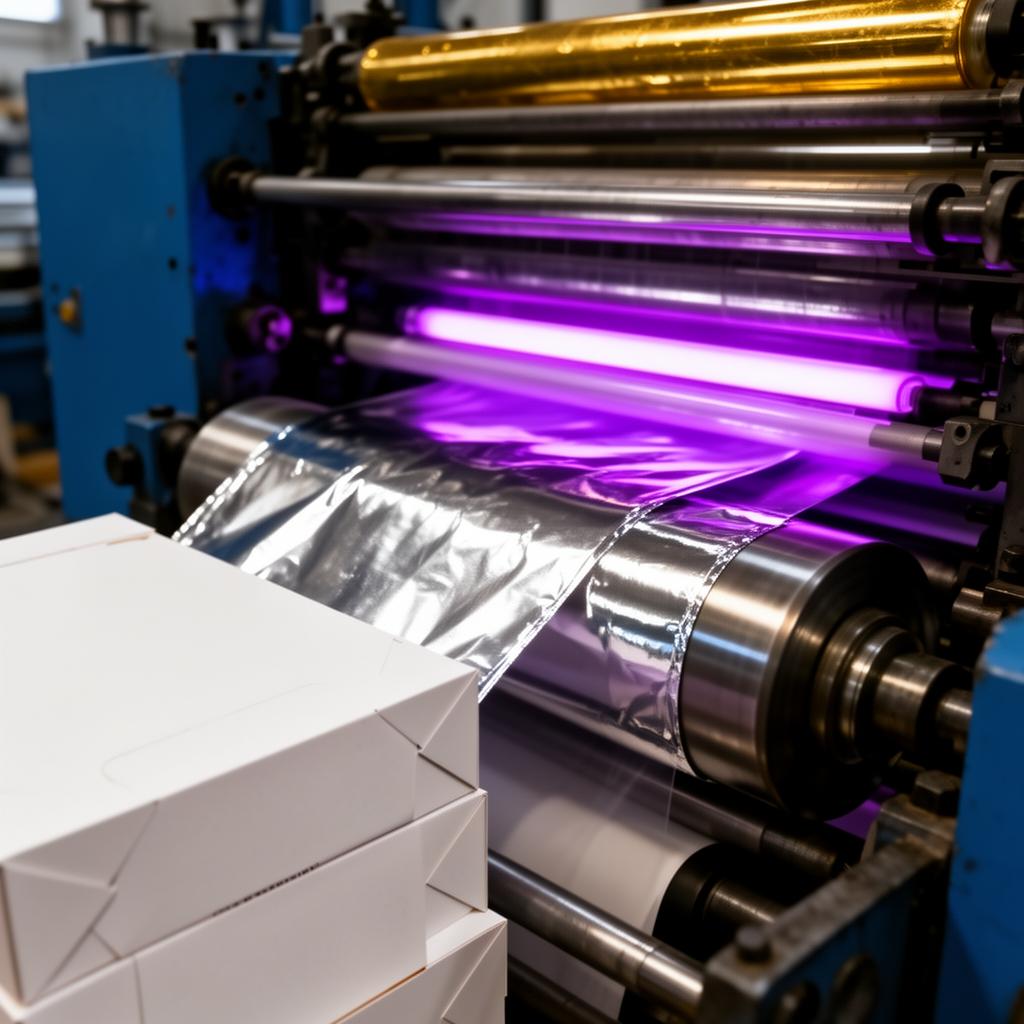
Cold Stamping Foil
Cold stamping foil for inline UV flexo and offset presses — no heat, no dies, up to 150 m/min with metallic, holographic and pigmented finishes.
View productRelated Articles
View allTechnical Knowledge · May 22, 2026
Hot Stamping Foil: PET, Release, Color, Adhesive Layers
Discover the 4 key layers of hot stamping foil: PET carrier, release, color, and adhesive. Understand how each layer works for optimal performance.
Technical Knowledge · Aug 25, 2026
Foil Stamping vs Digital Foil vs Cold Foil: Which Method Actually Wins on Cost?
An honest four-part cost comparison of hot foil stamping, cold foil and digital foil — tooling, material, machine time and changeover — plus the run-length crossover points, substrate limits and lower-cost alternatives to foil altogether.
Technical Knowledge · Jul 28, 2026
Fluorescent Hot Stamping Foil: What It Is, How It Works, and When to Use It
A practical guide to fluorescent hot stamping foil — pigment chemistry, neon and UV-reactive grades, applications, lightfastness limits, and the five things to check before ordering for apparel, packaging or events.
Ready to source foil stamping and die-cutting from one supplier?
From stamping foils to post-press machines and die-cutting consumables — get factory-direct pricing and free samples.