
An honest four-part cost comparison of hot foil stamping, cold foil and digital foil — tooling, material, machine time and changeover — plus the run-length crossover points, substrate limits and lower-cost alternatives to foil altogether.
Table of Contents
- The three methods in one paragraph each
- The four cost components
- Tooling
- Foil material per impression
- Machine time
- Setup and changeover
- The crossover points
- When the answer is "don't use foil"
- Printing on aluminium with an offset press
- What "digital gold foil" actually means
- The four questions I ask customers
- Frequently Asked Questions
The question I get asked more than any other is some version of: what is the most cost-effective way to put foil on my packaging? The answer is genuinely complicated, and most published comparisons oversimplify it because they are written by equipment vendors. A digital foil supplier says digital is the future. A die maker says nothing beats hot stamping. A press manufacturer says cold foil answers everything. Each is partly right and each omits the scenarios where their technology loses.
Selling foil into all three methods removes that incentive. What follows is the cost structure as converters actually experience it.
The three methods in one paragraph each
Hot foil stamping. A heated die presses foil against the substrate; heat activates the adhesive and the decorative layer transfers in the die's shape. Machines run from around USD 800 manual units to USD 70,000-plus automatics, dies from USD 50 to 800. The oldest and still the highest-volume method worldwide — see the hot stamping guide for process detail.
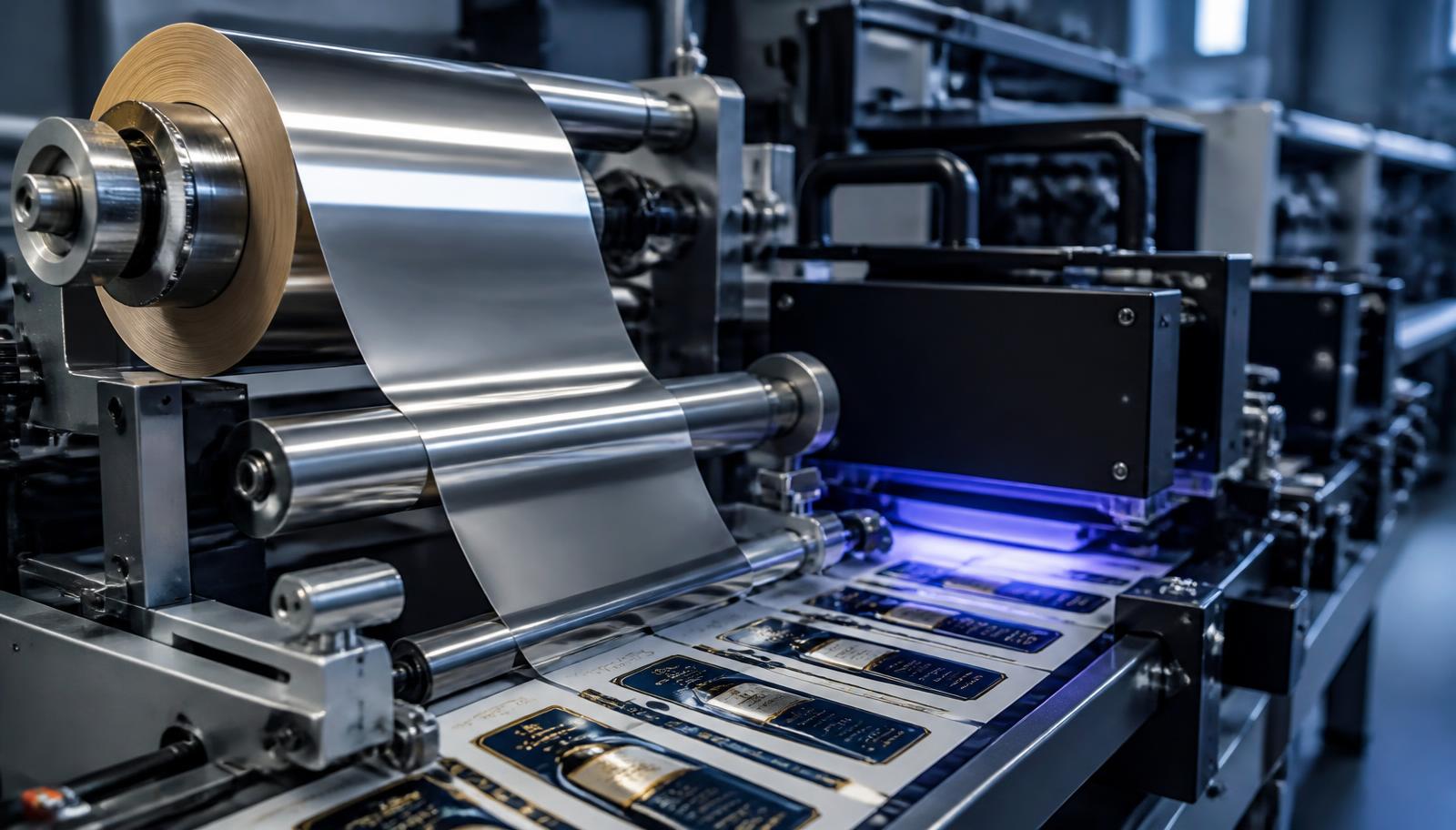
Cold foil. A UV-curable adhesive is printed through a flexo or offset plate, the foil web contacts it, a UV lamp cures, and the carrier peels away. It runs inline with the press — no separate machine, no separate pass, no heated die. The cold foil printing guide covers the five-step workflow, and cold stamping foil lists the grades.
Digital foil. No die, no plate. Either toner-based — a laser printer lays toner that acts as adhesive, then a foil laminator bonds the foil to it, the principle behind digital toner-reactive foil — or digital adhesive deposition, where systems from Scodix, MGI or Kurz jet UV adhesive at high resolution and foil inline, at USD 150,000 to 500,000-plus.
The four cost components
Foil decoration cost is not one number. It is tooling, material, machine time and changeover, and each method wins a different one.
Tooling
| Method | Tooling cost per design | Lead time |
|---|---|---|
| Hot stamping (brass die) | USD 80–800 | 3–7 days |
| Hot stamping (magnesium die) | USD 30–150 | 1–3 days |
| Cold foil (flexo/offset plate) | USD 50–200 | 1–2 days |
| Digital foil | 0 | Instant |
Digital wins unconditionally. Zero tooling means zero financial barrier to a new design, a revision or a one-off. Hot stamping loses hardest — every design needs its own die, and complex brass work costs a week. The hot foil stamping dies guide explains what drives that price.
Foil material per impression
| Method | Web utilisation | Foil cost/m² | Cost per 100×100 mm stamp |
|---|---|---|---|
| Hot stamping (standard) | 55–70% | USD 3.50–5.00 | USD 0.05–0.09 |
| Hot stamping (with foil saving) | 70–85% | USD 3.50–5.00 | USD 0.04–0.07 |
| Cold foil | 85–92% | USD 3.00–4.50 | USD 0.03–0.05 |
| Digital foil (toner) | 90–95% | USD 8.00–15.00 | USD 0.08–0.15 |
| Digital foil (Scodix/MGI) | 85–92% | USD 6.00–10.00 | USD 0.06–0.10 |
Cold foil wins on material: adhesive lands only where needed and utilisation approaches 90 percent, on a foil formulation that is simpler and cheaper to make. Digital loses despite excellent utilisation, because digital-compatible foil chemistry costs two to three times conventional foil. Hot stamping sits between, and the spread inside it is real — programmable foil advance on a machine like the XG1080G automatic hot stamping machine cuts foil waste 30 to 50 percent against a basic press.
Machine time
| Method | Speed | Machine/hr | Labour/hr | Cost per 1,000 impressions |
|---|---|---|---|---|
| Hot stamping (semi-auto) | 1,500/hr | USD 3–5 | USD 8–15 | USD 7–13 |
| Hot stamping (full auto) | 4,000–5,000/hr | USD 8–12 | USD 8–15 | USD 3–5 |
| Cold foil (inline flexo) | 8,000–15,000/hr | USD 15–25 | USD 8–15 | USD 1.50–3.00 |
| Digital foil (toner) | 200–500/hr | USD 2–4 | USD 8–15 | USD 20–40 |
| Digital foil (Scodix/MGI) | 1,000–3,000/hr | USD 20–35 | USD 8–15 | USD 10–17 |
Cold foil wins dramatically because it rides the press: no second pass, no second operator, no standalone machine to amortise beyond the foiling unit. Toner-based digital is the most expensive per impression here — cheap to buy, expensive to run at scale. Full-auto hot stamping stays competitive through the middle volumes; the hot foil blocking machine guide covers the machine classes.
Setup and changeover
| Method | Changeover time | Cost (labour + waste) |
|---|---|---|
| Hot stamping | 15–45 min (die + foil) | USD 15–50 |
| Cold foil | 10–20 min (plate) | USD 10–25 |
| Digital foil | 0–2 min (file) | USD 0–5 |
Digital wins this as decisively as tooling. On a converter running 8 to 15 jobs a shift, changeover can consume 20 to 30 percent of productive hours on a stamping machine — a cost that never appears on a per-square-metre quotation.
The crossover points
Digital foil wins under roughly 300 to 500 pieces per design, when design variety is high (personalised invitations, variable-data packaging, short-run promotion), and for prototyping — five samples of a new carton beats cutting a die for samples every time. The toner-reactive foil guide covers the practical setup.
Hot stamping wins from roughly 500 to 10,000 pieces, whenever substrate variety is wide (paper, board, film, leather, fabric, wood), whenever foil and emboss must happen in one pass, and whenever maximum edge sharpness is the brief.
Cold foil wins above roughly 10,000 pieces, when the converter already owns a flexo or offset press, when foil is one element of a multi-colour design that must register automatically, and across narrow-web labels generally — wine, spirits and premium cosmetics have made it the default. The cold foil cost breakdown works the break-even arithmetic in detail, and the hot vs cold foil comparison covers the quality trade-offs.
When the answer is "don't use foil"
Metallic ink. Silver or gold pigment in an ink vehicle, printed as another station. Less brilliant than vacuum-metallised foil, far cheaper, and adequate for mass-market food packaging and promotional print.
Pre-metallised paper or board. The whole surface is metallic and you print over it, leaving the unprinted areas bright. Common in luxury tobacco and premium cosmetics cartons; it removes the foiling step entirely but restricts substrate choice.
Metallic-pigment UV coating. Aluminium flake or interference mica in a UV coating applied inline by flexo or screen. Subtler than foil, very fast, common in mid-tier cosmetics and food packaging.
None matches genuine foil's mirror reflectivity or the colour-shifting behaviour of holographic grades, but where budget outranks peak impact they are legitimate choices.
Printing on aluminium with an offset press
Not directly. Packaging-gauge aluminium at 6 to 15 micrometres is non-absorbent, unstable under tension and tears. What offset presses can do is apply cold foil inline through an adhesive plate — the Kurz DM-JETLINER family and equivalents — or print process inks onto pre-metallised board, where the aluminium acts as a built-in fifth colour and UV-curing or oxidative inks replace heatset.
What "digital gold foil" actually means
True digital foil (toner transfer). Real metallic foil bonded to toner. On 300 gsm smooth stock with good laser output and a properly set laminator, it approaches hot stamping quality on simple designs. Entry cost is a quality laminator plus a good laser printer, roughly USD 2,000 to 8,000.
Metallic toner. Some Konica Minolta and Ricoh commercial presses print a metallic-looking finish with no foil at all. Lower reflectivity, lowest cost per sheet.
Inkjet metallic ink. Least reflective, widest format range; used for signage, POS and large mockups.
If you need genuine foil reflectivity on short runs, the toner route is the practical entry point. If "metallic-looking" is enough, metallic toner may be all you need.
The four questions I ask customers
- How many pieces per design? Under 500 → digital. 500–10,000 → hot stamping. Over 10,000 → cold foil if there is a press, automatic hot stamping if not.
- What substrate? Paper and board → all three. Plastic film → hot stamping or cold foil. Leather, fabric, wood → hot stamping only. Cross-check the foil-substrate compatibility matrix.
- Do you need embossing too? Yes → hot stamping, the only method that combines both in one pass.
- What does the job mix look like? Many short runs daily → digital. A few long runs weekly → hot stamping or cold foil. High variety and high volume → run two methods.
No method is universally cheapest. Get the match right and foil adds value at manageable cost; get it wrong and you either overpay per impression or drown in tooling and changeover.
For supplier shortlisting, see the Top 10 Chinese hot stamping foil manufacturers and the Top 10 Chinese cold foil manufacturers. To have your own artwork costed across all three methods, send us the run length and substrate.
Frequently Asked Questions
Quick answers about foil stamping.
Companion Products
Specs and samples for the products discussed in this article.
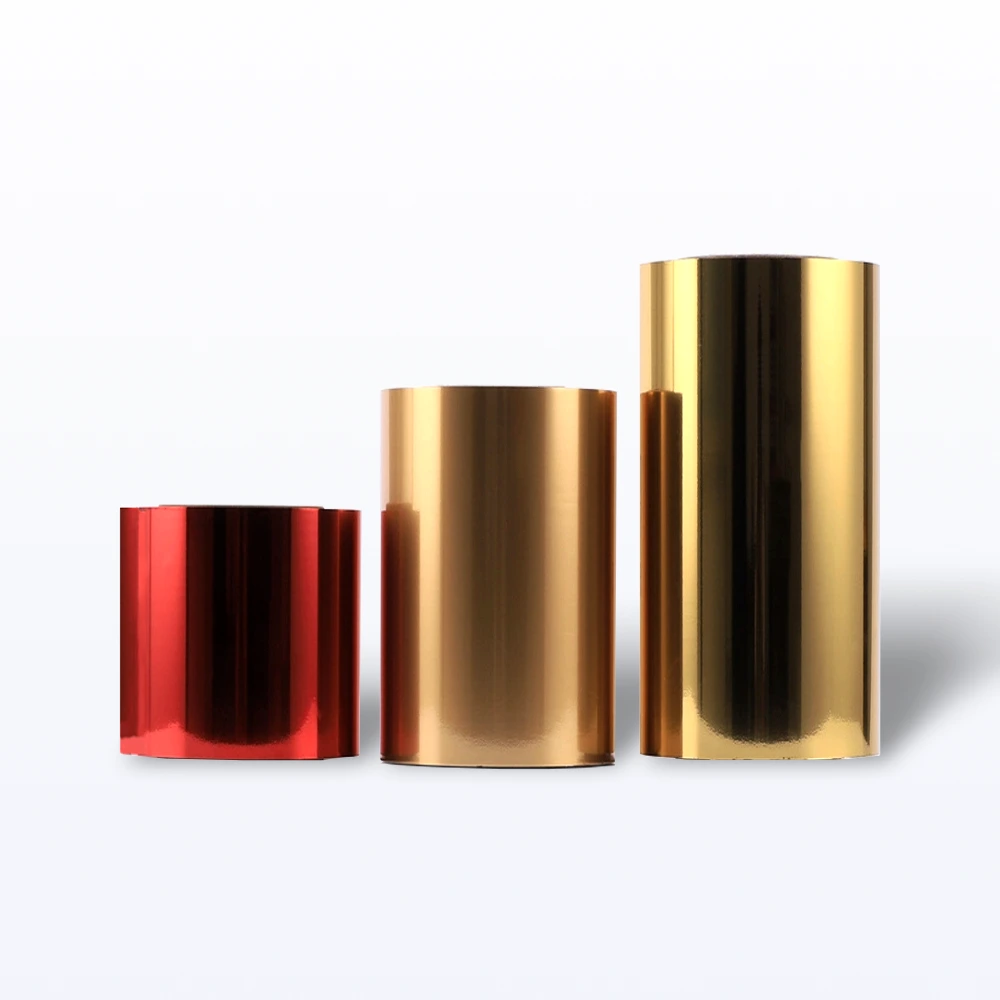
Digital Toner Reactive Foil
Digital toner-reactive foil for laser printers — bonds to HP/Konica/Xerox toner via a 110–130°C laminator, no dies. Gold, silver, rose-gold, holographic. 12µm PET, 120m rolls, MOQ 50 rolls.
View product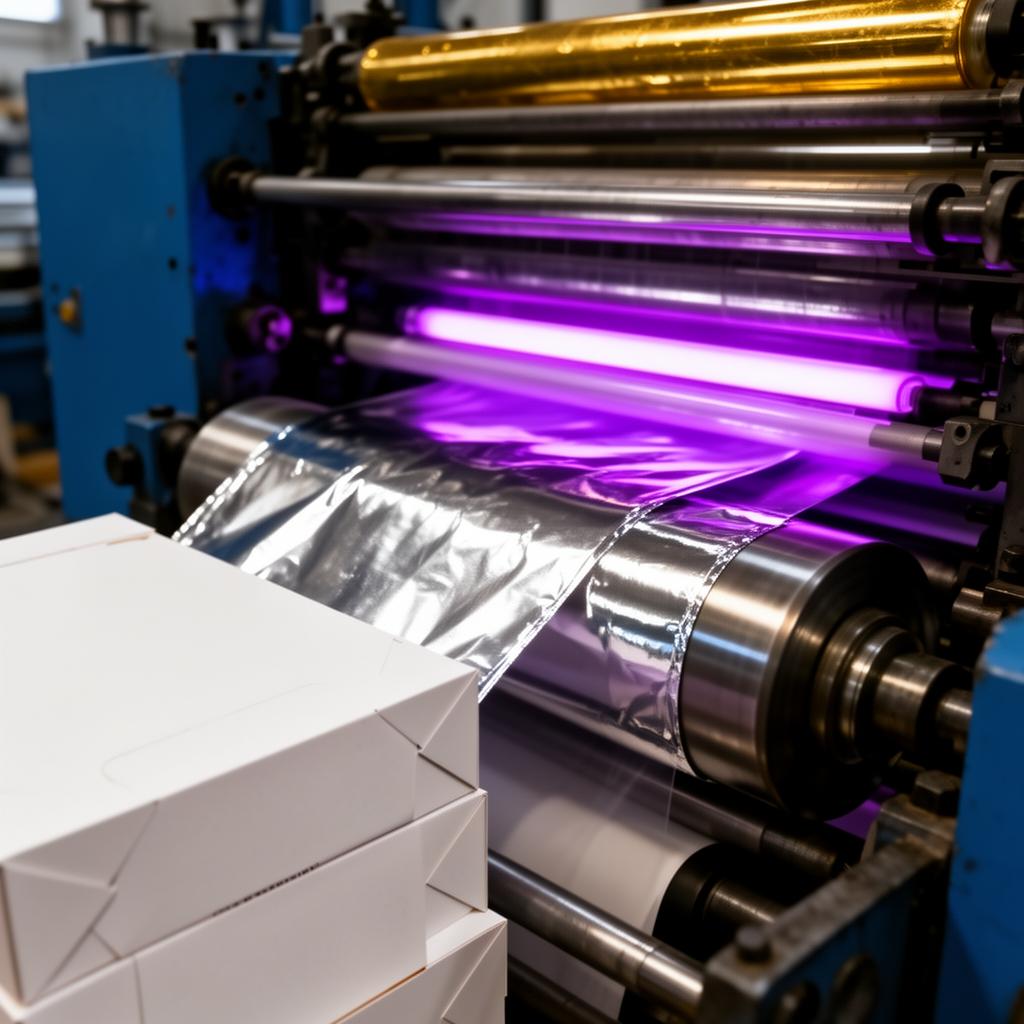
Cold Stamping Foil
Cold stamping foil for inline UV flexo and offset presses — no heat, no dies, up to 150 m/min with metallic, holographic and pigmented finishes.
View product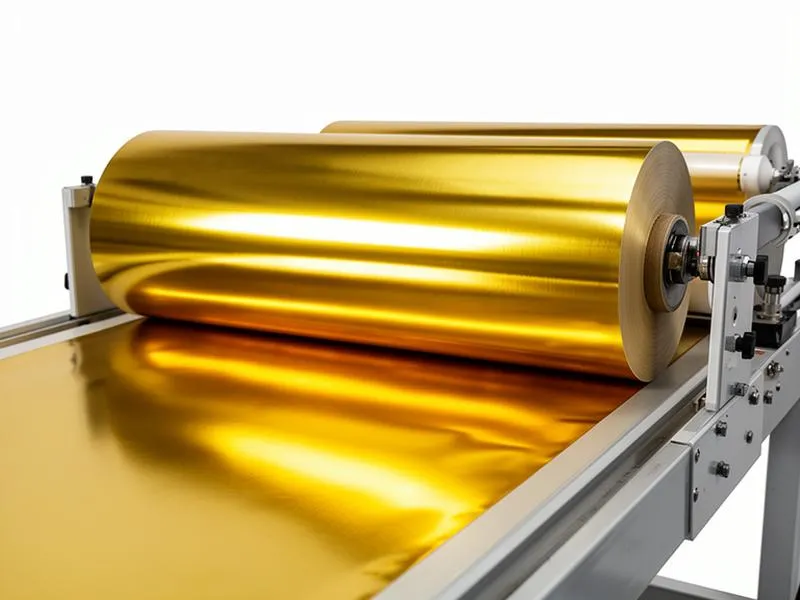
Premium Metallic Gold Hot Stamping Foil
Ultra-bright metallic gold foil with mirror-like reflection for premium packaging and label applications.
View productRelated Articles
View allTechnical Knowledge · Apr 21, 2026
Hot Foil vs Cold Foil vs Digital Foil: 2026 Comparison
Compare hot foil, cold foil, and digital foil to find the best foiling method for your packaging needs. This guide offers insights on metallic finishes.
Technical Knowledge · Aug 25, 2026
Is Cold Foil Actually Cost Effective? A Real Cost Breakdown (2026)
A line-by-line cost comparison of cold foil against hot foil and digital foil — foil consumption, UV adhesive, die and make-ready charges, press time and waste — plus the run-length break-even point where cold foil stops being the cheaper option.
Industry News · Aug 24, 2026
Cold Foil Global Market Analysis 2026: What the Numbers Don't Tell You
A supplier-side read of the global cold foil market in 2026: market size, end-use verticals, regional demand, equipment concentration and where the segment is actually heading — with the confidence levels stated honestly.
Ready to source foil stamping and die-cutting from one supplier?
From stamping foils to post-press machines and die-cutting consumables — get factory-direct pricing and free samples.