
Discover hot stamping foil for automotive interiors. This guide covers materials, specs, and OEM tests for durable car trim and logo decoration.
Table of Contents
- Why automotive interiors rely on hot stamping foil
- Key automotive substrates and matching foil specs
- 1. ABS & PC/ABS (dashboard trims, A/C vents, switch panels)
- 2. Polypropylene (PP) — door cards, pillar trims
- 3. TPU & soft-touch coatings
- 4. IMD/IML film inserts (curved displays, capacitive panels)
- The qualification tests every automotive foil must pass
- Process: hot stamping vs. cold foil vs. digital foil for car parts
- Choosing the right hot stamping machine for interior parts
- Common defects and how to fix them
- Sourcing & lead times in 2026
- Frequently Asked Questions
Why automotive interiors rely on hot stamping foil
From dashboard trims and door panels to gear-shift bezels and brand logos, modern car interiors use hot stamping foil to deliver chrome, brushed-metal, wood-grain and matte black finishes without electroplating. Compared with paint or chrome plating, foil decoration is solvent-free, faster to retool for new model years, and survives the harsh thermal cycles inside a parked vehicle (cabin temperatures reach 80–95 °C in direct sun).
Tier-1 interior suppliers in 2026 are standardizing on three foil families:
- Heat-resistant decorative foil — for ABS, PC/ABS and PP injection-molded trims
- IMD/IML transfer foil — for in-mold decoration of complex 3D parts
- Soft-touch / matte foil — for premium tactile surfaces on door grabs and consoles
Key automotive substrates and matching foil specs
1. ABS & PC/ABS (dashboard trims, A/C vents, switch panels)
The most common interior substrate. Use a premium metallic hot stamping foil with an acrylic-modified release layer. Recommended process window: stamping temp 130–160 °C, dwell 0.6–1.2 s, pressure 4–6 bar. The size coat must pass cross-cut adhesion (ISO 2409, Gt0–Gt1) after a 240 h heat-aging cycle at 90 °C.
2. Polypropylene (PP) — door cards, pillar trims
PP has very low surface energy (≈30 mN/m), so it needs a flame- or plasma-treated surface and a PP-specific foil grade with a polyolefin-tie size coat. Without the right tie layer, foil will lift after the first 80 °C / 95 %RH humidity cycle.
3. TPU & soft-touch coatings
For padded armrests and steering-wheel inserts, brands increasingly specify a low-temperature foil (110–130 °C) so the foam substrate is not crushed. Pair with a matte silver foil or matte-black variant for the OEM premium look.
4. IMD/IML film inserts (curved displays, capacitive panels)
Here the foil is not stamped onto the finished part — instead, the decorative layer is printed/transferred onto a PET carrier film, formed, and back-injected with PC. Talk to our IMD specialists about adhesion-promoter recipes for PMMA face films.
The qualification tests every automotive foil must pass
Most OEM interior specs (VW PV 3964, GMW 14444, Toyota TSH 6502, Stellantis MS.90013) require the same core tests. Plan a 4–6 week qualification window for any new decorative foil introduction:
- Cross-cut adhesion (ISO 2409) — Gt0–Gt1 before and after aging
- Heat aging — 240–500 h at 90 °C
- Heat / humidity cycle — 10 cycles, -40 °C ↔ +80 °C / 95 %RH
- Xenon-arc weathering — 300–600 kJ/m² (interior parts), grayscale ≥ 4
- Sunscreen / hand-cream resistance — 24 h contact, no lift, no haze (this is where most cheap foils fail)
- Abrasion — Crockmeter or Taber CS-10, 200–1000 cycles
- VOC / fogging — DIN 75201 (G ≥ 90) and VDA 278
Process: hot stamping vs. cold foil vs. digital foil for car parts
For a deeper comparison see our 2026 foiling-method comparison. For automotive interiors the verdict is clear:
- Hot stamping — dominant for trims and logos. Best heat resistance and edge sharpness.
- Cold foil — used on labels and identification plates, not structural trims. Pair with UV flexo cold foil adhesive on warning-label converting lines.
- Digital foil — useful for low-volume prototyping and personalized badges (digital toner-reactive foil), but not yet OEM-qualified for high-temperature trims.
Choosing the right hot stamping machine for interior parts
3D curved trims need a contoured silicone die or a roll-on hot stamping head. Flat badges and emblems run on a fully automatic flatbed hot stamping machine. Production-line throughput typically lands at 600–1,800 parts/hour for door-trim inserts. See our machine selection guide for press-tonnage and dwell-time math.
Common defects and how to fix them
- Foil lifting at edges after heat aging → wrong size coat for substrate; switch to PC/ABS-specific grade.
- Hazing under sunscreen contact → top-coat too soft; specify a 2K-PU protected foil.
- Color shift on metallic chrome trims → vacuum-metallized layer too thin (<30 nm); request thicker Al deposition.
- Hot-stamp pinholing on PP → surface tension < 38 mN/m; add inline plasma treatment before stamping.
Sourcing & lead times in 2026
Automotive-grade foil rolls are typically supplied in 640 mm and 1,020 mm widths, 305 m or 610 m lengths, on 76 mm cores. Standard lead time from All-in Pack is 15–25 days for qualified colorways and 35–45 days for new custom shades that require Xenon retesting. Request a sample kit with our top six interior-grade foils (chrome, satin chrome, matte black, brushed silver, piano black, wood-grain brown) for your next program qualification.
Frequently Asked Questions
Quick answers about automotive interior.
Companion Products
Specs and samples for the products discussed in this article.
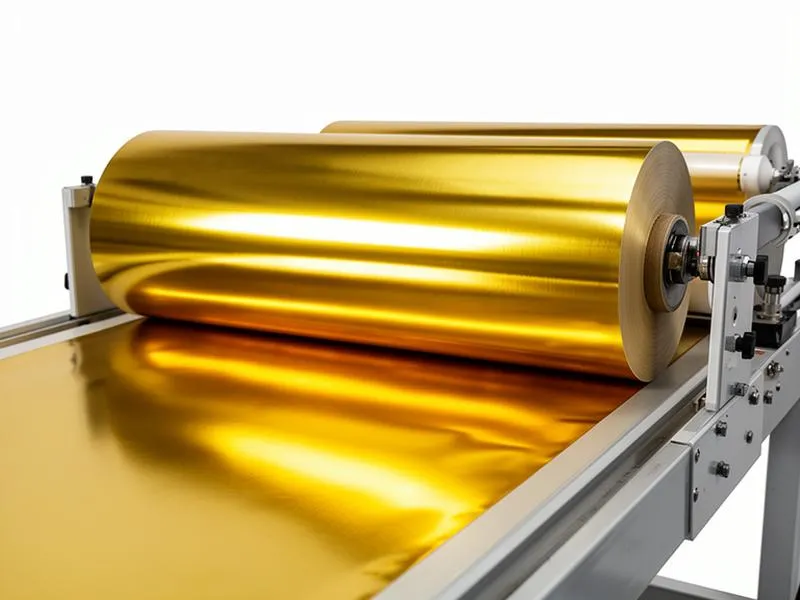
Premium Metallic Gold Hot Stamping Foil
Ultra-bright metallic gold foil with mirror-like reflection for premium packaging and label applications.
View product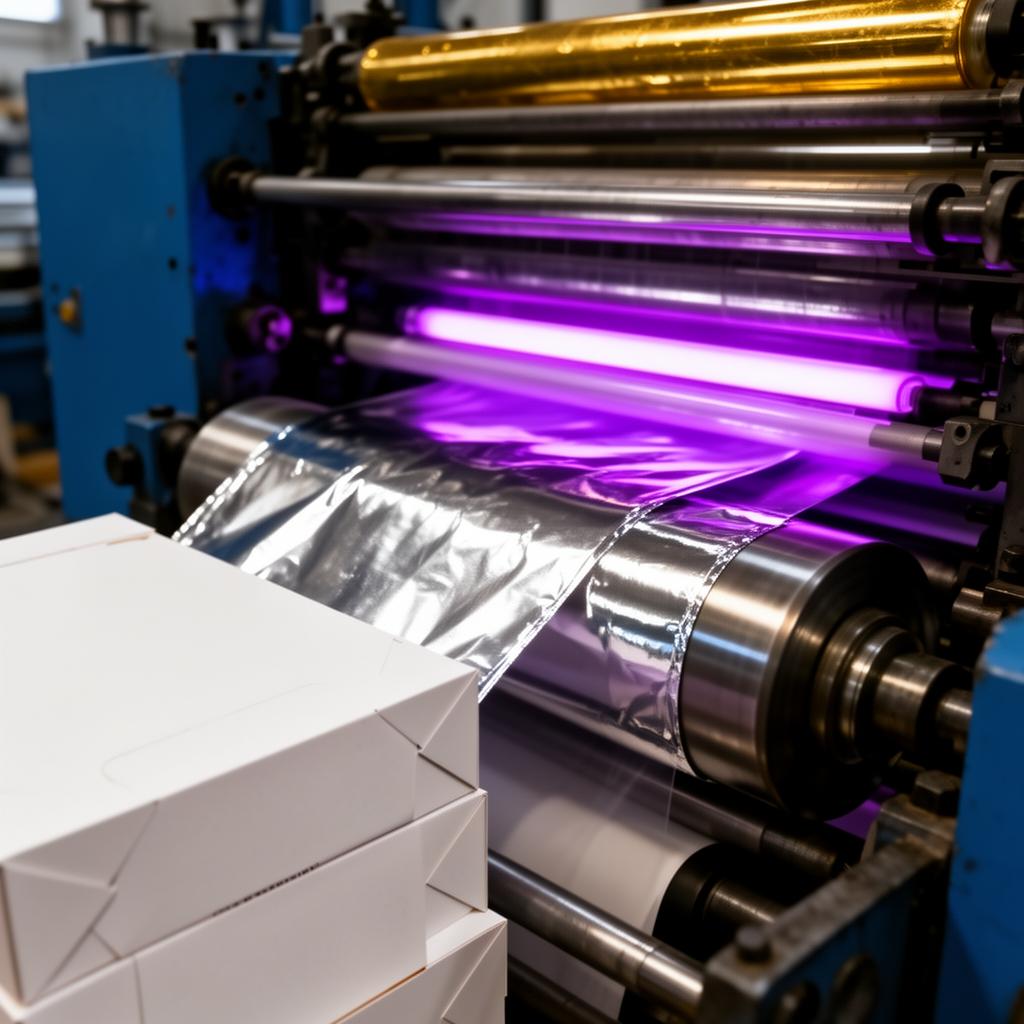
Cold Stamping Foil
Cold stamping foil for inline UV flexo and offset presses — no heat, no dies, up to 150 m/min with metallic, holographic and pigmented finishes.
View product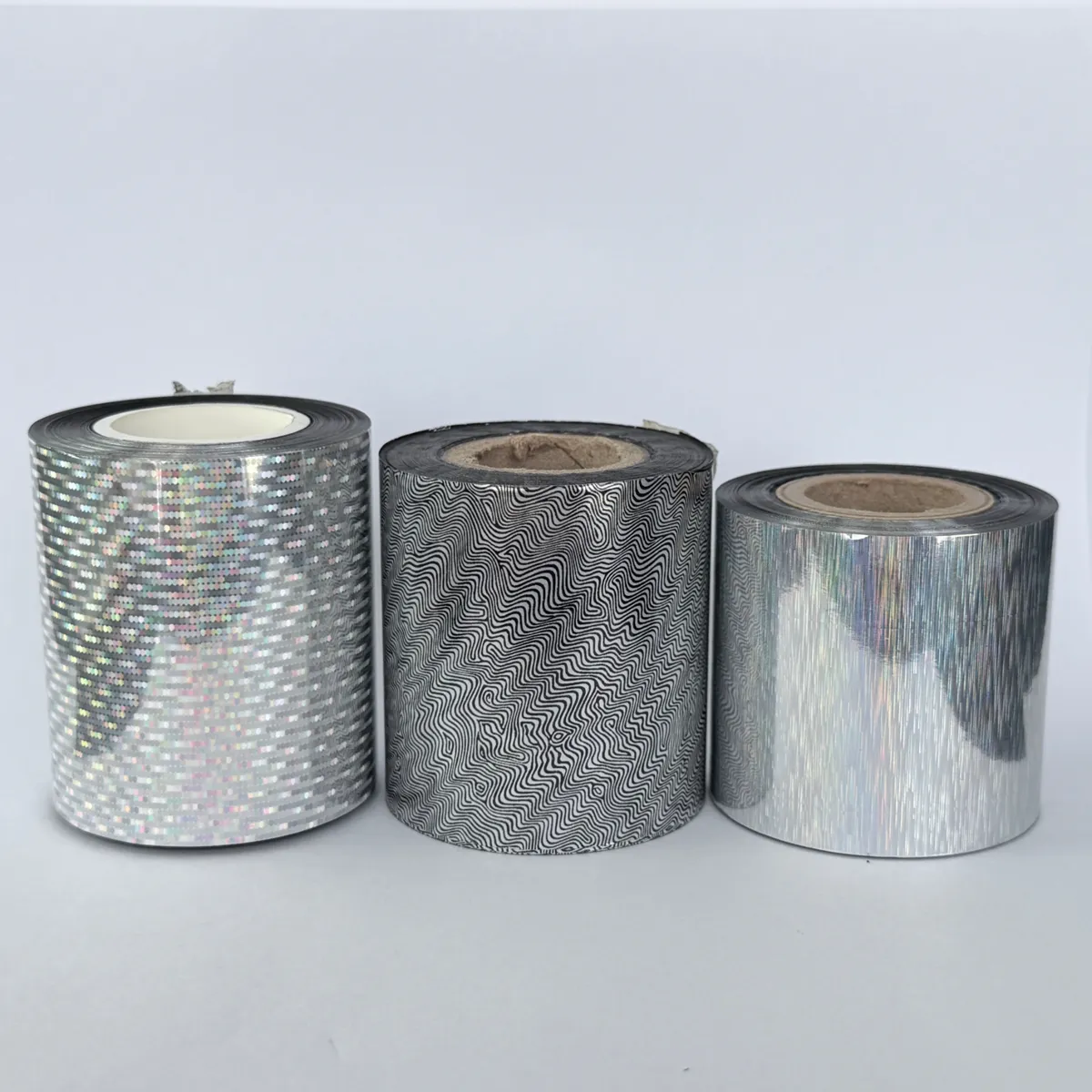
Scratch-Off Foil for Hot Stamping
High-opacity scratch-off foil for lottery tickets, gift cards and security labels — clean removal, no flaking, strong heat-seal bond to paper, cardstock and PVC.
View productRelated Articles
View all
Technical Knowledge · Apr 20, 2026
Hot Stamping Foil for Paper Packaging: Buyer's Guide
Choose hot stamping foil for paper packaging with confidence. This guide helps buyers match foil to substrates and optimize stamping for luxury cartons.
Technical Knowledge · Jul 28, 2026
Fluorescent Hot Stamping Foil: What It Is, How It Works, and When to Use It
A practical guide to fluorescent hot stamping foil — pigment chemistry, neon and UV-reactive grades, applications, lightfastness limits, and the five things to check before ordering for apparel, packaging or events.
Technical Knowledge · May 29, 2026
Hot Foil Stamping Machine: How to Use It
Set up, dial in temperature, pressure and dwell, and fix ghosting or flaking - 7-step operator guide.
Ready to source foil stamping and die-cutting from one supplier?
From stamping foils to post-press machines and die-cutting consumables — get factory-direct pricing and free samples.