
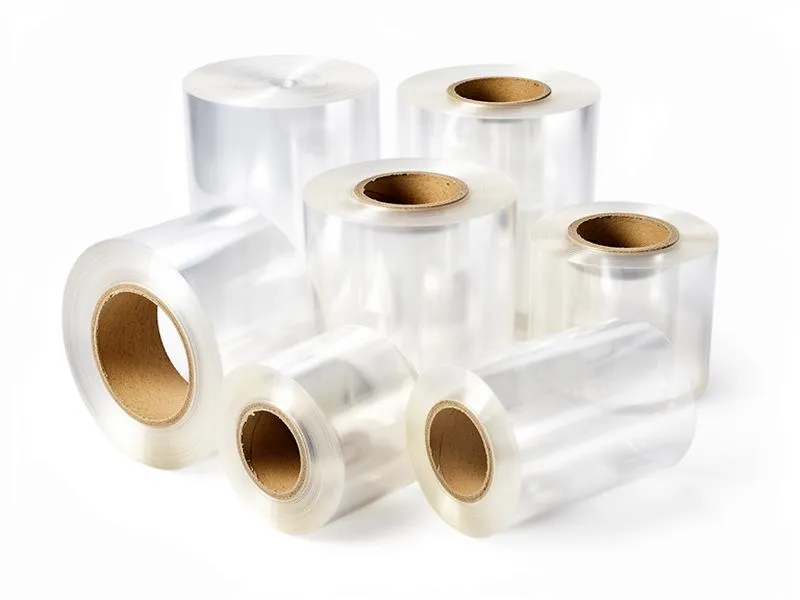
Compare BOPP, PET, and PP self-adhesive label stock for industrial applications. This guide helps you choose the best film labels for your packaging needs.
Table of Contents
- Understanding BOPP Self-Adhesive Label Stock
- Exploring PET Self-Adhesive Label Stock
- Introducing PP Self-Adhesive Label Stock
- Clarity and Aesthetics
- Temperature & Chemical Resistance
- Printability & Conversion
- Cost & Sustainability
- Decision Matrix — Which Film for Which Application?
- Get Material Specs & Samples
- Frequently Asked Questions
Selecting the correct self-adhesive label stock is a critical decision in industrial packaging, directly impacting product presentation, durability, and operational efficiency. Among the most prevalent filmic options are Biaxially Oriented Polypropylene (BOPP), Polyethylene Terephthalate (PET), and Polypropylene (PP). Each material offers a unique set of characteristics, making it suitable for specific end-use applications. Understanding their differences in clarity, thickness, temperature and chemical resistance, printability, conformability, and cost per square meter is essential for informed material specification. For a broader decision framework, see our self-adhesive label material buyer's guide.
Understanding BOPP Self-Adhesive Label Stock
BOPP is a biaxially oriented polypropylene film known for its excellent clarity, moisture resistance, and cost-effectiveness, making it suitable for a wide range of general-purpose and flexible packaging labels. The biaxial orientation process enhances its tensile strength, stiffness, and barrier properties compared to standard PP, while maintaining flexibility. Clear BOPP self-adhesive film is available in various finishes, including clear, white, and metallized, offering versatility for branding and product information.
Its inherent resistance to moisture and many common chemicals positions BOPP as a reliable choice for products exposed to humidity or mild spills. The material's conformability allows it to adhere well to semi-squeezeable containers, preventing wrinkling or lifting. BOPP films typically range in thickness from 30 μm to 60 μm, balancing durability with flexibility.
Exploring PET Self-Adhesive Label Stock
PET, or polyethylene terephthalate, offers superior strength, dimensional stability, and high-temperature resistance, making it ideal for durable and high-performance labeling applications. As a polyester film, PET possesses exceptional rigidity and tensile strength, which translates to labels that resist tearing and stretching, even in demanding environments. This robustness makes it a preferred choice for industrial machinery, automotive parts, and electronic components — including thermal transfer label stock for barcode and asset tracking.
PET's excellent thermal stability allows it to withstand significant temperature fluctuations, from deep-freeze to high-heat sterilization processes, without degradation. Its chemical resistance is also superior, providing a strong barrier against oils, solvents, and aggressive cleaning agents. PET films are commonly available in thicknesses from 23 μm to 75 μm, offering a range of options for specific durability requirements.
Introducing PP Self-Adhesive Label Stock
PP, or polypropylene, is a versatile and economical film that provides good moisture resistance and conformability, often used for squeeze bottles and general product labeling. Unlike BOPP, standard PP films are not biaxially oriented, which generally results in lower tensile strength and clarity but greater flexibility. This flexibility makes synthetic PP label stock an excellent choice for labels on highly curved or squeezable containers where the label needs to move with the packaging without delaminating.
PP offers good resistance to water, oils, and many common household chemicals, making it suitable for a broad array of consumer and industrial products. It is typically more opaque than clear BOPP or PET, though clear versions are available. PP films are often found in thicknesses ranging from 50 μm to 75 μm, providing a balance of conformability and substance. For tear-resistant outdoor PE/PP variants, see our synthetic paper outdoor labels guide.
Clarity and Aesthetics
Clarity refers to the material's transparency, with BOPP and PET offering distinct visual properties depending on the desired aesthetic. Clear BOPP is widely recognized for its high transparency, enabling a desirable "no-label look" on glass and PET bottles. PET films deliver even sharper optical clarity with virtually no haze, making them the preferred choice for premium cosmetics and luxury beverage labels. PP, by contrast, tends toward a slight milky tint and is most often used in opaque white or pre-printed form rather than as a clear film.
Temperature & Chemical Resistance
PET clearly outperforms both BOPP and PP in extreme temperature service: continuous use up to 150 °C, brief excursions to 200 °C, and stable down to −40 °C make it the only film of the three qualified for engine compartments, autoclave sterilization, and cold-chain logistics. BOPP handles −20 °C to 80 °C reliably, while PP is generally rated −20 °C to 100 °C. For chemical exposure — oils, solvents, alkaline washes — PET again leads, followed by BOPP, with PP showing softening and swelling against aggressive solvents.
Printability & Conversion
All three films require corona treatment (38–44 dyne/cm) before printing. BOPP and PP accept UV flexo, UV letterpress, and water-based inks well; PET also accepts these plus screen and thermal transfer printing. Die-cutting behaves similarly across the three, though PET requires sharper rules and higher tonnage due to its tensile strength. If you are pairing the stock with cold or hot foiling for premium finishes, plan adhesive compatibility carefully — see our cold foil defects troubleshooting guide.
Cost & Sustainability
On a per-square-meter basis, PP is typically the lowest cost, BOPP runs 10–20% higher, and PET commands a 40–80% premium. Sustainability profiles diverge: BOPP and PP are mono-material polyolefins that fit cleanly into PP/PE recycling streams; PET is widely recycled but in a separate stream. For brands prioritizing recyclability, our sustainable self-adhesive labels guide covers FSC liners, wash-off adhesives, and the EU PPWR-aligned mono-material strategy.
Decision Matrix — Which Film for Which Application?
| Application | Recommended Film | Why |
|---|---|---|
| Premium beverage / cosmetics (no-label look) | Clear BOPP or PET | High clarity, gloss, moisture resistance |
| Industrial nameplates & asset tags | PET | Heat, chemical, abrasion resistance |
| Squeeze bottles & flexible containers | PP | Conformability, flexibility |
| Cold-chain & autoclave | PET | Wide temperature range |
| High-volume general FMCG | BOPP | Best cost/performance balance |
| Promo / removable applications | Removable adhesive paper | Clean removal, no residue |
Get Material Specs & Samples
All-in Pack supplies BOPP, PET, and PP self-adhesive stock from 23 μm to 100 μm in clear, white, and metallized variants — paired with permanent, removable, or freezer-grade acrylic adhesives. Request a quote with your application details (substrate, environment, print method, run length) and our application engineers will recommend the optimal facestock/adhesive/liner combination within 24 hours, plus free A4 samples shipped to your QC lab.
Frequently Asked Questions
Quick answers about self-adhesive-labels.
Related Articles
View all
Technical Knowledge · May 12, 2026
Synthetic Paper Self-Adhesive Tear-Resistant Labels
Discover durable synthetic paper for self-adhesive labels that withstand harsh outdoor conditions. Get tear-resistant labels offering superior performance for industrial use.
Technical Knowledge · Apr 10, 2026
Self-Adhesive Label Material: A Buyer's Guide
Choose the perfect self-adhesive label material for your product with this comprehensive guide, ensuring durability and optimal performance. Learn what to consider for your labels today.
Technical Knowledge · May 22, 2026
Hot Stamping Foil: PET, Release, Color, Adhesive Layers
Discover the 4 key layers of hot stamping foil: PET carrier, release, color, and adhesive. Understand how each layer works for optimal performance.
Ready to source foil stamping and die-cutting from one supplier?
From stamping foils to post-press machines and die-cutting consumables — get factory-direct pricing and free samples.