
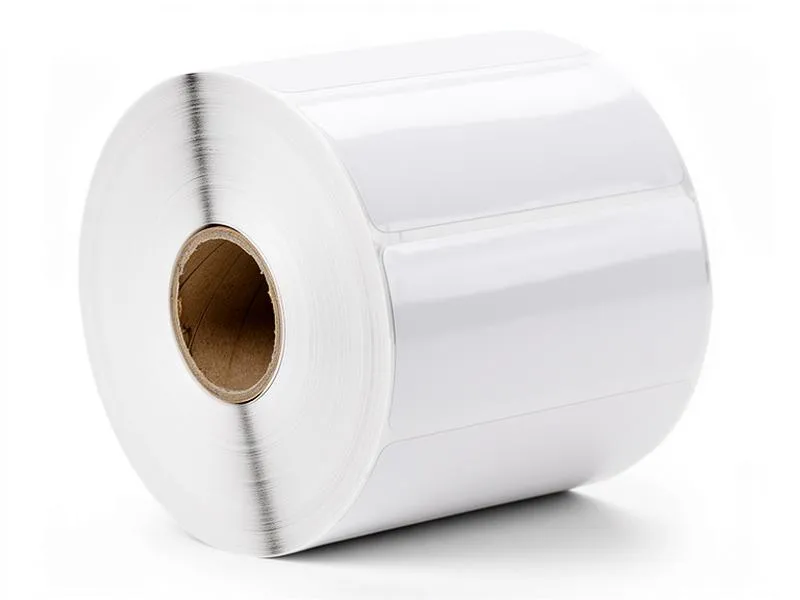
Discover wash-off self-adhesive labels for returnable glass bottles. This guide covers alkaline wash specs and recyclability for optimal performance.
Table of Contents
- What "wash-off" actually means
- Why standard permanent PSA labels fail wash-off
- The wash-off facestock options
- The wash-off adhesive
- Recyclability and CEPI / APR alignment
- Application-line settings that protect wash-off performance
- Pre-production qualification checklist
- Bottom line
- Frequently Asked Questions
European brewers wash and refill the average returnable glass bottle 25–50 times before it is recycled. That economics only works if every label cleanly releases in the bottle washer — leaving zero fibre, zero adhesive residue, and zero ink contamination in the caustic bath. This guide covers the spec envelope for modern wash-off pressure-sensitive (PSA) labels and the facestock/adhesive combinations that pass it.
What "wash-off" actually means
A label is "wash-off" when, under controlled caustic conditions, both the facestock and the adhesive separate cleanly from the glass within the production bottle washer cycle. The standard reference test is the EBC (European Brewery Convention) wash-off protocol, with parameters typically:
| Parameter | EBC reference | Production range |
|---|---|---|
| NaOH concentration | 2.0 % w/w | 1.5–3.0 % w/w |
| Bath temperature | 80 °C | 70–85 °C |
| Contact time | 5 min | 3–8 min |
| Mechanical action | Mild agitation | Spray + carrier conveyor |
Pass criteria: label detaches as an intact film (not fragmented), sinks or floats predictably for separation, leaves no visible adhesive on the bottle, and does not bleed ink into the bath.
Why standard permanent PSA labels fail wash-off
A general-purpose permanent acrylic adhesive on a coated paper face — the workhorse of most label converters — fails wash-off in three ways:
- Paper face disintegrates into fibre slurry that clogs filters and contaminates the recovered caustic.
- Permanent adhesive does not de-bond in 5 minutes at 80 °C; it softens and smears across the glass.
- Ink migrates into the bath, turning the caustic brown within hours of production.
The standard gloss white coated paper and matte coated paper facestocks are designed for permanent decoration of consumer packaging — excellent for one-way containers, but not engineered for the alkaline bottle washer.
The wash-off facestock options
Three facestock families are formulated specifically for returnable bottles:
- Wet-strength coated paper — pulp treated with melamine-formaldehyde resin so the sheet survives the bath as a coherent film, then floats for screen separation. Lowest cost, dominant in European brewing.
- BOPP filmic facestock — fully synthetic, no fibre release. Pairs with our transparent BOPP self-adhesive film for "no-label look" mineral water and premium beer. Sinks in the bath for bottom separation.
- PE / PP synthetic film — like the synthetic PP/PET label, used where conformability around bottle curves is required (single-serve dairy, shaped bottles). Floats for top skimming.
The wash-off adhesive
The adhesive chemistry is what actually decides the result. There are two production families:
- Caustic-soluble emulsion acrylic — formulated to swell and dissolve in alkaline solution. Tack and shear are deliberately lower than permanent PSA, so labels must be applied at controlled bottle temperatures (5–20 °C) and stored away from condensation.
- Caustic-releasable hot-melt — bond remains intact through chilled distribution but releases as a film, not a residue, in the wash. Slightly higher initial tack than emulsion grades; better for shaped or curved bottles.
Both chemistries are not drop-in replacements for general-purpose acrylic. Test on your filler line at production speed before committing — see our broader self-adhesive label selection guide for the screening protocol.
Recyclability and CEPI / APR alignment
Even on one-way (non-returnable) glass and PET containers, wash-off PSA labels are increasingly specified to meet recycling-stream requirements:
- Glass cullet contamination — labels that survive the wash contaminate cullet with paper fibre and adhesive carbon. CEPI and Glass Recycling Coalition guidelines now favour wash-off PSA over permanent labels on premium glass.
- PET bottle recycling (APR) — for PET, the equivalent is the APR Critical Guidance protocol: label and adhesive must float-separate during the 60–80 °C caustic flake-wash step. Wash-off acrylic emulsions pass; permanent rubber-based PSA does not.
This sits alongside the broader sustainability shift in our sustainable label trends 2026 overview.
Application-line settings that protect wash-off performance
Even a correctly specified wash-off label can fail in the wash if the filler line over-bonds it. Three controls:
- Bottle surface temperature at application: 5–20 °C. Above 25 °C, emulsion acrylics build excessive tack and fail to release in 5 minutes.
- Applicator pressure: Use the minimum belt or pad pressure that achieves full lay-down. Over-pressure embeds adhesive into glass micro-roughness.
- Pre-wash storage: Returned bottles should enter the washer within 7 days of consumer return. Longer dwell allows adhesive to crystallise and resist caustic.
Pre-production qualification checklist
- Run the EBC 2 % NaOH / 80 °C / 5 min test on at least 30 sample labels applied to your actual bottle glass.
- Verify label detaches in one piece (not fragmented), with zero visible residue under 10× magnification.
- Confirm the recovered label floats or sinks predictably for your wash-line separation hardware.
- Test ink colour-fastness in caustic — if the bath turns brown after 100 labels, the ink system is migrating and must be reformulated before scale-up.
- Document the application-line temperature, pressure, and dwell window that produced the pass.
Bottom line
Wash-off is a system: facestock, adhesive, ink, application conditions, and washer chemistry all have to land inside a narrow envelope. Spec each component to the EBC (or APR, for PET) reference, qualify on your own bottle and line — not just on supplier datasheets — and the returnable-bottle economics work for another 25 cycles.
Frequently Asked Questions
Quick answers about Self-Adhesive.
Related Articles
View all
Technical Knowledge · May 12, 2026
Synthetic Paper Self-Adhesive Tear-Resistant Labels
Discover durable synthetic paper for self-adhesive labels that withstand harsh outdoor conditions. Get tear-resistant labels offering superior performance for industrial use.

Industry News · Feb 20, 2026
Self-Adhesive Label Market Asia: Growth Trends to 2026
Explore the growth drivers and opportunities of the self-adhesive label market in Asia, fueled by e-commerce and packaging demands. Find out more about this booming industry.
Industry News · Jan 15, 2026
Sustainable Packaging: Trends & Materials for 2026
Discover key sustainable packaging material trends and how eco-adhesives are reshaping the industry, offering converters greener solutions.
Ready to source foil stamping and die-cutting from one supplier?
From stamping foils to post-press machines and die-cutting consumables — get factory-direct pricing and free samples.