
Protect brand integrity with security hot stamping foil. Integrate micro-optics and forensic features to deter counterfeiters in pharma and tobacco packaging.
Table of Contents
- Technical Anatomy of Anti-Counterfeit Foil
- Comparison: Standard vs. High-Security Hot Foils
- Advanced Overt and Covert Features
- Application Parameters for Pharma and Tobacco
- Temperature Regulation
- Pressure Metrics
- Integration with Sustainable Substrates
- Quality Control and Slitting Precision
- Specify Your Project
- Frequently Asked Questions
In the global fight against trade in illicit goods, packaging is the first line of defense. For the pharmaceutical and tobacco industries, the primary challenge is not just visual appeal, but the integration of verifiable authentication measures that cannot be replicated by standard commercial printing equipment. Security hot stamping foil serves as a high-barrier authentication tool, embedding complex holographic data and forensic markers directly into the paper or cardboard surface. Beyond the 2D/3D visual depth, modern security foils utilize multi-layer polyester carriers (typically 12 to 16 microns) and specialized release layers designed to withstand high-speed application cycles. This article breaks down the technical specifications, application parameters, and design features necessary for implementing professional-grade anti-counterfeit measures on high-volume production lines.
Technical Anatomy of Anti-Counterfeit Foil
Unlike standard holographic rainbow foil, which features a repeating pattern, security foil for pharma and tobacco often utilizes Registered Image Holograms. This requires the foil to be positioned with precision accuracy of ±0.15mm during the stamping process. The foil structure typically consists of five distinct layers: a polyester carrier film, a release layer, a protective lacquer layer, the relief-image layer (containing the nano-engraved hologram), a reflective aluminum layer, and a heat-activated adhesive layer.
For tobacco packaging, which often uses high-GSM coated boards, the adhesive must have high thermal sensitivity. These foils are engineered to activate at temperatures between 110°C and 150°C. In the pharmaceutical sector, where thin folding cartons are standard, the foil must maintain high edge definition (vignetting resistance) to ensure that micro-text as small as 50 microns remains legible under magnification.
Comparison: Standard vs. High-Security Hot Foils
To choose the right material, manufacturers must evaluate the level of risk associated with the product. Below is a technical comparison of standard decorative foils versus specialized security variants.
| Feature | Standard Decorative Foil | Security/Anti-Counterfeit Foil |
|---|---|---|
| Carrier Thickness | 12 Micron PET | 16 - 19 Micron PET (high tension) |
| Optical Features | Rainbow / Pillar of Light | Kinetic 3D, Micro-text, Hidden E-Beam |
| Application Speed | Standard (up to 5,000 SPH) | High (up to 8,000+ SPH) |
| Adhesion Surface | General paper/board | UV-coated, Film-laminated, or Ink-heavy |
| Authentication Level | Overt (Visual only) | Overt, Covert, and Forensic |
Advanced Overt and Covert Features
The efficacy of anti-counterfeit security foil lies in its multi-layered security logic. All-in Pack provides foils that incorporate several levels of verification:
- Kinetic Effects: Images that appear to move or rotate when the package is tilted. These are created via electron-beam (E-beam) lithography with resolutions up to 120,000 dpi.
- Micro-text and Nano-text: Characters readable only under 10x or 50x magnification, often used in pharmaceutical labels to hide batch-specific information.
- Hidden Images (Laser Readable): Features that remain invisible to the naked eye but appear when illuminated by a dedicated laser pointer.
- Color Shifting: Distinct color transitions (e.g., Green to Blue) at specific viewing angles (OVI equivalent effects).
Application Parameters for Pharma and Tobacco
Achieving a perfect bond on high-speed equipment like the XG1080G fully automatic hot stamping machine requires strict adherence to the "Golden Triangle" of stamping: Temperature, Pressure, and Dwell Time.
Temperature Regulation
Security foils often utilize a more robust lacquer to protect the hologram. This requires a slightly higher die temperature, typically 130°C to 145°C. If the temperature is too low, the micro-engravings will not transfer cleanly; too high, and the polyester carrier may distort, ruining the holographic registration.
Pressure Metrics
For embossed security features, a pressure of 40-60 kgf/cm² is often required. This ensures the foil penetrates the fibers of the board, making it impossible to peel the security feature off without destroying the substrate. When combined with a TYM-1060 automatic embossing machine, brands can achieve a "3D Tactile" security effect that serves as an additional sensory authentication mark.
Integration with Sustainable Substrates
As the industry moves toward greener packaging, security foils must now perform on non-traditional surfaces. All-in Pack ensures our security foils are compatible with synthetic PP and PET materials often used in pharmaceutical clinical trials. Furthermore, for tobacco products using recycled grey-back board, our foils include a high-opacity priming layer to prevent the dark substrate from dulling the holographic brilliance.
Quality Control and Slitting Precision
Security foil is often produced in jumbo rolls of 640mm or 1280mm widths. However, most pharma labeling lines require narrow ribbons. Using a precision AF-1350 high-speed slitting machine is critical to ensure clean edges. Frayed edges on a foil roll can lead to dust contamination on the stamping die, causing "pinholes" in the security image which can be mistaken for a counterfeit or a defect during automated vision inspection (AVI).
Specify Your Project
Implementing a robust anti-counterfeit strategy requires selecting the specific resin-to-substrate chemistry for your production line. Whether you are securing high-volume tobacco cartons or sensitive pharmaceutical vials, our technical team provides custom-originated holographic masters and trial rolls. To request a technical data sheet or a quote for custom holographic patterns, visit our product page and contact a specialist via our security foil inquiry form today.
Frequently Asked Questions
Quick answers about security-foil.
Companion Products
Specs and samples for the products discussed in this article.
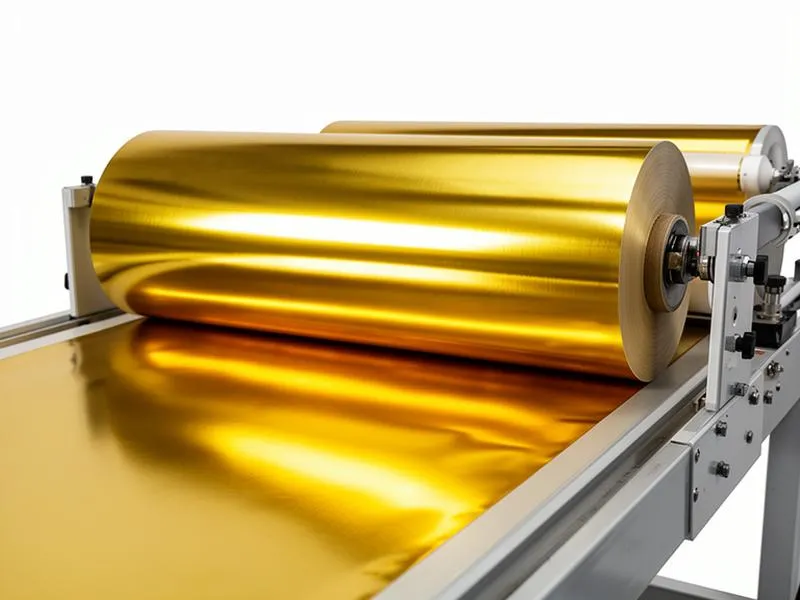
Premium Metallic Gold Hot Stamping Foil
Ultra-bright metallic gold foil with mirror-like reflection for premium packaging and label applications.
View product
Anti-Counterfeit Security Foil
Security foil with micro-text, color-shifting OVD, VOID tamper-evidence and custom holograms for pharma, tobacco, electronics and luxury authentication.
View product
Cold Stamping Foil
Cold stamping foil for inline UV flexo and offset presses — no heat, no dies, up to 150 m/min with metallic, holographic and pigmented finishes.
View productRelated Articles
View all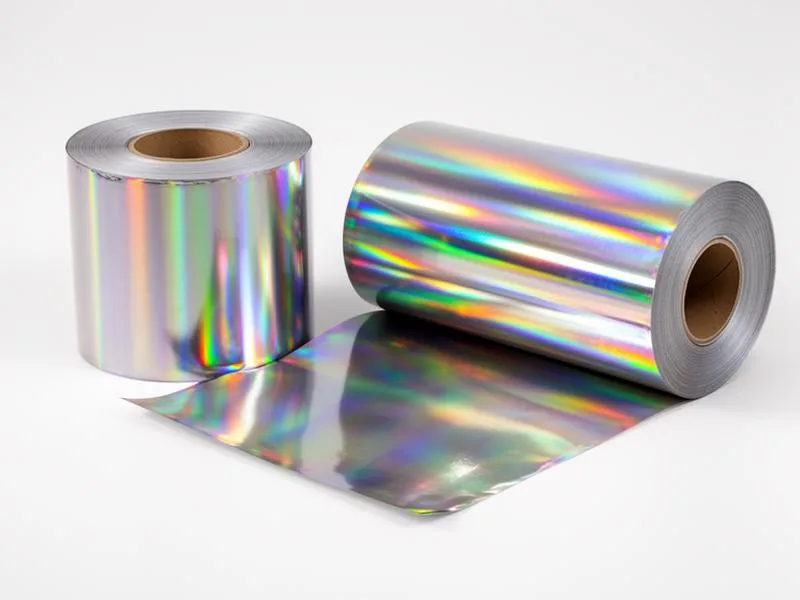
Industry News · Apr 16, 2026
Holographic Foil Trends: Luxury & Anti-Counterfeit
Explore the growth of holographic foil in luxury packaging and anti-counterfeit applications. Learn how it protects brands and boosts aesthetic appeal.
Technical Knowledge · May 22, 2026
Hot Stamping Foil: PET, Release, Color, Adhesive Layers
Discover the 4 key layers of hot stamping foil: PET carrier, release, color, and adhesive. Understand how each layer works for optimal performance.
Technical Knowledge · Aug 25, 2026
Foil Stamping vs Digital Foil vs Cold Foil: Which Method Actually Wins on Cost?
An honest four-part cost comparison of hot foil stamping, cold foil and digital foil — tooling, material, machine time and changeover — plus the run-length crossover points, substrate limits and lower-cost alternatives to foil altogether.
Ready to source foil stamping and die-cutting from one supplier?
From stamping foils to post-press machines and die-cutting consumables — get factory-direct pricing and free samples.