
Achieve 100% opaque, solid color effects with pigment hot stamping foil. Elevate your packaging with high-gloss or matte finishes for superior results.
Table of Contents
- The Anatomy of Pigment Hot Stamping Foil
- Technical Specifications and Application Parameters
- Why Choose Pigment Over Solvent Inks?
- Matte Foil Stamping: The Minimalist Aesthetic
- Integration with Post-Press Equipment
- Common Troubleshooting in Pigment Foiling
- 1. Incomplete Transfer (Holidays)
- 2. Over-stamping (Filling-in)
- 3. Poor Adhesion on Plastics
- Specify Your Project
- Frequently Asked Questions
While metallic finishes dominate the industry, pigment hot stamping foil offers a unique architectural depth that standard inks and metallic coatings cannot replicate. As brands move toward minimalist, high-tactile packaging, the demand for solid color foils—available in both high-gloss and muted matte finishes—has surged. Unlike metallic foils which rely on vacuum-metallized aluminum layers, pigment foils utilize heavy concentrations of opaque pigments to provide total surface coverage. This makes them ideal for dark substrates where traditional offset or flexo inks would lose vibrancy. Understanding the rheology of the release layers and the heat-transfer properties of the adhesive sizing is critical for high-speed production. In this guide, we break down the technical specifications, application parameters, and machinery requirements for achieving flawless solid color effects.
The Anatomy of Pigment Hot Stamping Foil
To the naked eye, a pigment foil looks like a simple layer of dry paint. However, its construction is a multi-layered precision-engineered product typically ranging from 12 to 16 microns in total thickness. The core structure differs significantly from premium metallic gold hot stamping foil because it lacks the aluminum vapor deposition layer.
- Carrier Film: Usually a 12-micron biaxially-oriented polyester (PET) film providing tensile strength.
- Release Layer: A wax or resin-based layer designed to melt at specific temperatures (90°C to 150°C), allowing the pigment to "release" from the carrier.
- Color/Pigment Layer: A heavy density of organic or inorganic pigments mixed with resins. This layer dictates the opacity.
- Adhesive/Sizing Layer: A heat-activated polymer tailored to bond with specific substrates like matte white self-adhesive label paper or uncoated folding cartons.
Technical Specifications and Application Parameters
Achieving a crisp "stamp" without pinholes or "flaking" requires precise control over the heat-pressure-dwell time triangle. Because pigment foils have a higher solids content than metallic foils, they often require slightly higher pressure (measured in kgf/cm²) to ensure a sharp shear at the edge of the die.
| Specification Parameter | Matte Pigment Foil | Gloss Pigment Foil |
|---|---|---|
| Base PET Film Thickness | 12 Microns | 12-16 Microns |
| Stamping Temperature (Platen) | 110°C - 130°C | 100°C - 125°C |
| Stamping Temperature (Rotary) | 140°C - 180°C | 130°C - 160°C |
| Recommended Pressure | 400 - 600 kgf/cm² | 350 - 500 kgf/cm² |
| Abrasion Resistance (Sutherland) | High (>200 cycles) | Medium/High |
| Opacity Level | 98% - 100% | 95% - 99% |
Why Choose Pigment Over Solvent Inks?
The primary advantage of pigment hot stamping foil is its opacity. When printing a "Gloss White" logo on a dark black kraft paper, an offset ink would require multiple hits or a silk-screen process to prevent the dark background from bleeding through. A pigment foil, however, provides a physical "slab" of color that is 100% opaque. This is particularly effective when working with synthetic PP/PET self-adhesive labels where ink adhesion can be challenging.
Furthermore, pigment foils offer a tactile elevation. The thickness of the pigment layer (approx. 2-4 microns) combined with the indentation of the die gives the brand a premium feel that flat printing cannot match. For high-volume production, utilizing an XG1080G fully automatic hot stamping machine ensures that the pressure remains consistent across a 1060mm sheet, preventing "scumming" or incomplete transfer in the center of the web.
Matte Foil Stamping: The Minimalist Aesthetic
Matte pigment foils are the current standard for luxury "quiet luxury" branding. Unlike reflecting light, these foils absorb it, creating a soft, velvet-like visual. They are frequently used on wine labels, high-end cosmetics, and electronics packaging where a matte silver hot stamping foil might be too flashy, but a deep matte navy or charcoal grey adds sophisticated texture.
Integration with Post-Press Equipment
To maximize the efficiency of solid color foil applications, the choice of machinery is as important as the foil itself. Large-format stamping or fine-detail work requires different setups:
- Large Area Coverage: If you are foiling a large solid block of color, ensure your machine has high tonnage. We recommend the TYM-1060 automatic embossing machine, which provides the necessary dwell time for the pigment to bond to the fibers of the paper.
- High-Speed Conversion: For label converters, the slitting of the master rolls must be perfect. Any burrs on the edge of the foil roll can cause "tracking" issues during a high-speed run. Using an AF-1350 high-speed slitting machine ensures clean edges for precision feeding.
- Refining the Finish: In some cases, a pigment foil is applied first, followed by a spot varnish using an SG-1080 automatic UV varnishing machine to create a "matte-on-gloss" contrast that is highly effective for anti-counterfeit purposes.
Common Troubleshooting in Pigment Foiling
Even with high-quality solid color foil, operators may encounter issues due to substrate variability.
1. Incomplete Transfer (Holidays)
If the color is not transferring fully, it is usually a sign of insufficient temperature or low pressure. Since pigment layers are denser than the metal layers in hot foil vs digital foil, they require a fractionally longer dwell time to reach the "glass transition temperature" of the adhesive.
2. Over-stamping (Filling-in)
If small text or fine lines are "filling in" with color, the heat is likely too high, causing the release layer to melt beyond the edges of the die. Reducing the temperature by 5°C increments or increasing the speed (m/min) can sharpen the results.
3. Poor Adhesion on Plastics
When stamping on materials like transparent BOPP self-adhesive film, ensure the foil has a "hard-type" adhesive sizing specifically formulated for non-porous surfaces. Standard paper foils will flake off plastic films easily.
Specify Your Project
Selecting the right pigment hot stamping foil requires balancing color accuracy with the technical constraints of your substrate and machinery. Whether you are aiming for a high-gloss white on a black luxury box or a matte black-on-black industrial look, our technical team can provide the specific micron-ratings and temperature profiles for your equipment. If you are integrating this into a high-speed production line, we can also advise on machine compatibility. Contact us today at All-in Pack Support to request color swatches or technical data sheets for your next project.
Frequently Asked Questions
Quick answers about pigment-foil.
Companion Products
Specs and samples for the products discussed in this article.
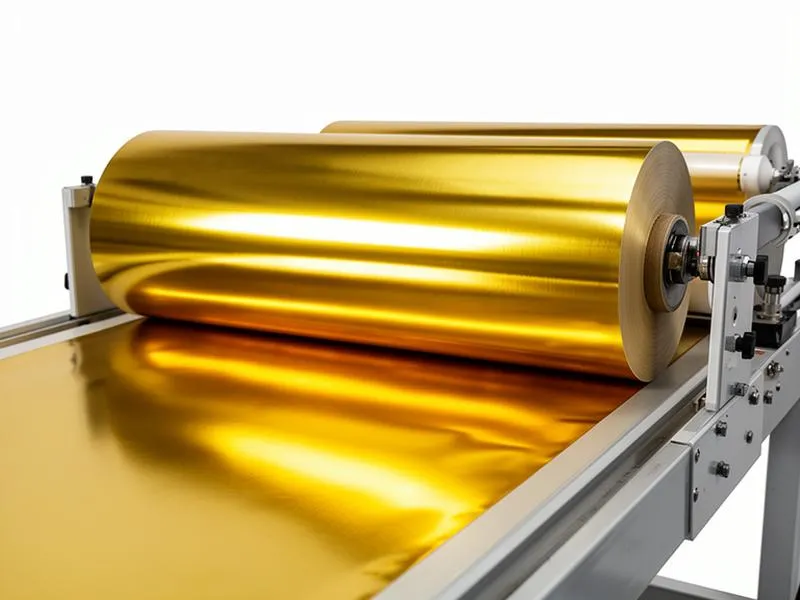
Premium Metallic Gold Hot Stamping Foil
Ultra-bright metallic gold foil with mirror-like reflection for premium packaging and label applications.
View product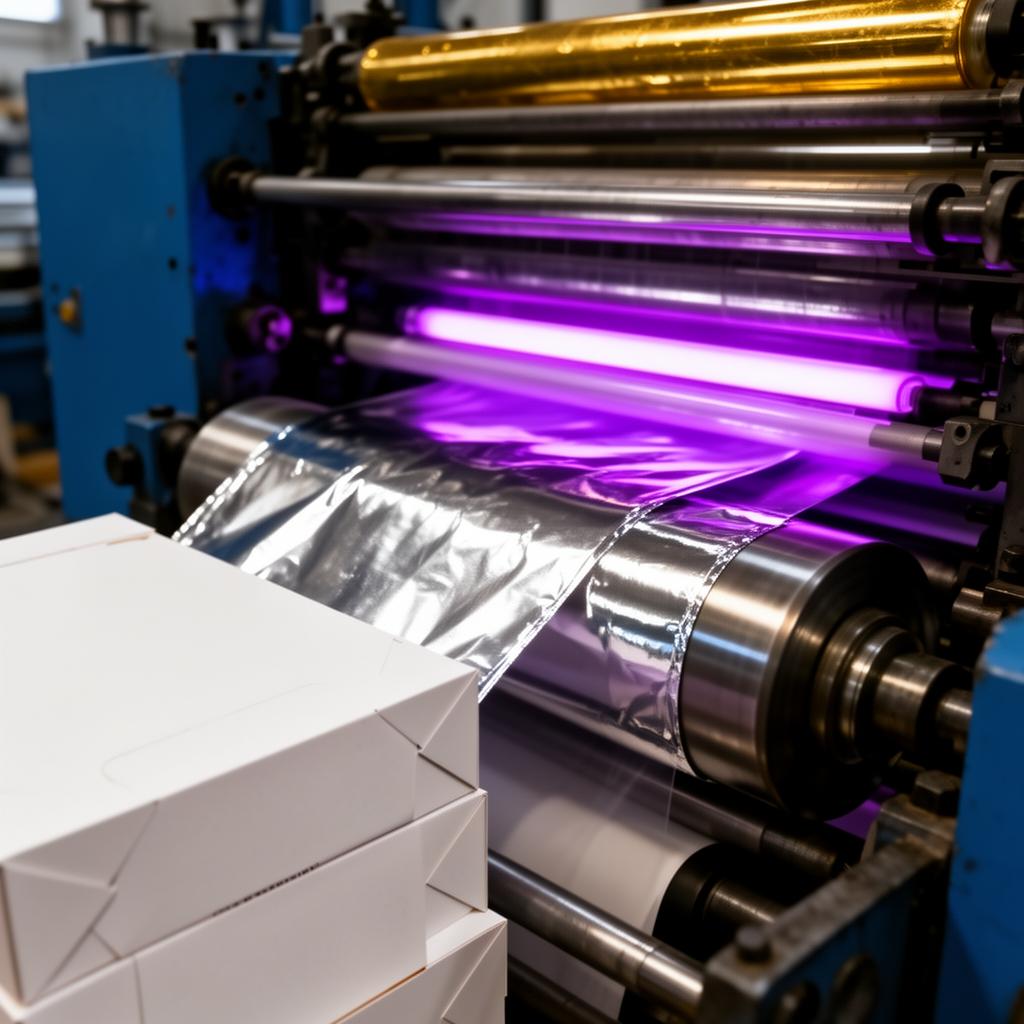
Cold Stamping Foil
Cold stamping foil for inline UV flexo and offset presses — no heat, no dies, up to 150 m/min with metallic, holographic and pigmented finishes.
View product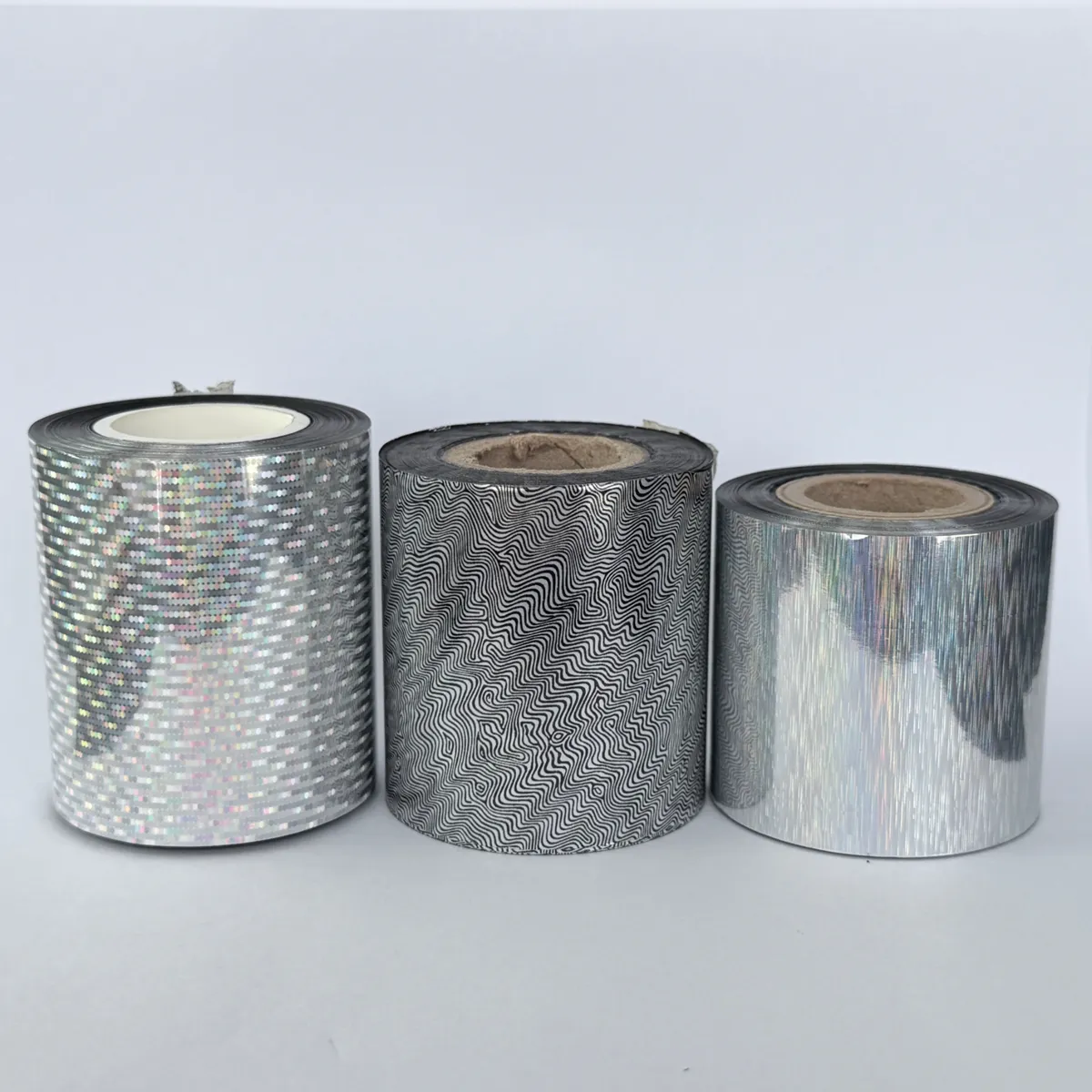
Scratch-Off Foil for Hot Stamping
High-opacity scratch-off foil for lottery tickets, gift cards and security labels — clean removal, no flaking, strong heat-seal bond to paper, cardstock and PVC.
View productRelated Articles
View allTechnical Knowledge · May 22, 2026
Hot Stamping Foil: PET, Release, Color, Adhesive Layers
Discover the 4 key layers of hot stamping foil: PET carrier, release, color, and adhesive. Understand how each layer works for optimal performance.
Technical Knowledge · May 12, 2026
Hot Stamping Defects: Troubleshooting Pinholes & Tearing
Troubleshoot common hot stamping defects like pinholes, adhesion loss, and tearing. Optimize your process for flawless results with stamping foils.
Technical Knowledge · May 12, 2026
Cold Foil vs Hot Foil: High-Speed Printing Comparison
Compare cold foil vs hot foil for high-speed printing. Discover technical details to choose the best stamping foil for your packaging needs.
Ready to source foil stamping and die-cutting from one supplier?
From stamping foils to post-press machines and die-cutting consumables — get factory-direct pricing and free samples.