
Troubleshoot common hot stamping defects like pinholes, adhesion loss, and tearing. Optimize your process for flawless results with stamping foils.
Table of Contents
- Diagnostic Hierarchy: The Golden Triangle of Parameters
- 1. Solving Pinhole Defects (Micro-Voids)
- Common Causes and Fixes:
- 2. Adhesion Failure: Why the Foil Won't Stick
- 3. Tearing and "Flaking" at the Edges
- 4. Bridging and Filling-In of Fine Details
- 5. Foil Gassing and Bubbling
- Troubleshooting Checklist for Post-Press Operators
- Specify Your Project
- Frequently Asked Questions
In high-end packaging and label production, finishing quality represents the thin line between a premium product and a rejection pile. For converters, mastering hot stamping defects troubleshooting is essential to maintaining high OEE (Overall Equipment Effectiveness) and minimizing waste. Whether you are encountering micro-pinholes in heavy solids, poor adhesion on UV-varnished stocks, or edge tearing during high-speed runs, the root cause usually lies in the delicate balance of the "stampers trinity": temperature, pressure, and dwell time. This technical guide analyzes the mechanical and chemical variables of the hot stamping process, providing actionable solutions for operators using high-performance stamping foils and automated machinery to achieve zero-defect production.
Diagnostic Hierarchy: The Golden Triangle of Parameters
Before diving into specific defects, it is critical to establish a baseline of operational parameters. Hot stamping is a thermal transfer process where a heated die (typically brass or magnesium) activates a release layer and an adhesive layer on the foil, transferring the metallic or pigment layer to the substrate. Most defects occur when these settings deviate from the foil manufacturer’s specifications.
- Temperature: Standard foils generally activate between 100°C and 150°C. Lower temperatures cause incomplete transfer, while excessive heat can cause "gassing" or "bridging."
- Pressure: Measured in kgf/cm², pressure must be uniform. For large solid areas, higher pressure is required compared to fine-line scripts.
- Dwell Time: The duration the die remains in contact with the substrate. On high-speed equipment like the XG1080G fully automatic hot stamping machine, dwell time is managed by the mechanical cycle speed, often reaching up to 5,500 sheets per hour.
1. Solving Pinhole Defects (Micro-Voids)
Pinholes—tiny un-foiled spots—are the most common frustration in large-area stamping. They often appear like a "salty" texture rather than a smooth metallic finish. This occurs when the foil does not make 100% contact with the substrate surface.
Common Causes and Fixes:
- Substrate Roughness: If using a 120 GSM textured paper or a matte-finish board, the foil may not reach the "valleys" of the grain. Increase the pressure or use a softer make-ready (backing) to push the foil into the texture.
- Dust and Contamination: Micro-particles on the matte white self-adhesive label paper can prevent contact. Ensure your shop floor is climate-controlled and use anti-static bars at the feeder.
- Insufficient Temperature: If the adhesive layer (usually 1.5–3 microns thick) doesn't fully melt, it won't flow into the substrate fibers. Increase the temperature by 5°C increments.
2. Adhesion Failure: Why the Foil Won't Stick
Adhesion failure, or "foil lifting," happens when the bond between the foil adhesive and the substrate is weaker than the bond between the foil and its own carrier film. This is particularly prevalent when stamping over UV coatings or dense inks.
| Substrate Condition | Surface Tension (Dynes) | Recommended Solution |
|---|---|---|
| Standard Uncoated Paper | >38 dyne/cm | Standard Metallic Foil at 110°C |
| UV Varnished / Laminated | <34 dyne/cm | Use over-printable foil; increase temp to 130°C |
| Synthetic PP/PET | Variable | Corona treatment or specialized synthetic adhesives |
| Ink-Heavy Areas | 32-36 dyne/cm | Ensure ink is fully oxidative-dry or UV-cured |
If you are working with difficult surfaces, consider using a premium metallic gold hot stamping foil formulated with high-performance heat-activated resins that target low-surface-energy coatings. If the problem persists on digital prints, you may need a specialized digital toner reactive foil which bonds specifically to polymer toners rather than the paper itself.
3. Tearing and "Flaking" at the Edges
Edge tearing occurs when the foil does not shear cleanly from the carrier. This results in "fuzziness" or "bearding" around the stamped image. This is often a matter of "release timing."
In high-speed production, if the foil is stripped from the substrate while the adhesive is still too hot and fluid, it will "string" and tear. Conversely, if it cools too much, it becomes brittle. Adjust the air blast (used to separate the foil from the sheet) or the distance of the stripping roller. For intricate designs, a matte silver hot stamping foil often provides a cleaner shear than highly extensible holographic foils due to its specific pigment-to-binder ratio.
4. Bridging and Filling-In of Fine Details
Bridging occurs when the foil fills in the "counters" (the holes in letters like 'e', 'a', or 'o'). This is essentially the opposite of pinholes; too much foil is being transferred.
- Excessive Heat: High temperatures cause the adhesive to "mushroom" outwards beyond the die edge. Reduce heat by 10°C.
- Excessive Pressure: Too much force crushes the foil, forcing it into areas where there is no die contact.
- Die Depth: Ensure your CNC-engraved brass dies have a depth of at least 1.5mm to 2.5mm to prevent the "shoulder" of the die from touching the foil.
5. Foil Gassing and Bubbling
Gassing looks like small craters or bubbles within the foil surface. This is a classic sign of thermal degradation. When the temperature exceeds the boiling point of the release wax or the solvents in the lacquers, they vaporize. If you see smoke or a strong chemical odor during the stamping cycle on your TYM-1060 embossing and stamping machine, you are likely burning the polyester carrier (PET), which usually has a melting point around 250°C, but begins to deform much earlier.
Troubleshooting Checklist for Post-Press Operators
When a defect appears, follow this diagnostic sequence to identify the culprit without wasting thousands of meters of foil:
- Clean the Die: Use a brass brush and specialized solvent to remove carbonized foil buildup.
- Check the Make-Ready: Ensure the underlying "sandwich" of pressboard or Pertinax is not worn down or uneven.
- Verify Foil Tension: Improper tension on the unwind or rewind shafts of the AF-1350 slitting machine or the stamper can cause wrinkles that look like missed spots.
- Tape Test: Apply 3M 610 tape to the stamped area and pull. If the foil comes off, the problem is adhesion (chemical/heat). If the foil stays but looks poor, the problem is transfer (pressure/mechanical).
Compare your results against our latest process comparison guide to see if a switch to cold foiling might be more efficient for your specific substrate.
Specify Your Project
Solving complex hot stamping defects requires more than just machine adjustments; it requires the right chemistry between the foil and the substrate. Whether you are dealing with high-speed pharmaceutical packaging or luxury spirit labels, All-in Pack provides the technical expertise and high-grade consumables to ensure success. If you are experiencing persistent adhesion or pinhole issues, contact our technical team today to request a sample of our specifically formulated foils tailored to your machinery and substrate. Consult with an All-in Pack specialist to optimize your production line and eliminate costly waste.
Frequently Asked Questions
Quick answers about hot-stamping.
Companion Products
Specs and samples for the products discussed in this article.
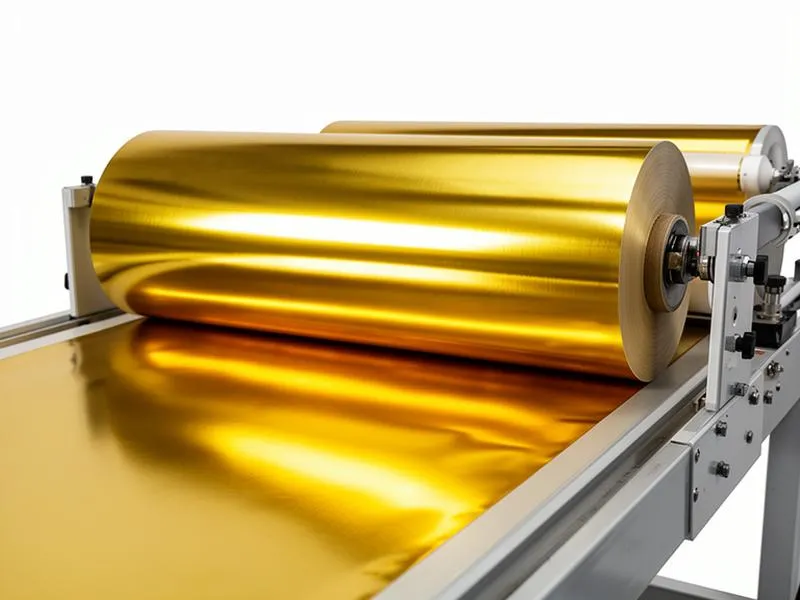
Premium Metallic Gold Hot Stamping Foil
Ultra-bright metallic gold foil with mirror-like reflection for premium packaging and label applications.
View product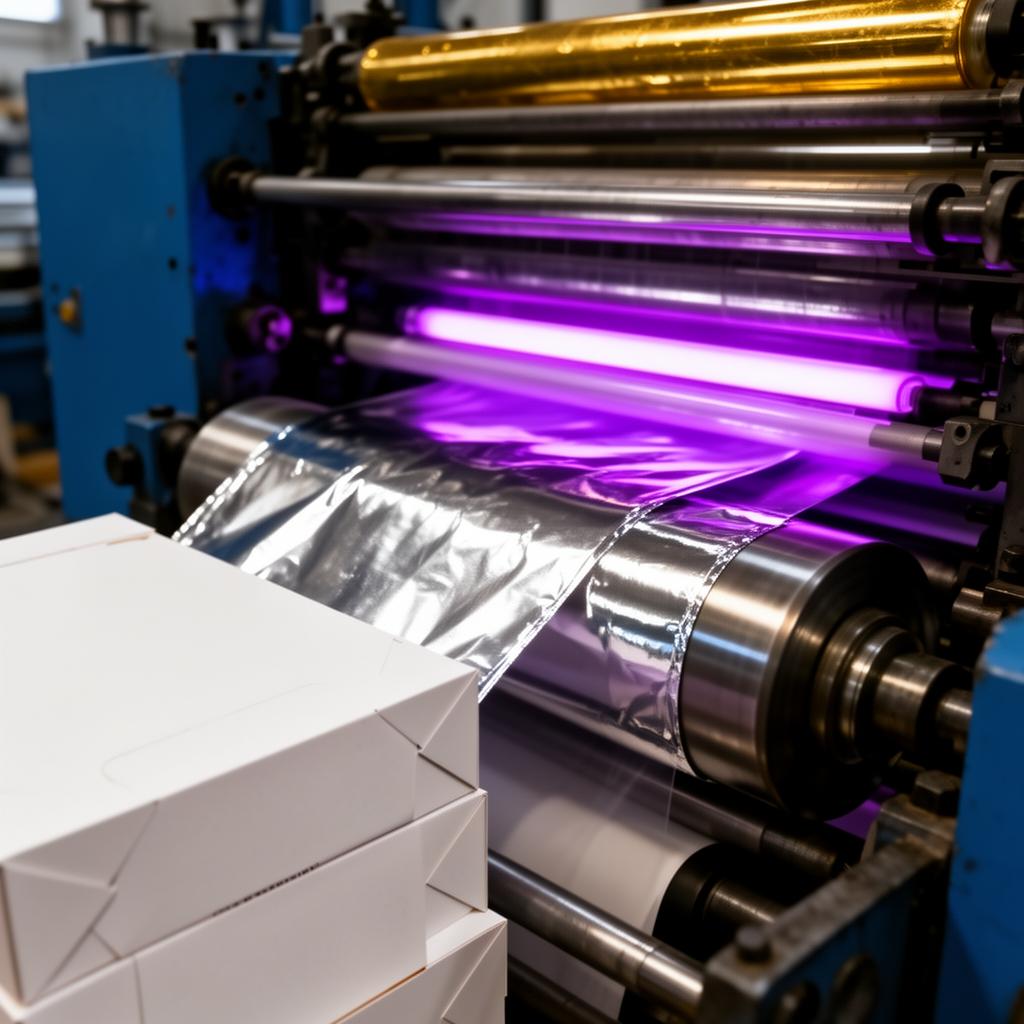
Cold Stamping Foil
Cold stamping foil for inline UV flexo and offset presses — no heat, no dies, up to 150 m/min with metallic, holographic and pigmented finishes.
View product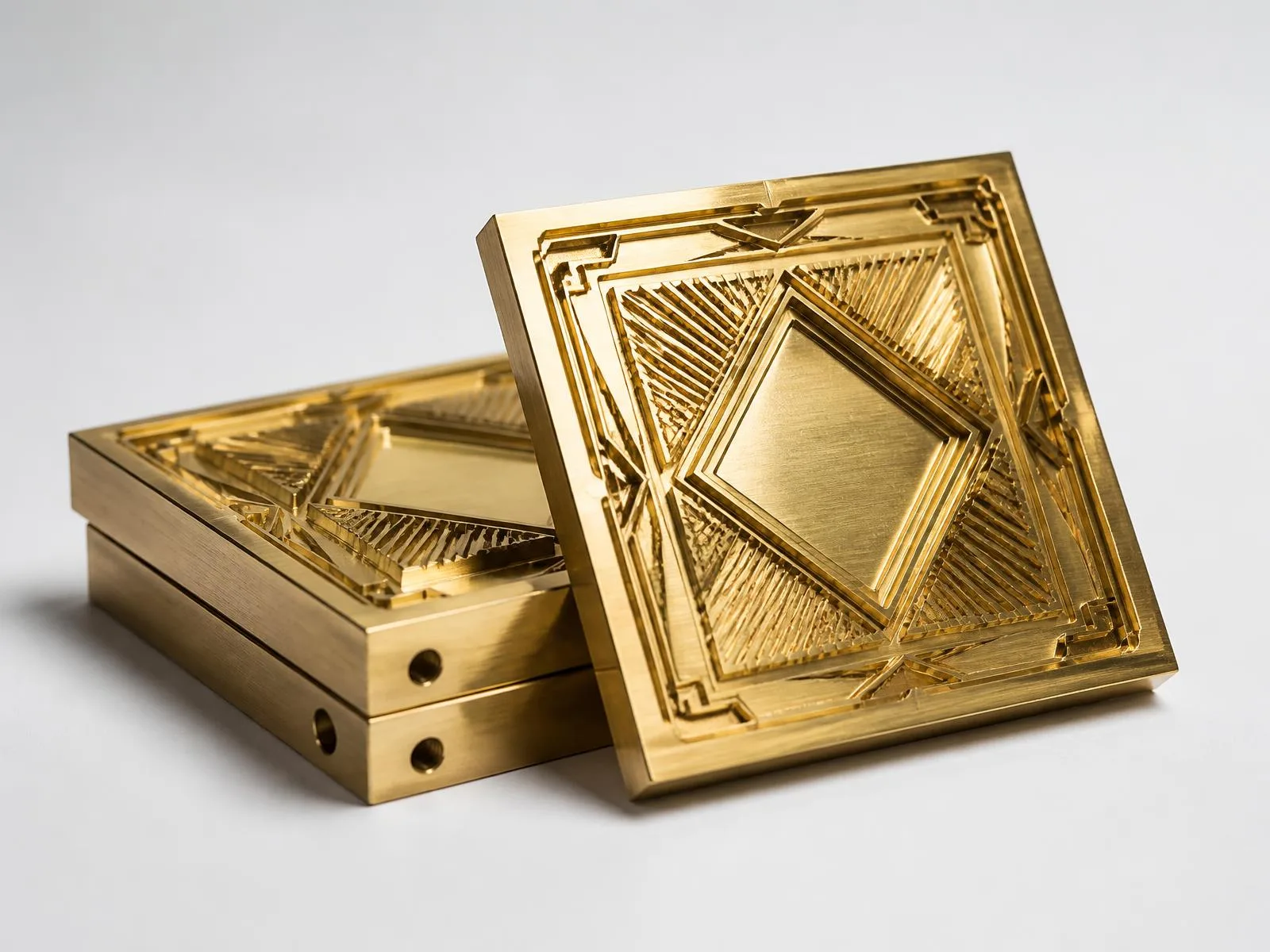
Brass & Magnesium Hot Stamping Dies
Engraved brass and magnesium stamping dies made to your artwork — the tooling that decides foil edge quality.
View productRelated Articles
View all
Technical Knowledge · May 21, 2026
Hot Stamping Foil Defects Troubleshooting Guide
Troubleshoot common hot stamping foil defects like pinholes and ghosting. This guide helps press operators achieve optimal quality and reduce waste.
Technical Knowledge · May 12, 2026
Pigment Hot Stamping Foil: Solid Color Effects
Achieve 100% opaque, solid color effects with pigment hot stamping foil. Elevate your packaging with high-gloss or matte finishes for superior results.
Technical Knowledge · May 12, 2026
Cold Foil vs Hot Foil: High-Speed Printing Comparison
Compare cold foil vs hot foil for high-speed printing. Discover technical details to choose the best stamping foil for your packaging needs.
Ready to source foil stamping and die-cutting from one supplier?
From stamping foils to post-press machines and die-cutting consumables — get factory-direct pricing and free samples.