
Colour Guide · 2026 Edition
Gold Hot Stamping — Shades, Settings & Selection
Rich gold, pale gold, champagne, rose gold foil stamping and copper compared — press window, substrate rules, tooling notes and MOQ for each shade.
راجعه Gavin Gao, المدير الفني
The Direct Answer
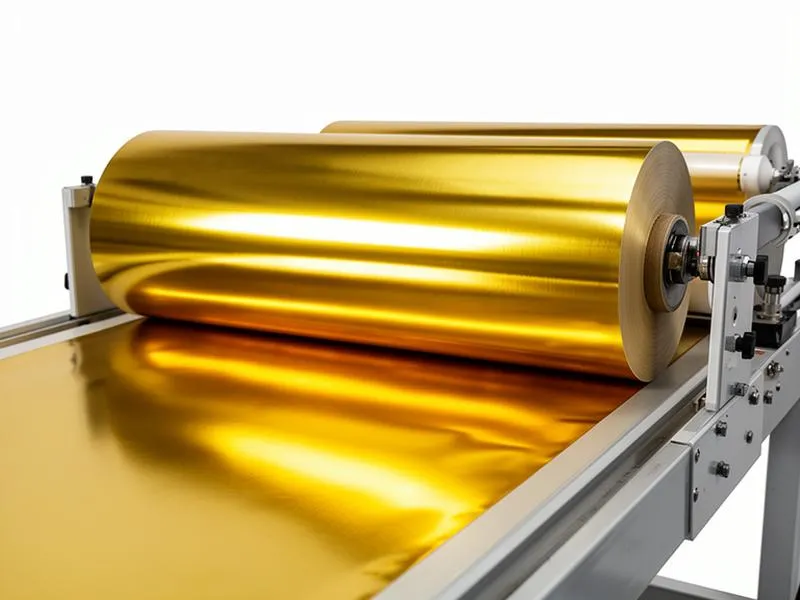
Gold hot stamping transfers a gold-toned foil onto paper, board, film or leather using a heated die at 110–140 °C with 0.3–0.8 s dwell. The gold comes from a transparent tinted lacquer over a ~50 nm aluminium layer, so rose gold foil stamping, champagne and copper run on the same dies and the same press settings as classic gold. Live specs on the premium metallic gold foil product page.
Key Engineering Takeaways
- 01
Gold foil is aluminium plus a tinted lacquer — pale gold, rich gold, champagne, rose gold and copper all share one base, so shade changes need no new tooling.
- 02
Press window 110–140 °C with 0.3–0.8 s dwell on coated board; drop 10–15 °C for plastics and leather.
- 03
Rose gold is the highest-demand warm shade in cosmetics and electronics; order large solid areas from a single batch to avoid visible drift.
- 04
Foil out-performs metallic gold ink on brightness in every lighting condition; cold foil bridges the cost gap on large coverage.
- 05
Combination emboss + foil needs a brass die and 15–25% more pressure than flat stamping.
- 06
Stock shades ship from 1 roll in 3–5 days; custom Pantone metallic from 500 m² in 12–15 days.
How gold stamping foil is built
A gold stamping foil is five layers: a 12–19 µm PET carrier, a release wax, the tinted colour lacquer that defines the shade, a vacuum-deposited aluminium mirror, and a heat-activated adhesive. Nothing in that stack is gold metal — which is why hot stamping gold costs a fraction of gold leaf and holds its colour for decades indoors. The full layer breakdown is in What is Hot Stamping Foil; the commercial side (cost per sheet, break-even, tooling) sits in the foil stamping pillar guide. For cool tones read silver foil stamping, for rainbow effects holographic foil, and for low-gloss warm shades matte foil.
Warm-tone family — 5 shades compared
Gloss measured at 60° on coated SBS 300 gsm. All shades run on the same dies.
| Shade | Gloss (GU) | Press Window | Reads As | Best For |
|---|---|---|---|---|
| Rich gold | 80–95 | 110–135 °C | Classic warm yellow | Spirits, chocolate, traditional luxury |
| Pale / lemon gold | 80–92 | 110–135 °C | Light cool-yellow | Fine type, designs paired with silver |
| Champagne gold | 45–65 | 110–130 °C | Muted soft gold | Fragrance, wedding stationery |
| Rose gold | 75–90 | 110–135 °C | Pink-warm metallic | Cosmetics, jewellery, electronics |
| Copper | 70–88 | 115–140 °C | Deep red-bronze | Craft beer, coffee, heritage brands |
Where gold foil is specified
Rich gold on coated board — logos, seals, borders and rigid box wraps.
Rose gold and champagne on soft-touch laminate; the highest-repeat colours in beauty.
Champagne and pale gold on uncoated cotton stock; also digital toner-reactive gold for runs of 1–500.
Rich gold in narrow 30–60 mm slit rolls for spine-only stamping.
Combination emboss + gold foil with a brass die for raised, tactile crests.
Copper and bronze on kraft and uncoated recycled board.
Frequently asked questions
Q01What is gold hot stamping?+
Gold hot stamping is the transfer of a gold-toned metallic foil onto a substrate using a heated die, typically at 110–140 °C with 0.3–0.8 s dwell. The foil is not gold metal: a ~50 nm aluminium layer supplies the mirror, and a transparent yellow-to-amber lacquer above it supplies the gold tone. Changing the lacquer formulation is what produces pale gold, rich gold, champagne, rose gold and copper from the same aluminium base — which is why shade changes cost nothing extra in tooling.
Q02Which gold shade should I choose?+
Rich gold (the 'classic' warm yellow) is the default for spirits, chocolate and traditional luxury. Pale/lemon gold suits designs sitting next to silver or white and looks less heavy on small type. Champagne is a muted low-saturation gold used across fragrance and wedding stationery. Rose gold reads pink-warm and dominates beauty and consumer electronics. Copper is the deepest warm tone, used on craft beer, coffee and heritage brands. Ask for the A4 swatch pack — screen renderings of metallics are unreliable.
Q03What is rose gold foil stamping used for?+
Rose gold foil stamping is the same process with a copper-pink tinted lacquer. It is the single most requested colour in cosmetics, jewellery packaging, wedding invitations and phone-accessory boxes. It runs at standard settings (110–135 °C) but shows shade drift more visibly than yellow gold, so we hold ΔE ≤ 2.0 roll-to-roll and recommend ordering the full job quantity from one batch when the design uses large solid areas.
Q04Gold stamping foil vs metallic gold ink — which is better?+
Foil wins on brightness by a wide margin: stamped gold reflects like a mirror, while metallic ink is a suspension of flakes in varnish and looks grey-gold under store lighting. Ink wins on cost for very large coverage areas and on runs below a few hundred sheets where die setup dominates. A practical rule: use gold stamping foil for logos, type, borders and seals; consider ink only for full-bleed backgrounds where a die would be uneconomic — or use cold foil, which gives foil brightness at ink-like coverage cost.
Q05What temperature and pressure does gold foil need?+
Coated paperboard: 110–135 °C, 0.3–0.8 s dwell, medium pressure with 60–80 Shore A make-ready. Uncoated and kraft: raise 5–10 °C or extend dwell, never both at once. Plastics (PVC, PET, ABS): drop to 105–125 °C with a film-grade adhesive. Leather and PU: 100–120 °C with longer dwell. Overheating shows first as a dulled, brownish edge on fine serifs; that is the signal to reduce temperature before touching pressure.
Q06Can gold foil be combined with embossing?+
Yes — combination dies emboss and foil in a single hit, producing a raised gold logo with sharp shoulders. It requires a brass die (magnesium will not hold the sculpted relief through a long run) and 15–25% more pressure than flat stamping. Board of 300 gsm and above takes the relief best. Details and pricing are in our hot foil stamping dies guide.
Q07Is gold foil recyclable and food-safe?+
The aluminium layer is around 50 nm thick — well under the thresholds at which standard paper-recycling streams are affected, and stamped cartons are accepted as recyclable paperboard in the EU and North America. Our foils are supplied with REACH, RoHS and heavy-metal declarations; food-contact-compliant adhesive grades are available for direct-contact packaging. Request the certificate pack with your quote.
Q08What is the MOQ and lead time for gold foil?+
Stock rich gold, pale gold, champagne, rose gold and copper ship from 1 roll (typically 640 mm × 120 m) in 3–5 days. Custom slitting from 30 mm to 1,600 mm takes 7–10 days. Custom Pantone metallic matching needs 500 m² and 12–15 days including a one-time matching fee. Free A4 swatch packs covering every warm shade ship in about 5 business days to qualified buyers.
Get gold foil samples in 5 days
Send us the shade, roll width, substrate and monthly volume — we reply with FOB pricing, lead time and a free A4 swatch pack covering every warm shade.