
Colour Guide · 2026 Edition
Silver Foil Stamping — Shades, Specs & Press Settings
Bright silver, matt silver, gunmetal and white foil stamp shades compared, plus silver holographic foil — with the press window, substrate rules and MOQ for each.
Reviewed by Gavin Gao, Technical Director
The Direct Answer
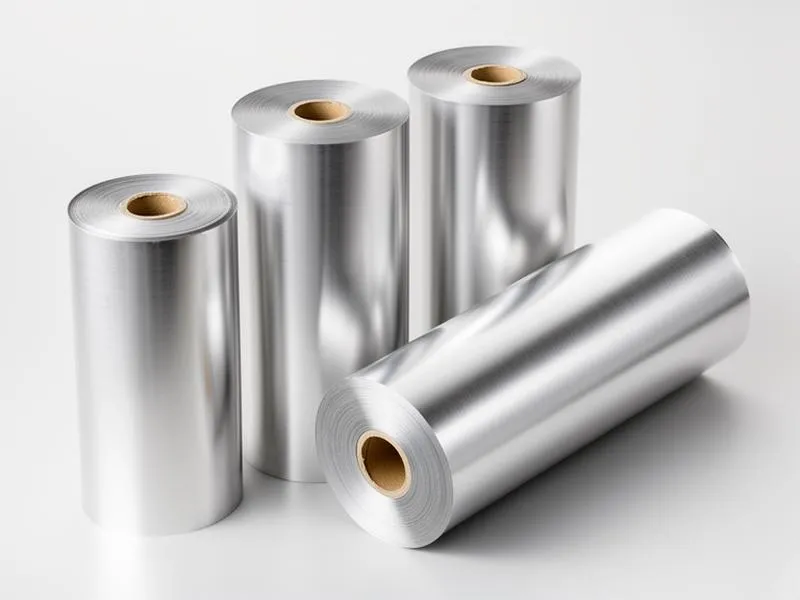
Silver foil stamping uses a heated die to transfer an aluminium-metallised foil onto paper, board, film or leather at 105–135 °C with 0.3–0.8 s dwell. The four production shades are bright silver, matt silver, gunmetal foil and opaque white foil; adding a diffraction grating to the same base gives silver holographic foil. Browse live specs on the matt silver foil product page.
Key Engineering Takeaways
- 01
Four silver-family shades cover almost every brief: bright silver (mirror), matt silver (texture-friendly), gunmetal (dark metallic), white (opaque pigment).
- 02
Silver holographic foil is the same silver base with a diffraction grating — brighter and cooler-toned than gold-based holographic.
- 03
Press window 105–135 °C for metallics, 100–125 °C for white pigment foil; shade changes never require a new die.
- 04
Matt silver and gunmetal are the safe picks on kraft, recycled and soft-touch stock where a mirror finish shows every flaw.
- 05
White foil is the only reliable way to place clean white type on black or dark-coloured board.
- 06
Stock shades ship from 1 roll in 3–7 days; custom slitting 30–1,600 mm in 7–10 days.
Silver foil stamp vs silver foil stamping — what buyers actually mean
Searches for a silver foil stamp usually mean one of two things: the finished decoration on a box or card, or the die that produces it. Both come back to the same three decisions — which silver shade, which substrate, and hot or cold. Shade is handled below; substrate rules are in What is Hot Stamping Foil; the hot-versus-cold economics are in Hot vs Cold Foil Stamping. If your artwork needs a rainbow rather than a flat mirror, read the holographic foil guide, and for the low-gloss family see matte foil. The warm-tone equivalent of this page is gold foil stamping.
Silver family — 5 shades compared
All five run on the same dies and the same presses. Gloss measured at 60° on coated SBS 300 gsm.
| Shade | Gloss (GU) | Press Window | Reads As | Best For |
|---|---|---|---|---|
| Bright silver | 80–95 | 105–130 °C | Mirror chrome | Spirits, cosmetics, coated board |
| Matt silver | 25–40 | 105–130 °C | Brushed technical | Kraft, recycled, soft-touch, electronics |
| Gunmetal foil | 18–30 | 125–135 °C | Dark anthracite metallic | Men's grooming, tools, automotive |
| White foil stamp | 35–55 | 100–125 °C | Opaque flat white | Black board, dark film, kraft |
| Silver holographic foil | 70–90 | 105–130 °C | Cool rainbow mirror | Gift wrap, promo, anti-copy |
Where each silver shade is specified
Bright silver on coated board for label panels, neck collars and rigid boxes.
Matt silver and gunmetal foil read as technical rather than decorative; both hide handling marks.
Bright silver logos over soft-touch laminate; white foil for reversed-out type on black cartons.
Silver spines and covers, including narrow 30–60 mm slit rolls for spine-only stamping.
Silver holographic foil in rainbow and star patterns, supplied in wide 640–1,600 mm rolls.
Silver cold foil printed inline, then overprinted CMYK to create any tinted metallic.
Frequently asked questions
Q01What is silver foil stamping?+
Silver foil stamping is hot stamping with an aluminium-metallised foil that carries a neutral or cool-toned lacquer, transferred to the substrate by a heated die at 105–135 °C with 0.3–0.8 s dwell. The ~50 nm vacuum-deposited aluminium layer is what makes the finish mirror-bright; the lacquer above it decides whether the result reads as bright silver, matt silver, pearl white or dark gunmetal. It is the second most-specified foil colour after gold and the default choice for electronics, spirits, cosmetics and technical packaging.
Q02Bright silver vs matt silver vs gunmetal foil — how do I choose?+
Bright silver (gloss 80–95 GU) is a true mirror — best on smooth coated board where the reflection stays undistorted. Matt silver (25–40 GU) hides substrate texture and fingerprints and is the safe choice on uncoated, kraft and soft-touch laminated stock. Gunmetal foil is a dark grey-anthracite metallic (18–30 GU) used when the design needs a metallic that stays legible against white or light artwork — common on premium electronics, tools, automotive and men's grooming packaging. All three run at identical press settings, so you can swap shades without re-making the die.
Q03What is white foil stamping and when should I use it?+
White foil is a pigment foil, not a metallic one: an opaque titanium-dioxide-loaded lacquer replaces the aluminium layer. Use it when you need clean white type or line art on dark board, kraft, black soft-touch laminate or coloured film, where white ink would sink in and look grey. Opacity is the spec that matters — our standard white gives full hiding on black 300 gsm board in one pass; two-pass stamping is only needed on heavily textured stock. Press 100–125 °C, slightly cooler than metallic silver, because pigment lacquers scorch sooner.
Q04What is silver holographic foil?+
Silver holographic foil is a silver-based metallic foil embossed with a nanoscale diffraction grating before metallisation, so the mirror surface splits light into a moving rainbow. The common patterns are rainbow (general-purpose), fine pillar, dot-matrix and seamless star. Because the base is silver, the holographic effect stays cool-toned and reads brighter than gold-based holographic foil under store lighting. Full technical detail is in our holographic foil guide; if you need registered, logo-specific holograms see the security foil guide.
Q05What press settings does silver foil need?+
Bright and matt silver: 105–135 °C die temperature, 0.3–0.8 s dwell, 60–80 Shore A make-ready. Gunmetal: same window, but hold the top of the range (125–135 °C) so the darker lacquer bonds fully. White pigment foil: 100–125 °C. On plastics (PP, PVC, PET) drop 10–15 °C and lengthen dwell instead of raising heat. If the edge of the stamp looks feathered, the die is too hot; if the foil lifts in the middle of a solid area, add pressure before adding temperature.
Q06Which substrates work best with silver foil?+
Coated SBS/FBB 200–500 gsm gives the brightest mirror. Uncoated, recycled and kraft stocks work well with matt silver and gunmetal — the diffuse finish visually integrates with the fibre texture. Films (BOPP, PET, PVC 0.05–0.8 mm) need our film-grade adhesive. Soft-touch laminate needs a high-tack grade; ask for a sample test before committing to a run. Textile and leather use a separate heat-transfer silver.
Q07What is the MOQ and lead time for silver foil?+
Stock bright silver, matt silver and white ship from 1 roll (typically 640 mm × 120 m) in 3–5 days. Gunmetal and silver holographic are stocked in the common widths and ship in 5–7 days. Custom widths from 30 mm to 1,600 mm are slit to order in 7–10 days; custom holographic patterns need 1,000 m² and 18–25 days. Free A4 swatch packs covering every silver shade are available to qualified buyers.
Q08Can I get silver as cold foil instead?+
Yes — cold foil is silver by definition. A UV adhesive is printed, a plain silver foil is laminated inline, and the silver is then overprinted with CMYK to create gold, rose gold, copper or any tinted metallic from a single roll. That is why high-volume label and carton lines stock silver cold foil only. Break-even against hot stamping is usually 5,000–8,000 sheets per design; see the hot vs cold foil comparison for the full maths.
Get silver foil samples in 5 days
Tell us the shade, roll width, substrate and monthly volume — we reply with FOB pricing, lead time and a free A4 swatch pack covering every silver shade.