
Discover essential PVC card hot stamping foil specifications for bank, loyalty, and membership cards. Ensure durable, high-quality finishes for plastic cards.
Table of Contents
- Technical Specifications for PVC Card Foils
- The Importance of Heat Management and Dwell Time
- Signature Panel and Security Integration
- Durability and Chemical Resistance Requirements
- Choosing Between Flat-bed and Rotary Stamping
- Surface Pre-treatment and Ink Compatibility
- Specify Your Project
- Frequently Asked Questions
In the high-stakes world of plastic card manufacturing, visual appeal is inseparable from functional durability. Utilizing the correct PVC card hot stamping foil ensures that brand logos, security features, and decorative borders withstand the rigors of daily wallet friction and chemical exposure. Unlike paper-based applications, PVC (Polyvinyl Chloride) and PETG substrates are heat-sensitive, requiring specialized foils that activate at specific temperatures without warping the card body, typically a standard CR80 format. Engineers must consider the release layer and the adhesive sizing of the foil to ensure clean edges on fine-line patterns while maintaining high-speed production efficiency on units like an automatic hot stamping machine. This post explores the technical parameters necessary for bank-grade and loyalty card applications.
Technical Specifications for PVC Card Foils
PVC card stamping requires a multi-layer foil construction designed for non-absorbent surfaces. The carrier layer is usually a 12-micron, 16-micron, or 19-micron PET film. For credit card foil applications, a thinner 12-micron carrier is preferred for high-definition stamping, whereas a 16-micron carrier offers better mechanical strength for large solid areas. The foil must be compatible with both laminated and non-laminated PVC surfaces, as well as surfaces coated with UV-curable inks or varnishes.
| Technical Property | Bank-Grade Specification | Loyalty/Membership Grade |
|---|---|---|
| Substrate Compatibility | PVC, PETG, PC (Polycarbonate) | Standard PVC, ABS |
| Stamping Temperature | 110°C - 140°C (Cylinder) | 100°C - 130°C (Flat-bed) |
| Carrier Thickness | 12μm PET Film | 16μm PET Film |
| Abrasion Resistance | > 500 Taber cycles | > 200 Taber cycles |
| Adhesion Strength | DIN EN ISO 2409 (GT0) | DIN EN ISO 2409 (GT1) |
The Importance of Heat Management and Dwell Time
Temperature control is the most critical variable in PVC card stamping. PVC has a low glass transition temperature (Tg); excessive heat (above 150°C) can lead to card deformation or "orange peel" texture variations. High-quality premium metallic gold hot stamping foil for cards is formulated with low-temperature release resins. Optimal results are usually achieved within a dwell time of 0.2 to 0.5 seconds at a pressure of 3-5 kgf/cm². Accurate cutting of the master rolls on an AF-1350 slitting machine ensures that edges are clean and free of dust, which prevents hickeys and pinholes during the stamping process.
Signature Panel and Security Integration
For financial cards, the hot stamping process isn't limited to aesthetics. Holographic patches and anti-counterfeit security foil are applied via hot stamping to verify authenticity. These foils often contain OVD (Optically Variable Device) technology. The stamping die must be precisely registered to the card layout, often requiring optical sensor integration on the stamping press. If the card requires a matte finish, engineers may opt for matte silver hot stamping foil to provide a sophisticated, non-reflective contrast against a high-gloss card body.
Durability and Chemical Resistance Requirements
PVC cards are subject to harsh environments, including skin oils, detergents, and frequent mechanical swiping. Loyalty card gold foil must pass rigorous testing protocols to be considered industry-standard. Key tests include:
- Artificial Sweat Test: Resistance to acidity and moisture (pH 4.7) for 24 hours.
- Plasticizer Resistance: Important for cards stored in PVC wallets where plasticizer migration can cause foil softening.
- Tape Test (ASTM D3359): No foil lift when 3M 600 tape is applied and removed at a 90-degree angle.
- Adhesion to Over-lamination: Ensuring the foil bonds correctly if a secondary thermal laminating machine process is used after stamping.
Choosing Between Flat-bed and Rotary Stamping
The choice of equipment significantly influences the foil selection. Flat-bed stamping, often performed on machines like the TYM-1060 automatic embossing machine, allows for high-pressure application which is ideal for textured card surfaces. However, for high-volume bank cards, rotary stamping provides higher speeds (up to 8,000 cards per hour). Rotary foils require a faster "easy release" formulation compared to flat-bed foils, which benefit from a "medium-firm" release to prevent "flaking" on intricate designs.
Surface Pre-treatment and Ink Compatibility
Before applying PVC card hot stamping foil, the surface tension of the card should ideally be above 38 dyne/cm. If the card is printed with heavy UV offsets, the wax content in the ink can inhibit foil adhesion. In such cases, a primer or corona treatment may be necessary. For designers seeking unique visual effects, holographic rainbow foil can be used to create shifting color spectrums that enhance the perceived value of membership cards while adding a layer of difficulty for counterfeiters.
Specify Your Project
Are you looking for high-performance foil for credit, loyalty, or membership cards? Our technical team at All-in Pack can provide specific formulations tailored to your substrate and machine speed. Contact us today to receive data sheets and samples of our tailored PVC card hot stamping foil solutions.
Frequently Asked Questions
Quick answers about pvc-card-stamping.
Companion Products
Specs and samples for the products discussed in this article.
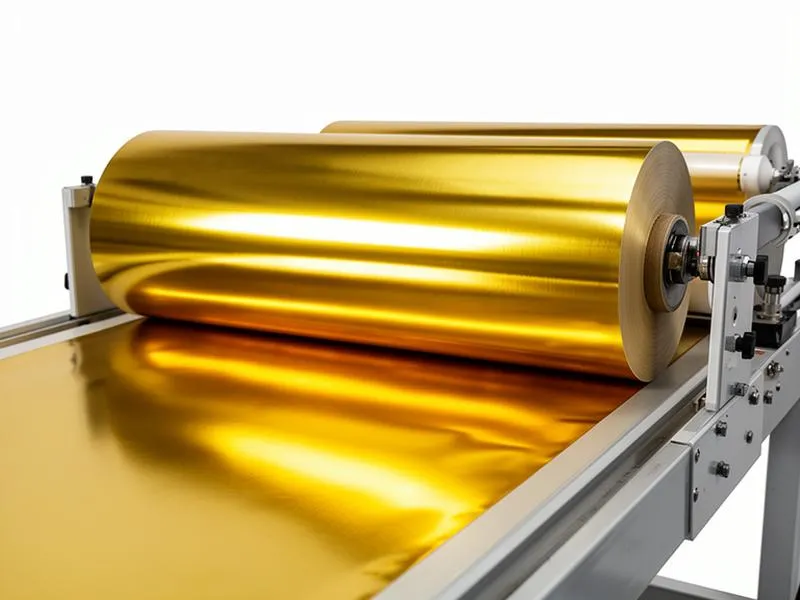
Premium Metallic Gold Hot Stamping Foil
Ultra-bright metallic gold foil with mirror-like reflection for premium packaging and label applications.
View product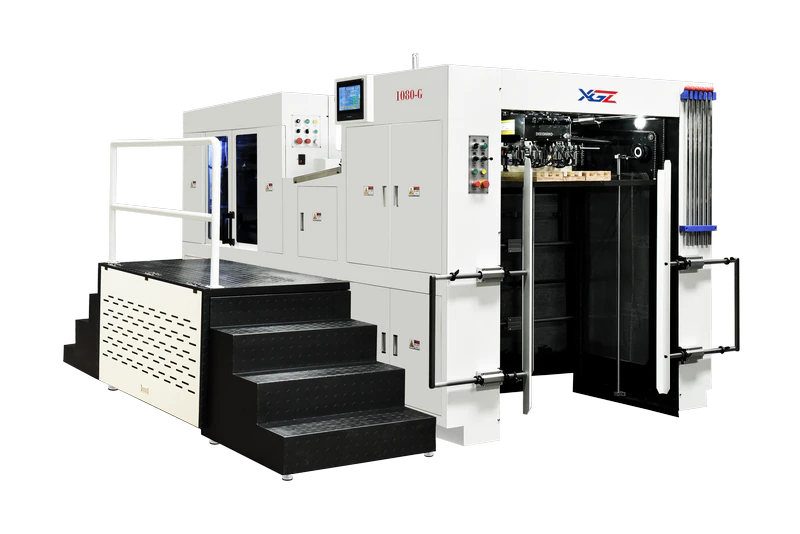
XG1080G Fully Automatic Hot Foil Blocking Machine (Hot Stamping Press)
Industrial hot foil blocking machine (also called a hot stamping press) with 5,500 sheets/hour throughput, 1060×740 mm max sheet size, 80-ton stamping pressure and ±2°C PLC temperature control — for paperboard, luxury packaging, book covers and security printing.
View product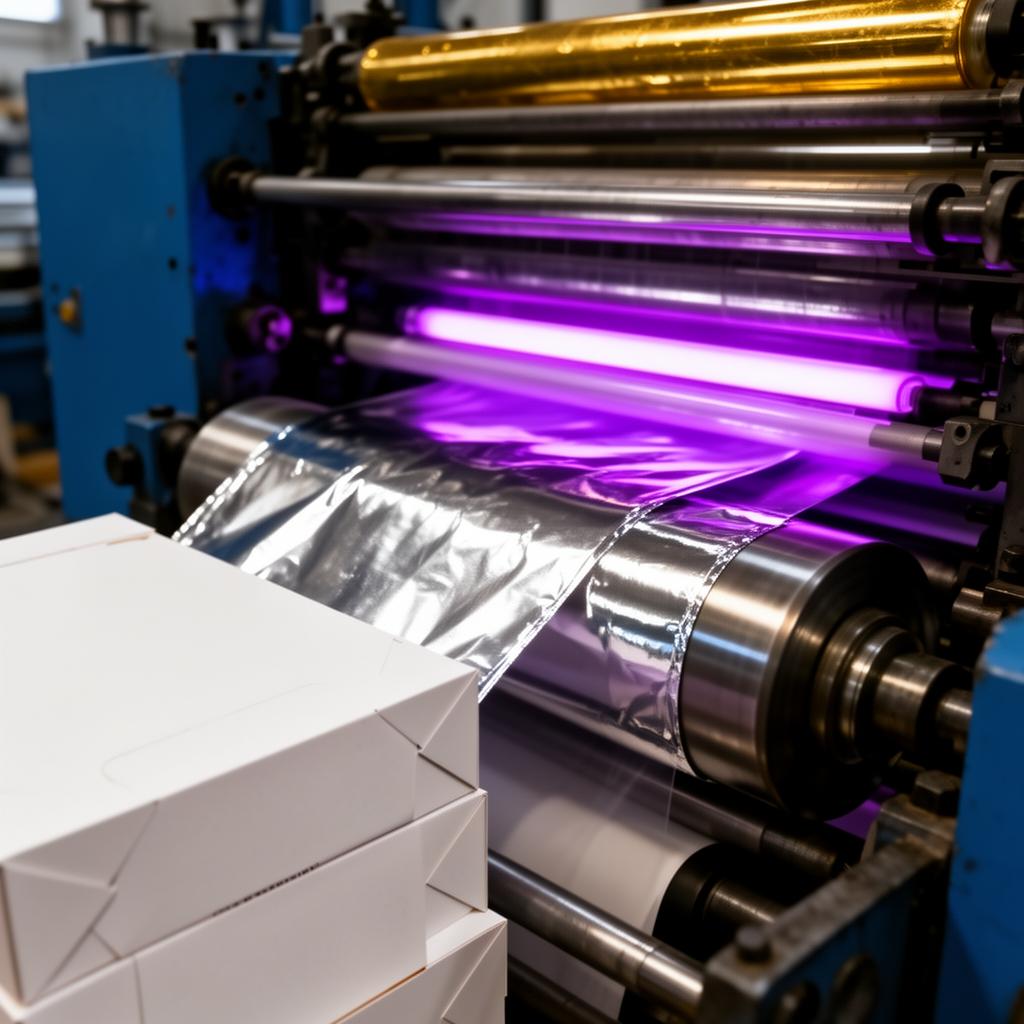
Cold Stamping Foil
Cold stamping foil for inline UV flexo and offset presses — no heat, no dies, up to 150 m/min with metallic, holographic and pigmented finishes.
View productRelated Articles
View allTechnical Knowledge · May 12, 2026
Cosmetic Hot Stamping Foil: Gold for Luxury Packaging
Select the perfect cosmetic hot stamping foil for luxury packaging. Ensure product success with ideal temperature, chemical resistance, and micron thickness.

Technical Knowledge · May 12, 2026
Hot Stamping Foil Roll Sizes & Specs Chart
Optimize production now with our hot stamping foil roll size chart, covering widths, lengths, and core specs for machine compatibility.
Technical Knowledge · May 12, 2026
Hot Stamping Foil for Greeting Cards: Pricing Guide 2026
Unlock optimal pricing for hot stamping foil for greeting cards with our 2026 guide. Balance quality and cost for your stationery elegantly.
Ready to source foil stamping and die-cutting from one supplier?
From stamping foils to post-press machines and die-cutting consumables — get factory-direct pricing and free samples.