

Optimize production now with our hot stamping foil roll size chart, covering widths, lengths, and core specs for machine compatibility.
Table of Contents
Selecting the correct hot stamping foil roll dimensions is critical for maximizing production efficiency, minimizing material waste, and ensuring optimal print quality. This detailed guide provides a comprehensive hot stamping foil roll size chart, outlining standard widths, lengths, and core specifications crucial for industrial packaging and graphic arts applications in 2026.
Understanding Hot Stamping Foil Roll Widths
Hot stamping foil roll widths are standardized to accommodate a wide range of hot stamping machines and application requirements, from narrow label printing to wide-format packaging decoration. Standard widths typically range from 64mm to 1280mm, with common increments designed for efficient slitting and machine compatibility.
The width of a hot stamping foil roll must precisely match or slightly exceed the area being stamped to ensure full coverage without excessive waste. Industrial applications commonly utilize widths such as 640mm and 1280mm to cover large surfaces or multiple smaller items simultaneously on high-speed presses. Smaller widths, like 64mm, 128mm, or 256mm, are frequently employed for intricate details, narrow strips, or specialized equipment.
Slitting tolerance is a critical factor in foil roll width. Reputable manufacturers maintain a tight slitting tolerance, typically +/- 1mm to +/- 2mm, to ensure consistent width across the entire roll. This precision is essential for proper feeding, alignment with the stamping die, and preventing issues like foil wrinkling or incomplete transfer during high-volume production runs. OEMs often provide custom slitting services to meet exact client specifications, optimizing material use for unique project dimensions.
Standard Hot Stamping Foil Roll Widths Overview
| Width (mm) | Common Applications | Typical Machine Compatibility |
|---|---|---|
| 64 | Small labels, narrow bands, security features, small graphics | Benchtop, manual, small semi-automatic machines |
| 128 | Product labels, cosmetic packaging, gift cards, book covers | Small to medium semi-automatic machines |
| 256 | Mid-sized packaging, stationery, greeting cards, general graphics | Medium semi-automatic, entry-level automatic machines |
| 320 | Mid-sized packaging, broader labels, specialized printing | Medium automatic, specialized presses |
| 480 | General packaging, larger labels, security documents | Medium to large automatic machines |
| 640 | Standard industrial packaging, large format graphics, wide labels | High-speed automatic, cylinder presses |
| 1280 | Very wide format packaging, large panels, continuous production | Specialized wide-format automatic machines |
Standard Hot Stamping Foil Roll Lengths
Hot stamping foil roll lengths are engineered to balance production efficiency with logistical considerations, offering options suitable for various operational scales. The most common lengths include 120m, 240m, 360m, 600m, and 1200m, each serving distinct production requirements.
Shorter rolls, such as 120m or 240m, are often preferred for prototyping, short production runs, or manual hot stamping machines where frequent roll changes are less impactful on overall efficiency. They also reduce initial material investment and simplify handling for smaller operations. Conversely, longer rolls, particularly 600m and 1200m, are indispensable for high-volume, automated production lines. These extended lengths significantly minimize machine downtime associated with roll changes, thereby boosting throughput and reducing labor costs. For instance, the shift towards automated stamping lines is expected to drive a 7.2% increase in orders for longer foil rolls (600m and 1200m) to minimize changeover times in 2026. The choice of length also influences inventory management and storage space requirements, with longer rolls typically offering a better cost-per-meter ratio for bulk purchases.
Hot Stamping Foil Roll Core Specifications
The core of a hot stamping foil roll is a critical component that ensures stable feeding and compatibility with hot stamping machinery. Hot stamping foil rolls primarily utilize two inner core diameters: 25.4mm (1 inch) and 76mm (3 inch). These standards accommodate the vast majority of hot stamping equipment available in the market.
The 25.4mm (1 inch) core is typically used for narrower and shorter foil rolls, often found on manual, semi-automatic, or smaller automatic hot stamping machines. These machines usually have smaller spindles designed to hold lighter rolls. The 76mm (3 inch) core, on the other hand, is the industry standard for wider and longer rolls, predominantly used on high-speed, fully automatic industrial hot stamping machines. These machines feature robust spindles capable of supporting the increased weight and torque of larger foil rolls, ensuring consistent tension and smooth unwinding during continuous operation. Core materials are usually sturdy cardboard or plastic, designed to withstand the stresses of winding and unwinding without deforming. Correct core selection is paramount for preventing slippage, uneven tension, and potential foil breakage, which can disrupt production and compromise product quality.
How to Select the Correct Foil Roll Dimensions
Selecting the appropriate hot stamping foil roll dimensions involves a systematic evaluation of several factors related to your specific application and machinery. An informed decision ensures maximum efficiency, minimal waste, and superior finished product quality.
- Evaluate Stamping Area: Precisely measure the maximum width and length of the area to be stamped on your substrate. The foil width should ideally be slightly greater than this area to allow for registration and minimize edge effects, but not excessively wide to avoid unnecessary material waste.
- Machine Compatibility: Consult your hot stamping machine's specifications for its maximum allowable foil roll width and length, as well as the compatible core inner diameter (1-inch or 3-inch). Ensure the chosen foil dimensions fit your machine's spindle and tensioning system.
- Production Volume: For high-volume, continuous production, opt for longer rolls (600m or 1200m) to reduce the frequency of roll changes and associated downtime. For smaller runs or prototyping, shorter rolls (120m or 240m) may be more economical and manageable.
- Material Type and Substrate: Consider the type of material being stamped and the substrate. Some applications may require specific foil types that are only available in certain widths or lengths.
- Storage and Handling: Assess your facility's storage capacity and material handling capabilities. Larger, heavier rolls require more robust handling equipment and dedicated storage space.
- Cost-Effectiveness: While longer rolls generally offer a lower cost per linear meter, the overall cost-effectiveness depends on your specific usage patterns and waste minimization efforts.
By 2026, industry analysts project a 5.8% increase in demand for wide-format hot stamping foils (640mm and above) for packaging applications, highlighting the need for precise roll sizing to meet evolving market demands.
OEM Custom Hot Stamping Foil Roll Sizes
While standard hot stamping foil roll sizes cater to most industrial requirements, there are instances where custom dimensions become essential for optimizing production. OEM custom hot stamping foil roll sizes are available to address unique machine configurations, specialized substrate dimensions, or specific project requirements that standard sizes cannot efficiently meet.
Custom slitting allows for precise width adjustments, ensuring that the foil perfectly matches the stamping area, thereby significantly reducing material waste and improving overall cost-efficiency. This is particularly beneficial for highly specialized packaging designs, security features, or non-standard product formats. When requesting custom sizes, it is crucial to provide detailed specifications, including the exact width, desired length, and core diameter, along with any specific tolerance requirements. Reputable suppliers can manufacture custom rolls with the same stringent quality controls as their standard offerings, ensuring consistent performance and reliability. Engaging with a supplier capable of OEM customization ensures that your hot stamping operations are always running at peak efficiency, regardless of the complexity of your project.
Understanding the intricacies of hot stamping foil roll sizes is fundamental to efficient and high-quality production. By carefully considering width, length, and core specifications, manufacturers can optimize their processes and achieve superior results. For tailored solutions and expert advice on selecting the ideal hot stamping foil dimensions for your specific needs, request a quote or sample from All-in Pack today.
Frequently Asked Questions
Quick answers about hot-stamping-foil.
Companion Products
Specs and samples for the products discussed in this article.

Premium Metallic Gold Hot Stamping Foil
Ultra-bright metallic gold foil with mirror-like reflection for premium packaging and label applications.
View product
Cold Stamping Foil
Cold stamping foil for inline UV flexo and offset presses — no heat, no dies, up to 150 m/min with metallic, holographic and pigmented finishes.
View product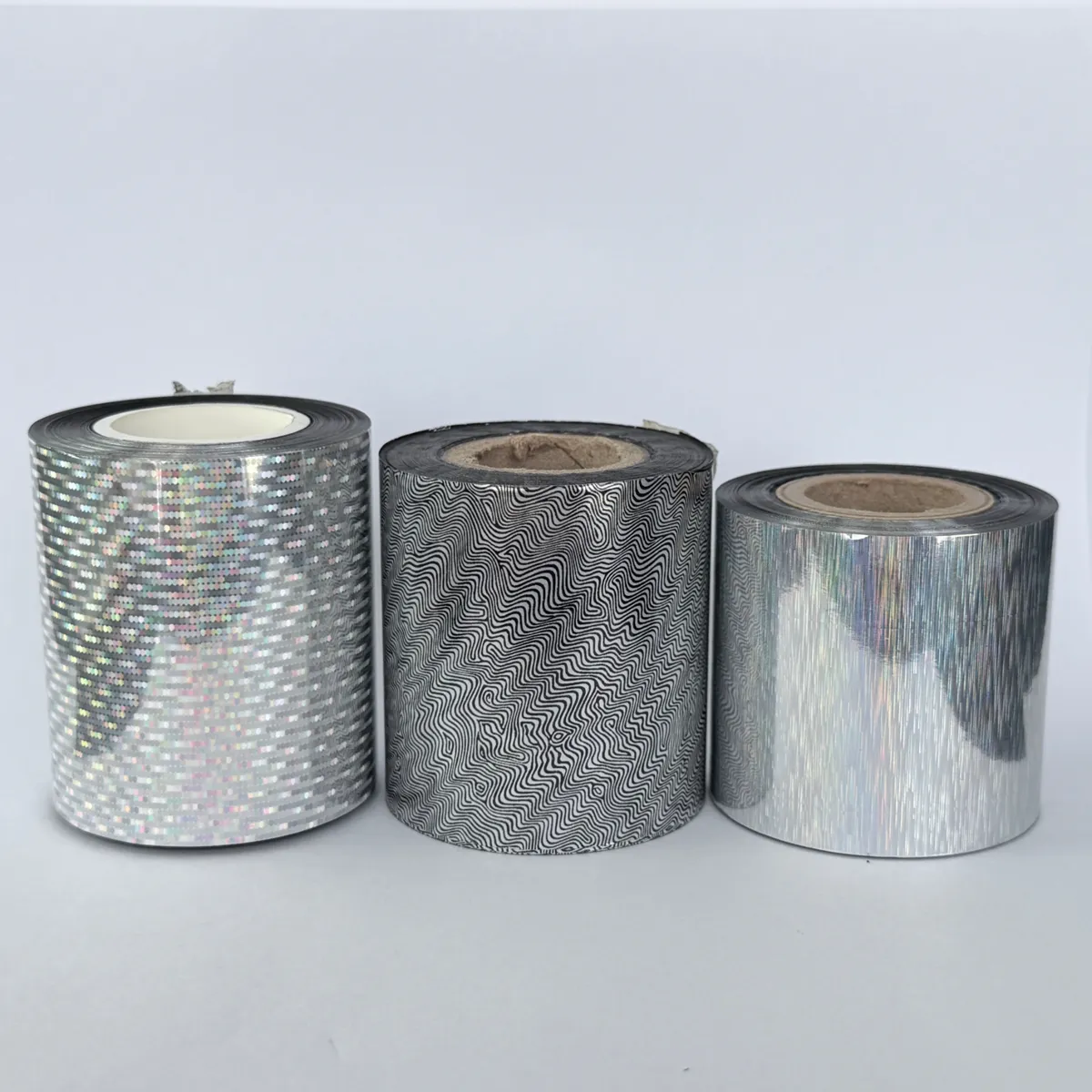
Scratch-Off Foil for Hot Stamping
High-opacity scratch-off foil for lottery tickets, gift cards and security labels — clean removal, no flaking, strong heat-seal bond to paper, cardstock and PVC.
View productRelated Articles
View all
Technical Knowledge · May 12, 2026
Hot Stamping Foil for Electronics: Specs Guide
Choose the right hot stamping foil for electronics, ensuring durable branding for phone cases, logos, and nameplates. Get high-performance results for your products.
Technical Knowledge · May 12, 2026
PVC Card Hot Stamping Foil Specs for Plastic Cards
Discover essential PVC card hot stamping foil specifications for bank, loyalty, and membership cards. Ensure durable, high-quality finishes for plastic cards.
Technical Knowledge · May 12, 2026
Hot Stamping Foil Price Per Roll 2026: Guide
Understand hot stamping foil price per roll for 2026. Explore bulk pricing, MOQs, and key cost drivers to optimize your procurement strategy and savings.
Ready to source foil stamping and die-cutting from one supplier?
From stamping foils to post-press machines and die-cutting consumables — get factory-direct pricing and free samples.