
Discover the latest automatic laminating machine specs, water-based vs. solvent systems, and achieve an 18-month ROI.
Table of Contents
- Water-Based vs. Solvent Lamination: A Technical Comparison
- Water-Based Adhesives
- Solvent-Based Adhesives
- BOPP/PET Film Compatibility and Specifications
- Technical Comparison of Common Lamination Films
- Mechanical Speed and Throughput: Achieving 150 m/min
- Power Consumption and Operational Costs
- Calculating ROI: A Path to 18-Month Payback
- Sample ROI Calculation:
- Frequently Asked Questions
In the competitive packaging sector, the structural integrity and surface finish of carton boxes are non-negotiable. Lamination is the critical process that delivers both protection and premium tactility. For large-scale producers, an automatic laminating machine for carton applications is a cornerstone investment for achieving high throughput and consistent quality. These systems automate the process of bonding a protective film, typically BOPP or PET, to paperboard substrates, moving beyond the limitations of semi-automatic or manual methods common in smaller operations.
Modern converting facilities demand efficiency, operator safety, and environmental compliance—factors that directly influence equipment selection. The evolution from solvent-based adhesives to aqueous solutions, coupled with advanced servo motor controls and PLC-driven automation, defines the current generation of high-speed laminators. This guide provides a technical breakdown of the specifications and financial metrics that matter for a carton laminating machine, demonstrating how a strategic investment in the right Post-Press Equipment can yield a full return on investment (ROI) in as little as 18 months through operational efficiencies and increased capacity.
Water-Based vs. Solvent Lamination: A Technical Comparison
The choice of adhesive system is one of the most consequential decisions when specifying a laminating machine. The industry has seen a decisive shift away from solvent-based adhesives toward water-based alternatives due to environmental, safety, and operational cost drivers.
Water-Based Adhesives
A water based laminator utilizes acrylic emulsions or polyurethane dispersions (PUDs) where water is the carrier solvent. The adhesive is applied to the film, and the water is evaporated in a heated drying tunnel before the film is nipped to the paperboard substrate. This process is free from volatile organic compounds (VOCs), making it compliant with stringent international environmental and safety regulations. The initial investment for a water-based system can be higher due to the need for a more powerful drying section, but the long-term operational costs are significantly lower. Water-based adhesives typically cost between $2.50 to $4.00 USD per kilogram, compared to the higher and more volatile pricing of solvent-based glues.
Solvent-Based Adhesives
Solvent-based systems use chemicals like ethyl acetate or toluene as the carrier. While they can offer strong initial bonds and faster curing times with less energy-intensive drying, they pose significant drawbacks. VOC emissions require expensive ventilation and solvent recovery systems to meet environmental standards. The adhesives are flammable, increasing fire safety risks and insurance premiums. Furthermore, the cost of solvents adds to the operational expense, with prices often ranging from $4.50 to $6.50 USD per kilogram for the adhesive. For these reasons, solvent-based machines are now primarily used in specialized applications, while the mainstream carton industry has standardized on water-based technology.
BOPP/PET Film Compatibility and Specifications
An automatic laminating machine must be engineered to handle the industry-standard films used for protecting printed cartons: Biaxially Oriented Polypropylene (BOPP) and Polyethylene Terephthalate (PET). The machine's film unwind, tension control system, and laminating nip must be precisely calibrated for these materials.
A high-quality BOPP lamination machine is versatile enough to handle both film types, which have distinct properties. The surface of the film must be pre-treated (typically via corona discharge) to raise its surface energy to a minimum of 38-42 dynes/cm. This is critical for ensuring proper adhesive wet-out and achieving a permanent bond. Our machines include an integrated or optional corona treater to ensure optimal surface tension, regardless of the film supplier's initial treatment quality.
Technical Comparison of Common Lamination Films
| Specification | BOPP Film | PET Film |
|---|---|---|
| Typical Thickness | 15-30 μm (microns) | 12-25 μm (microns) |
| Tensile Strength | 130-160 MPa | 160-190 MPa |
| Clarity/Haze | Excellent clarity, low haze (~1.5%) | Exceptional clarity, very low haze (~0.5%) |
| Scuff Resistance | Good (can be improved with hard coats) | Excellent |
| Approx. Cost | $2.00 - $2.80 USD/kg | $2.50 - $3.50 USD/kg |
| Primary Application | General-purpose cartons, high-gloss finish | High-end packaging, applications requiring high scuff resistance |
Mechanical Speed and Throughput: Achieving 150 m/min
Production speed is a primary driver of profitability. A state-of-the-art automatic laminating machine for carton production operates at speeds up to 150 meters per minute. This figure is not just a theoretical maximum; it is a sustainable operational speed for long runs of standard carton stock (e.g., 250-450 gsm paperboard). This level of performance is achieved through a synergy of robust mechanical engineering and sophisticated electronic control.
Key components enabling this speed include:
- High-Speed Feeder: A non-stop, servo-driven feeder capable of separating and feeding sheets with an overlap accuracy of ±2 mm.
- Drying Tunnel: An extended drying tunnel, typically 6-9 meters long, with multiple temperature zones. Using a combination of infrared (IR) heating elements and high-velocity hot air knives, it efficiently evaporates water from the adhesive at high speeds. A typical setup might involve three zones set to 60°C, 85°C, and 70°C.
- Laminating Nip: A large-diameter, internally heated chrome roller and a high-pressure silicone rubber roller. The chrome roller is heated to 80-110°C to activate the final bond. A pneumatic or hydraulic pressure system exerts 8-15 MPa of pressure to ensure a void-free lamination.
- PLC Control: A central PLC (e.g., Siemens S7-1200) synchronizes the feeder, adhesive application, tension control, and sheet separation, allowing the operator to manage the entire process from a single HMI touchscreen.
At 150 m/min, a machine laminating sheets 1 meter in length can process 9,000 sheets per hour. This is a 2-3x increase in throughput compared to older machines running at 50-70 m/min, enabling converters to handle larger contracts and reduce lead times.
Power Consumption and Operational Costs
While speed is critical, energy efficiency is paramount for managing operational expenditures. The total installed power of a 150 m/min automatic laminating machine is typically between 75 kW and 95 kW. However, the actual operational power consumption is lower, averaging 55-70 kWh during continuous running.
The primary power consumers are:
- Drying Tunnel Heaters & Fans: 50-70 kW (main consumer, cycles to maintain temperature)
- Main Drive Motor: 11-15 kW
- Heated Chrome Roller: 9-12 kW (cycles to maintain temperature)
- Ancillary Systems (Feeder, Pumps, Controls): 5-8 kW
Assuming an industrial electricity tariff of $0.12 USD/kWh, the hourly energy cost would be approximately $6.60 - $8.40. When factoring this into a job costing model, the per-sheet energy cost becomes minimal, especially when spread across the high volume of sheets processed. Modern machines utilize energy-saving features such as high-efficiency IR lamps and insulated drying tunnels to minimize thermal loss, directly reducing these costs.
Calculating ROI: A Path to 18-Month Payback
An investment in a high-speed automatic laminator, with a typical CAPEX of $90,000 - $130,000 USD, can be justified through a clear return on investment calculation. The payback period is driven by reduced labor costs, lower material waste, and increased revenue from higher throughput.
Sample ROI Calculation:
Let's assume a mid-sized converting business replaces a 10-year-old, 60 m/min semi-automatic laminator with a new 150 m/min automatic model.
Cost Savings:
- Labor Reduction: The new machine requires one skilled operator. The older machine required two operators. Assuming a fully-loaded labor cost of $25/hour per operator, this saves a full position.
Monthly Labor Savings: 1 operator * $25/hr * 160 hrs/month = $4,000 - Waste Reduction: The automatic feeder and PLC control reduce material waste from ~4% to ~1.5%. On a monthly consumption of 50,000 square meters of material at an average cost of $0.50/sqm, this yields significant savings.
Monthly Waste Savings: (4% - 1.5%) * 50,000 sqm * $0.50/sqm = $625
Increased Revenue:
- Throughput Increase: Production capacity increases by 150%. This allows the business to take on an additional 400 hours of laminating work per month, which was previously outsourced or rejected. Assuming a conservative net profit of $50/hour for lamination services.
Additional Monthly Profit: 100 hours (conservative estimate of new work) * $50/hr profit = $5,000
Total Monthly Gain: $4,000 (Labor) + $625 (Waste) + $5,000 (Profit) = $9,625
ROI Calculation:
- Machine CAPEX: $110,000
- Payback Period: $110,000 / $9,625 per month = 11.4 months
Even with more conservative estimates, achieving a full ROI within 18 months is a realistic benchmark for many businesses making this upgrade.
The technical specifications and performance metrics of a modern automatic carton laminating machine present a clear business case for investment. By prioritizing water-based systems, high speeds, and energy efficiency, packaging converters can enhance product quality while substantially improving their bottom line. To receive a detailed quotation and a customized ROI analysis for your specific production needs, please contact our technical sales team.
Frequently Asked Questions
Quick answers about automatic laminating machine carton.
Companion Products
Specs and samples for the products discussed in this article.
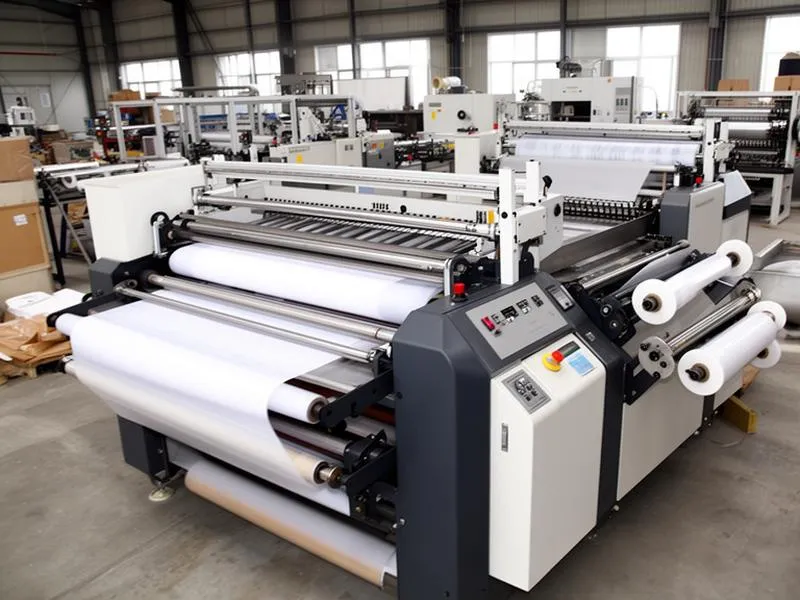
LM-1100 Automatic Thermal Laminating Machine
Fully automatic thermal laminator for BOPP, PET, and nylon film lamination with anti-curl system.
View product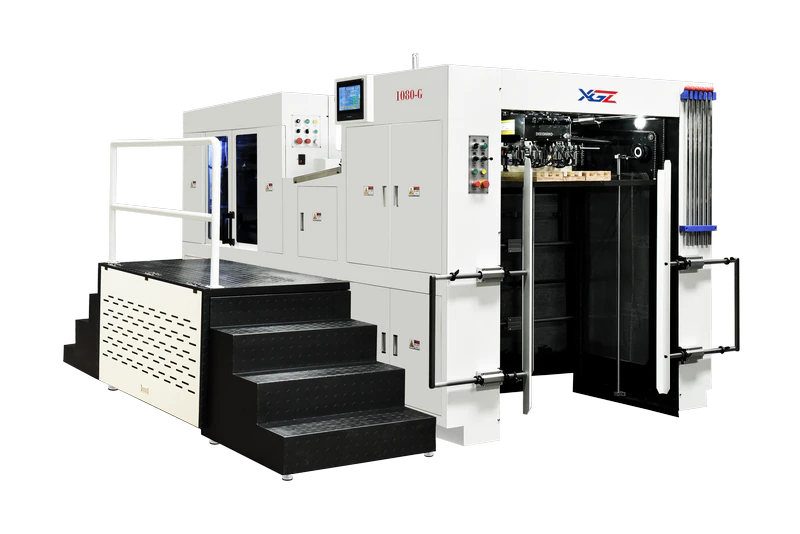
XG1080G Fully Automatic Hot Foil Blocking Machine (Hot Stamping Press)
Industrial hot foil blocking machine (also called a hot stamping press) with 5,500 sheets/hour throughput, 1060×740 mm max sheet size, 80-ton stamping pressure and ±2°C PLC temperature control — for paperboard, luxury packaging, book covers and security printing.
View product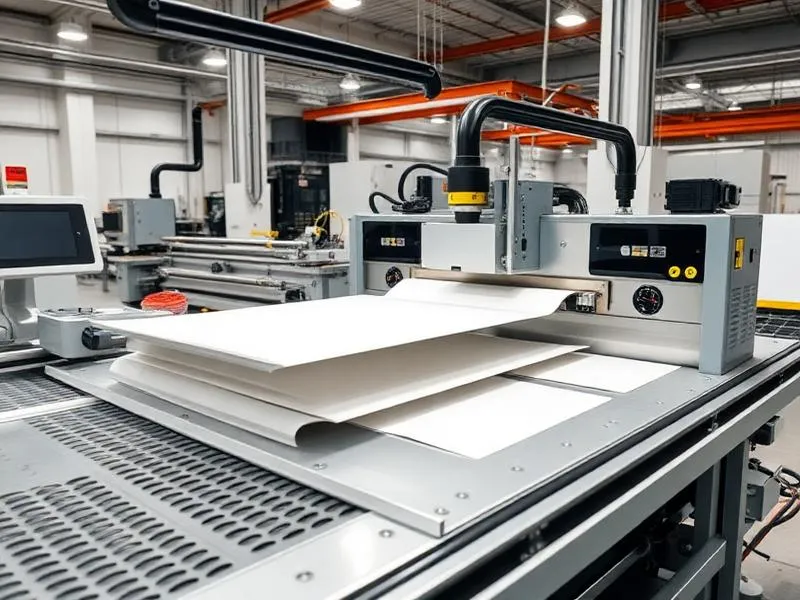
MQ-1060 Automatic Flatbed Die-Cutting Machine
MQ-1060 automatic flatbed die-cutting machine — 7,500 sheets/hour, 300-ton cutting pressure, 1060×740 mm sheets, ±0.1 mm accuracy. For folding cartons, labels and corrugated packaging.
View productRelated Articles
View allTechnical Knowledge · May 12, 2026
Automatic Die Cutting Machine 1080mm: A Buyer Guide
Discover the ideal automatic die cutting machine 1080mm for your carton converting needs. Optimize speed, stripping, and ROI for superior production.
Technical Knowledge · Aug 28, 2026
XG1080G Fully Automatic Hot Stamping Machine: Field Review
A field review of the XG1080G fully automatic hot stamping machine: 5,000 sheets/hour, plus or minus 0.075mm registration, 160-tonne pressure and 6-zone heating, with real sustained throughput figures, landed-cost budgeting and honest guidance on who should not buy it.
Technical Knowledge · May 12, 2026
Automatic Folder Gluer: Straight-Line vs. Crash-Lock
Optimize your production with the right automatic folder gluer machine. Compare straight-line and crash-lock models to increase efficiency.
Ready to source foil stamping and die-cutting from one supplier?
From stamping foils to post-press machines and die-cutting consumables — get factory-direct pricing and free samples.