
Discover the ideal automatic die cutting machine 1080mm for your carton converting needs. Optimize speed, stripping, and ROI for superior production.
Table of Contents
For carton and corrugated packaging converters, selecting the right post-press equipment is a critical investment decision that directly impacts production capacity, labor costs, and overall profitability. The automatic die cutting machine has become the cornerstone of modern finishing departments, and the 1080mm format represents a highly strategic choice for businesses aiming to balance versatility with high-volume output. This format is engineered to handle common B1/42-inch press sheet sizes with minimal waste, making it a workhorse for commercial printers and packaging specialists alike.
This guide provides a technical breakdown of the key performance indicators and features of a typical automatic die cutting machine with a 1080mm working width. We will analyze specifications, operational benefits, and investment considerations to help you determine if this class of machine aligns with your production needs. We will move beyond marketing claims to focus on the tangible data—speeds, power consumption, footprint, and cost—that drives a purchase decision. The objective is to equip you with the necessary information to evaluate suppliers and calculate the return on investment (ROI) for your specific operational context.
1080 Size Market Overview
The 1080mm die cutting format (with a maximum sheet size of approximately 1080 x 780 mm) is a dominant standard in the global packaging industry. Its prevalence is a direct result of its compatibility with the most common sheet-fed offset press formats, particularly the B1 size (707 x 1000 mm). This synchronization minimizes paper waste and streamlines workflow from printing to finishing, as jobs do not require resizing or special layouts. A 1080 die cutter is therefore optimized for a wide array of products, including food and beverage cartons, pharmaceutical boxes, cosmetic packaging, and commercial print-to-cut applications.
Compared to smaller formats (e.g., 750mm), the 1080mm size offers significantly higher throughput for the same number of machine cycles by accommodating more impressions per sheet. Conversely, while larger formats (e.g., 1300mm or 1500mm) offer even greater sheet capacity, they come with a substantial increase in machine footprint, tooling cost, and initial investment. The 1080mm size occupies a strategic middle ground, providing the capacity for high-volume jobs without the prohibitive overhead of very-large-format (VLF) equipment. This makes it the ideal upgrade path for converters currently operating smaller or manual die cutters who need to increase capacity to meet growing demand.
Speed: 7,500 Sheets per Hour
A benchmark specification for a modern automatic die cutting machine 1080 is a maximum running speed of 7,500 sheets per hour (SPH). This figure is not merely a theoretical maximum but a consistently achievable production speed for many substrates, assuming a well-maintained machine and properly prepared tooling. Achieving this level of performance requires a synchronized system of high-precision components. The feeder mechanism, for instance, must accurately separate and advance sheets from the pile at high velocity. This is typically achieved with a suction head featuring multiple, independently adjustable suction cups and a pre-loading system that allows for non-stop operation.
The core of the machine's speed is the platen drive system and the gripper bar chain. The platen, which applies cutting pressure up to 300 tons, is driven by a toggle mechanism connected to a heavy-duty crankshaft. The precision of this movement is paramount for consistent cutting and creasing at speed. Simultaneously, the gripper bar chain, often imported from manufacturers in Germany or Japan, must accelerate, transport, and position the sheet with repeat accuracy of less than ±0.1mm. High-performance indexing gearboxes or servo drives are used to ensure this precision, preventing registration errors that can lead to costly waste, especially on complex, multi-up jobs.
Stripping Unit Benefits
While die cutting is the primary function, waste stripping is where an automatic die cutter delivers significant labor savings and workflow efficiencies. A machine equipped with a triple-action stripping station automates the removal of lead edge, side edge, and internal waste from the cut sheet. This is accomplished using a system of male and female stripping boards fitted with pins and blocks that press out the waste material as the sheet passes through.
Without an integrated stripping unit, each cut sheet must be taken to a separate station where workers manually break out waste using hammers and pry tools. This process is slow, labor-intensive, and a common production bottleneck. It can require 2-3 additional staff members to keep pace with the output of the die cutter, increasing labor costs and the risk of repetitive strain injuries. By automating this process, a stripping unit allows the die cutter to deliver neatly stacked, waste-free blanks directly to the delivery pile, ready for the next stage of production (e.g., folding-gluing). The ROI on a stripping unit is often realized in less than 12 months through direct labor savings alone, not to mention the dramatic increase in net production speed.
Specification Comparison: With vs. Without Stripping
| Feature | Model with Stripping Unit | Model without Stripping Unit |
|---|---|---|
| Net Output | Up to 7,500 sheets/hour (delivery-ready) | ~2,000-3,000 sheets/hour (net, after manual stripping) |
| Required Operators | 1-2 (Machine Operator, Assistant) | 3-4 (Operator + 2-3 for manual stripping) |
| Turnaround Time | Immediate transfer to folding-gluing | Delayed by hours due to manual labor bottleneck |
| Footprint (Approx.) | 8.5m (L) x 5.5m (W) | 7.0m (L) x 5.5m (W) + Separate Stripping Area |
| Product Quality | Excellent, consistent blank quality | Risk of damaged blanks from manual handling |
Power & Footprint
Integrating a piece of industrial machinery like a carton die cutting machine requires careful facility planning. The machine itself has a substantial physical footprint, typically around 8500mm in length, 5500mm in width (including operator platforms), and 2500mm in height. A minimum clearance of 1 meter around the machine is required for safe operation and maintenance access. The machine's weight, approximately 18-20 metric tons, necessitates a reinforced concrete floor with a thickness of at least 300mm to ensure stability and damp vibration.
Electrical power requirements are also significant. A typical 1080 die cutter requires a total connected load of 22-25 kW. This is distributed among several systems, with the main drive motor being the largest consumer (e.g., an 11 kW motor). The balance of the power is used by feeder pumps, electronics, and safety systems. A stable 380V/50Hz 3-phase power supply is standard, though this can be adapted for different regional requirements. Proper grounding and circuit protection are mandatory for protecting both the machine's sensitive electronics and the safety of the operating personnel.
Price Range: USD 80,000 - 150,000
The automatic die cutter price is dependent on its configuration and the manufacturer's component choices. The price spectrum can be broken down into three general tiers:
- Base Model (approx. $80,000 USD): This configuration typically includes the core feeder, die cutting platen section, and a simple delivery unit. It automates the cutting and creasing process but requires manual stripping. This option is suitable for converters with lower volume or those with available labor for offline stripping.
- Mid-Range Model (approx. $115,000 USD): This is the most common configuration and represents the best balance of automation and cost. The price includes the addition of a single- or double-action stripping unit and often features like a non-stop feeder and delivery system. This allows for continuous operation, maximizing the 7,500 SPH throughput.
- High-Specification Model (approx. $150,000 USD): The top-tier price includes advanced features such as a triple-action stripping station with a blanking/separation module, which delivers individually separated cartons. It may also include components from premium European or Japanese suppliers (e.g., main chain, PLC, servo motors), a chase with a center-line system for faster die setup, and advanced diagnostic controls. This configuration is aimed at high-volume producers where maximum automation and minimal setup time are critical.
ROI Calculation
Calculating the ROI for an automatic die cutting machine 1080 involves quantifying the value of increased speed and reduced labor. A simplified model can be structured as follows:
- Calculate Increased Revenue: Determine the difference in net output. If an old machine or manual process yields 1,500 net sheets/hour and the new machine yields 6,000 net sheets/hour (a conservative estimate below the 7,500 max), the gain is 4,500 sheets/hour. At a hypothetical job value of $150 per 1,000 sheets, this equals an additional revenue of $675 per hour.
- Calculate Labor Savings: If the new machine eliminates the need for two manual stripping workers, each costing $2,500/month (including salary and benefits), the monthly labor saving is $5,000.
- Determine Payback Period: Assume a mid-range machine investment of $115,000. If the machine operates for 8 hours/day, 22 days/month, the additional monthly revenue is (4,500 SPH * 8 hours/day * 22 days/month * $0.15/sheet) = $118,800. Add the labor savings for a total monthly gain of $123,800. In this aggressive scenario, the payback is extremely fast. A more conservative calculation might assume only a fraction of that time is dedicated to high-gain jobs. Even if the machine generates just $15,000 in additional monthly profit/savings, the payback period is straightforward: $115,000 / $15,000 per month ≈ 7.7 months.
This basic calculation demonstrates the powerful financial impact of investing in modern die cutting automation. A thorough analysis should also factor in reduced waste, faster job turnaround, and the ability to take on more complex, higher-margin work.
The 1080mm automatic die cutting machine is a strategic asset for any serious carton converter. Its combination of speed, automation, and compatibility with standard press formats provides a direct path to increased productivity and profitability. To receive a detailed configuration and a precise financial analysis based on your specific production needs, please request a formal quotation from our technical sales team.
Frequently Asked Questions
Quick answers about automatic die cutting machine 1080.
Companion Products
Specs and samples for the products discussed in this article.
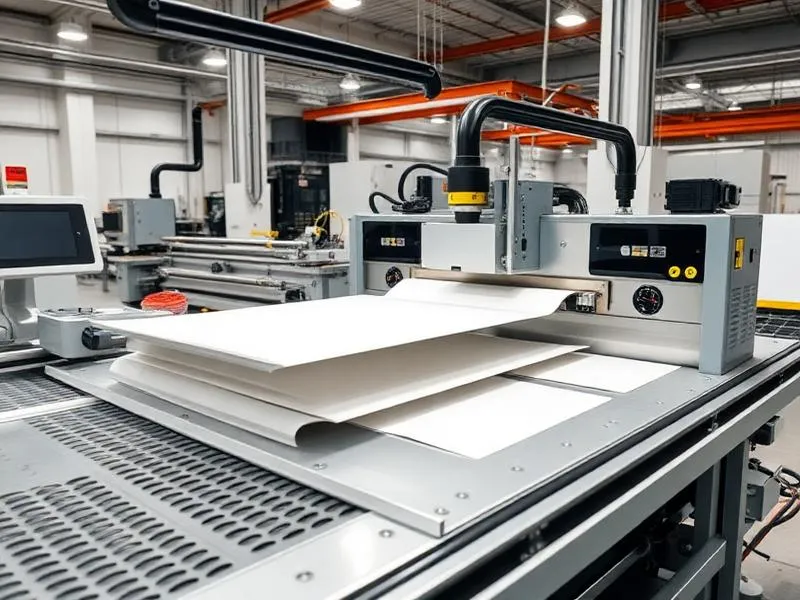
MQ-1060 Automatic Flatbed Die-Cutting Machine
MQ-1060 automatic flatbed die-cutting machine — 7,500 sheets/hour, 300-ton cutting pressure, 1060×740 mm sheets, ±0.1 mm accuracy. For folding cartons, labels and corrugated packaging.
View product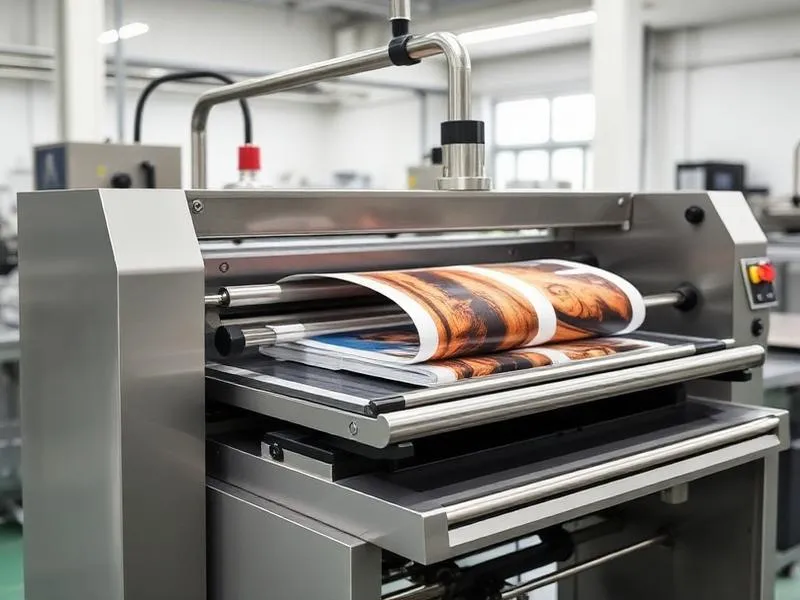
SG-1080 Automatic UV Varnishing Machine
High-speed automatic UV and water-based varnishing machine for print finishing and surface protection.
View product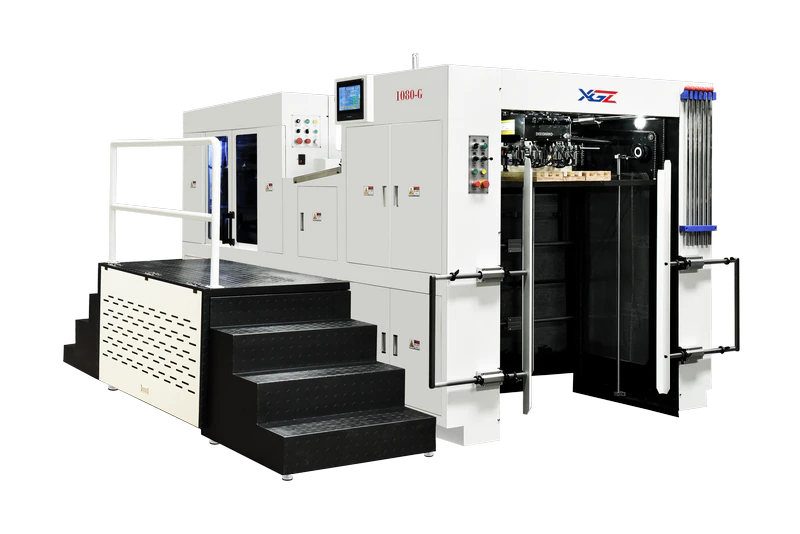
XG1080G Fully Automatic Hot Foil Blocking Machine (Hot Stamping Press)
Industrial hot foil blocking machine (also called a hot stamping press) with 5,500 sheets/hour throughput, 1060×740 mm max sheet size, 80-ton stamping pressure and ±2°C PLC temperature control — for paperboard, luxury packaging, book covers and security printing.
View productRelated Articles
View allTechnical Knowledge · May 12, 2026
Hot Stamping Die Cutting Combo Machine: 2-in-1 Guide
Discover if a hot stamping and die cutting combo machine is right for your B2B needs. Optimize ROI, floor space, and productivity with this integrated solution.
Technical Knowledge · Jun 1, 2026
Hot Foil Stamping Machine Buyer's Guide 2026
Navigate the best hot foil stamping machine for your business. This 2026 guide compares manual, semi-auto, and automatic models for optimal ROI.
Technical Knowledge · Aug 28, 2026
XG1080G Fully Automatic Hot Stamping Machine: Field Review
A field review of the XG1080G fully automatic hot stamping machine: 5,000 sheets/hour, plus or minus 0.075mm registration, 160-tonne pressure and 6-zone heating, with real sustained throughput figures, landed-cost budgeting and honest guidance on who should not buy it.
Ready to source foil stamping and die-cutting from one supplier?
From stamping foils to post-press machines and die-cutting consumables — get factory-direct pricing and free samples.