
Unlock premium packaging potential with 3D lens holographic foil. Discover how this technology creates captivating depth effects that enhance product appeal.
Table of Contents
- What is 3D Lens Foil?
- Visual Effect Comparison: Standard Holography vs. 3D Lens
- Best Use Cases for Depth Effect Foil
- Cosmetics & Perfumery
- Consumer Electronics
- Wine, Spirits, and Tobacco
- Tooling and Production Costs
- Mastering / Origination
- Stamping Dies
- Foil Material
- Calculating ROI for Brands
- Frequently Asked Questions
In the highly competitive retail environment, packaging must do more than simply contain and protect a product. It must capture attention, communicate value, and create a memorable brand experience. While standard printing and finishing techniques are foundational, brands in premium sectors are increasingly turning to advanced materials to achieve visual differentiation. The goal is to interrupt the consumer's scan, draw them in, and convey a sense of superior quality before they even interact with the product itself. This is where advanced decorative technologies become a strategic necessity.
Among the most effective of these technologies is 3D holographic foil, specifically the "lens" variant. Unlike standard holograms that offer shimmer and parallax, 3D lens technology creates a true, measurable illusion of depth, making designs appear to float above or recede deep into the substrate. This technical guide provides a comprehensive overview for packaging engineers, brand managers, and press operators on the composition, application, and strategic value of using this material to create high-impact, premium packaging.
What is 3D Lens Foil?
A 3D holographic foil, often called a 3D lens foil, is a specialized type of hot stamping foil that utilizes micro-optical structures to create distinct visual effects of depth, magnification, and dimensionality. It is not a hologram in the traditional diffractive sense. Instead of a diffraction grating that splits light into a spectrum of colors, lens foil employs an array of microscopic Fresnel lenses embossed into its surface.
The fundamental structure consists of several layers:
- Base Film: Typically a 19-23 micron (μm) Polyester (PET) carrier that provides stability during handling and application.
- Release Coat: A proprietary layer designed to release cleanly from the PET carrier under the correct heat and pressure.
- Lacquer/Structural Coat: The most critical layer. It receives the high-precision embossing of the micro-lens pattern from a master shim. The optical properties and hardness of this coat determine the clarity and durability of the effect.
- Metallization Layer: A vacuum-deposited layer of aluminum, typically less than 0.05 μm thick, which provides the reflectivity needed to make the lens effect visible.
- Adhesive/Sizing Coat: A heat-activated adhesive formulated for a specific range of substrates (e.g., coated papers, SBS board, certain plastics) and press types.
During application, a heated die presses the foil onto the substrate. The heat activates the adhesive layer, bonding the lacquer and metallization layers to the surface while the PET carrier and release coat are stripped away. The embossed lenses on the transferred foil then manipulate ambient light, creating a strong, compelling illusion that the design is three-dimensional.
Visual Effect Comparison: Standard Holography vs. 3D Lens
The distinction between a standard 2D/3D parallax hologram and a true 3D lens effect is critical for specification. While both fall under the "holographic" category, their underlying technology and resulting visual impact are vastly different. Lens effects provide a genuine sense of Z-axis depth that standard holograms cannot replicate.
| Feature | Standard 2D/3D Holographic Foil | 3D Lens Foil |
|---|---|---|
| Primary Visual Effect | Rainbow color shifts (spectral), parallax effect (objects appear to shift position). | True depth illusion (Z-axis), magnification, spatial movement. The pattern appears physically above or below the substrate surface. |
| Underlying Technology | Diffraction grating embossed into the surface. | Micro-lens array (Fresnel lenses) embossed into the surface. |
| Optimal Design Elements | Fine lines, detailed patterns, security features. | Bold, solid shapes, geometric patterns, logos. Fine details can be lost. |
| Typical Application Temperature | 95-120°C (Platen); 120-150°C (Cylinder) | 120-140°C (Platen); 140-160°C (Cylinder) |
| Typical Application Speed | 2,500-5,000 impressions/hour | 2,000-4,500 impressions/hour (requires precise pressure) |
| Typical Material Thickness | 12-16 μm | 19-25 μm |
Best Use Cases for Depth Effect Foil
The unique visual signature of depth effect foil makes it ideal for markets where perceived value and shelf impact are primary drivers of sales. The application must justify the higher cost through a tangible return in brand positioning or unit sales.
Cosmetics & Perfumery
High-end cosmetic brands sell an experience, not just a product. The packaging is the first point of physical contact. Applying a 3D lens pattern to a perfume carton or makeup palette creates an immediate sense of luxury and sophistication that standard printing cannot match. It connects with the sensory nature of the products themselves.
Consumer Electronics
For products like premium headphones, smartwatches, and high-end accessories, the packaging must communicate technological prowess. A well-executed premium packaging hologram using lens effects can make the product feel more advanced and valuable, helping it stand out in a visually saturated retail environment.
Wine, Spirits, and Tobacco
In this sector, a significant portion of purchases are gifts. Packaging that provides a "wow factor" has a distinct advantage. A lens foil on a whiskey tube, wine box, or premium cigar pack elevates the product into a different class, justifying a higher price point and encouraging purchase for special occasions.
Tooling and Production Costs
Integrating 3D lens foil requires an understanding of the associated costs, which are different from standard stamping foils. The primary difference lies in origination and material cost.
Mastering / Origination
This is the most significant upfront investment. Creating the master embossing shim for a lens design is a complex, high-precision process involving optical engineering. This is a one-time cost.- Standard Hologram Master: $2,500 - $6,000 USD
- Custom 3D Lens Master: $9,000 - $18,000+ USD, depending on the complexity and dimensions of the lens array.
Stamping Dies
The cost of the brass or steel die used for the stamping process is unchanged. This cost, typically $200 - $600, is determined by the image area and complexity, not the type of foil used.Foil Material
3D lens foils are inherently more expensive due to the complex manufacturing and thicker base material.- Standard Holographic Foil (e.g., rainbow sheer): $0.25 - $0.45 per square meter.
- 3D Lens Foil: $0.90 - $2.80 per square meter. The price is dictated by the complexity and exclusivity of the lens pattern.
Calculating ROI for Brands
The higher cost of 3D lens foil necessitates a clear return on investment. This ROI is realized through a combination of tangible and intangible benefits.
Increased Perceived Value & Higher Price Point: The most direct return. The premium visual effect allows the product to support a higher retail price. For example, an incremental cost of $0.20 per package for lens foil could easily support a $1.50 - $2.00 increase in the retail price in the luxury goods sector. This margin expansion is the primary financial justification.
Improved Shelf Velocity: Enhanced packaging directly correlates to higher consumer engagement and faster sell-through. In case studies, products that moved from standard to premium holographic packaging have seen pickup rates increase by as much as 25% in controlled retail tests. This reduces inventory carrying costs and increases overall revenue.
Enhanced Brand Positioning: Using cutting-edge materials solidifies a brand's image as a market leader. It is an investment in brand equity, signaling a commitment to quality and innovation that resonates with discerning consumers.
Inherent Anti-Counterfeiting: While its primary purpose is aesthetic, the high cost and technical difficulty of originating and manufacturing 3D lens foil provides a formidable barrier to counterfeiters. This adds a layer of brand protection at no extra cost, safeguarding revenue and consumer trust.
Ultimately, 3D lens foil is not a simple decorative finish; it is a strategic tool for market positioning. For brands in competitive, premium categories, it offers a proven method to increase margins, accelerate sales, and build lasting brand value. To discuss the technical requirements for your next project or to request a sample book, contact our technical sales team.
Frequently Asked Questions
Quick answers about 3d holographic foil.
Companion Products
Specs and samples for the products discussed in this article.
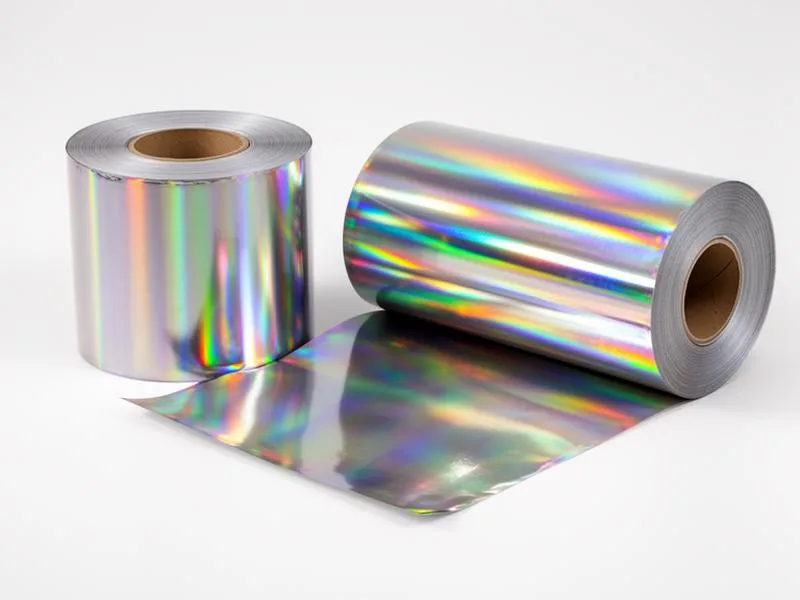
Holographic Rainbow Foil
Rainbow holographic foil with multi-dimensional laser patterns — 15 µm PET, 30–640 mm widths, stamps at 110–140 °C for security and premium packaging.
View product
Premium Metallic Gold Hot Stamping Foil
Ultra-bright metallic gold foil with mirror-like reflection for premium packaging and label applications.
View productRelated Articles
View allTechnical Knowledge · Aug 25, 2026
Holographic Foil Printing: The Complete Technical Guide (2026)
How holographic foil printing actually works — hot stamping, cold foil and transfer sheets compared, the four holographic foil families, security OVD requirements, honest limitations, and a step-by-step way to choose the right method for your run length.
Technical Knowledge · Aug 25, 2026
Metallic Foil Explained: Types, Colour Charts and Real Costs (2026)
What metallic foil actually is in packaging and print, the foil families worth knowing, how colour charts and reference numbers work, and honest per-square-metre and per-impression cost ranges for 2026.
Technical Knowledge · Jul 28, 2026
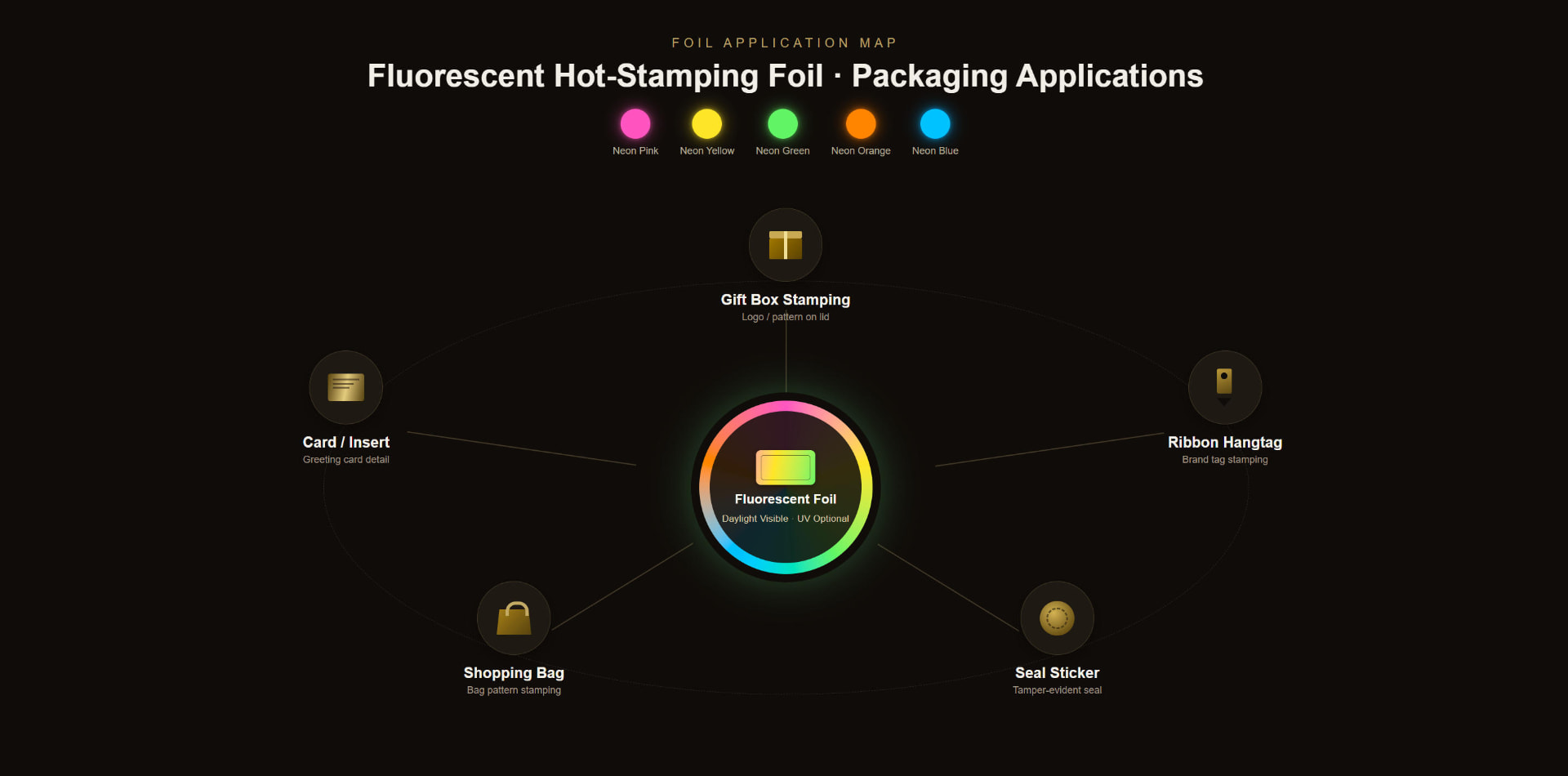
Fluorescent Hot Stamping Foil: What It Is, How It Works, and When to Use It
A practical guide to fluorescent hot stamping foil — pigment chemistry, neon and UV-reactive grades, applications, lightfastness limits, and the five things to check before ordering for apparel, packaging or events.
Ready to source foil stamping and die-cutting from one supplier?
From stamping foils to post-press machines and die-cutting consumables — get factory-direct pricing and free samples.