
Process Guide · 2026 Edition
Cold Foil Stamping & Cold Foil Printing
The complete guide to inline cold foil — UV-adhesive process, 5-step workflow, cost vs hot foil, overprintable metallic colors, and substrate compatibility for high-volume labels and folding cartons.
Reviewed by Gavin Gao, Technical Director
What is cold foil stamping?
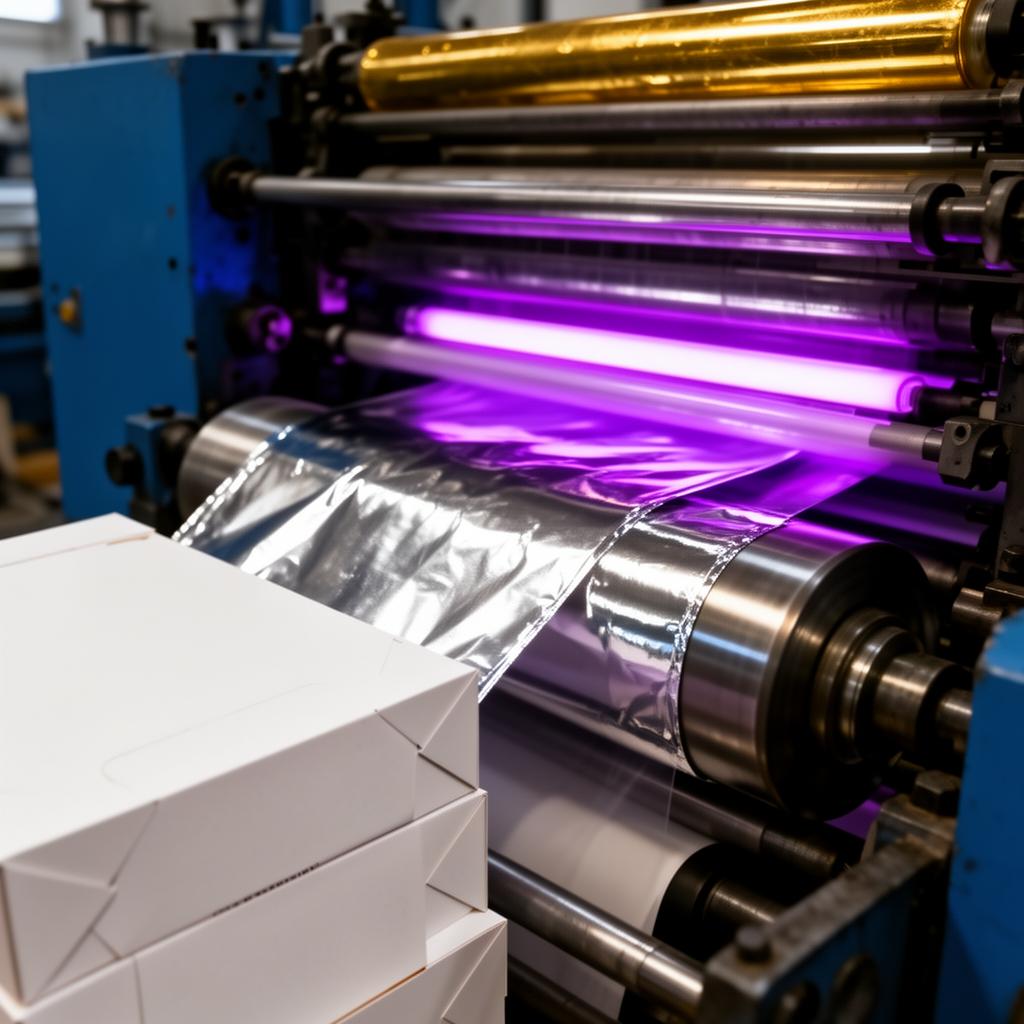
Cold foil stamping (also called cold foil printing) transfers a metallic foil layer onto a substrate using a UV-cured adhesive — no heat and no engraved die. It runs inline at full press speed (150–400 m/min on flexo, 9,000–15,000 sph on offset) and is the dominant cost-efficient metallic decoration method for high-volume folding cartons and pressure-sensitive labels. New here? Start with our cold foil overview, or source the right foil grade from our Cold Stamping Foil product line.
How cold foil printing works — 5 steps
UV adhesive printing
A UV-cured adhesive is printed onto the substrate via flexo or offset, in the exact shape of the foil image.
Foil nip
The substrate runs under a foil web at room temperature. The UV adhesive grabs the metallic layer where it was printed.
UV curing
The adhesive cures instantly under UV lamps, locking the foil in place.
Carrier rewind
The PET carrier web rewinds; only the metallic image stays on the substrate — no heat, no die.
Overprint (optional)
Process inks can be printed on top of the cold foil inline, creating millions of metallic color combinations from one foil grade.
Advantages and limits of cold foil
| Aspect | Advantage | Limit |
|---|---|---|
| Tooling | No die — adhesive printed, artwork changes cost zero | Requires UV-adhesive printing capability on press |
| Throughput | Inline at full press speed (150–400 m/min flexo, 9–15k sph offset) | Fine line resolution capped ~0.15 mm vs 0.05 mm for hot foil |
| Colour | Overprintable with CMYK — unlimited metallic combinations | Brightness ~10–15 % below hot foil (no reflow of metal layer) |
| Substrate | No heat — works on PE, BOPP, shrink film, lightweight stocks | Uncoated paper absorbs adhesive — switch to hot foil |
| Economics | Lower per-unit cost above 5,000 units due to inline integration | Adhesion lower than hot foil — not for harsh abrasion / outdoor |
Frequently asked questions
Q01What is cold foil stamping?+
Cold foil stamping is an inline printing process that transfers a metallic foil layer onto a substrate using a UV-cured adhesive — no heat and no engraved die. The adhesive is printed in the foil image shape via flexo or offset units, then the foil web is pressed onto it and cured instantly under UV lamps.
Q02Cold foil stamping vs cold foil printing — same thing?+
Yes. Both terms describe the identical process. 'Cold foil stamping' is the trade term inherited from hot foil vocabulary; 'cold foil printing' is the term most printers use because it integrates into a printing line rather than a separate stamping press.
Q03Cold foil vs hot foil — which should I use?+
Use cold foil for runs above 5,000 units on coated paperboard or film labels where you need inline speed and CMYK overprinting. Use hot foil for runs under 5,000, premium luxury packaging where peak brightness matters, fine line detail, or substrates cold foil cannot grip (leather, uncoated grayboard, thick rigid boxes).
Q04What is the cost of cold foil per square meter?+
Cold foil costs USD $0.45–$1.20 per m² in bulk (vs $0.60–$1.50 for hot foil), but the true per-unit advantage comes from inline integration — no die and no separate stamping pass. On a 50,000-unit folding-carton job with 8% foil coverage, cold foil typically lands at $0.018–$0.035 per unit fully loaded vs $0.045–$0.080 for hot foil.
Q05What substrates work with cold foil printing?+
Coated paperboard (SBS, FBB, CCNB 200–450 gsm) is ideal. Coated label paper, PE/BOPP/PET films (with adhesion promotion) and shrink sleeves all work. Uncoated stocks, kraft, recycled board and thick grayboard absorb the UV adhesive — switch to hot foil for those.
Q06Can I overprint colors on cold foil?+
Yes — overprinting is cold foil's biggest creative advantage. Once the silver cold foil layer is cured, downstream CMYK units print transparent inks on top, creating millions of metallic color combinations from a single foil grade.
Free cold foil samples for your press
Tell us your press make (Bobst, Heidelberg, Komori, Gallus, Nilpeter), substrate and UV adhesive system — we'll ship matched cold foil samples within 5 business days.