
Guía Técnica · Edición 2026
Lámina de Acabado Textil — Foil de Transferencia Térmica para Tela, Prendas y Calzado
La lámina de acabado textil — también llamada lámina de transferencia térmica, lámina para prendas o lámina de estampado en caliente para tela — es una lámina con adhesivo de poliuretano diseñada para adherirse a algodón, poliéster, mezclilla, cuero y mezclas bajo una prensa de calor. Esta guía cubre las 6 familias de láminas textiles, compatibilidad con telas, configuraciones de prensa (140–160 °C, 10–15 s, despegue en caliente), resistencia al lavado y frote (AATCC 135, 25–40 ciclos a 40 °C), y abastecimiento con MOQ desde 1 rollo para ropa, calzado, ropa deportiva y accesorios.
Revisado por Gavin Gao, Director Técnico
¿Qué es la lámina de acabado textil?
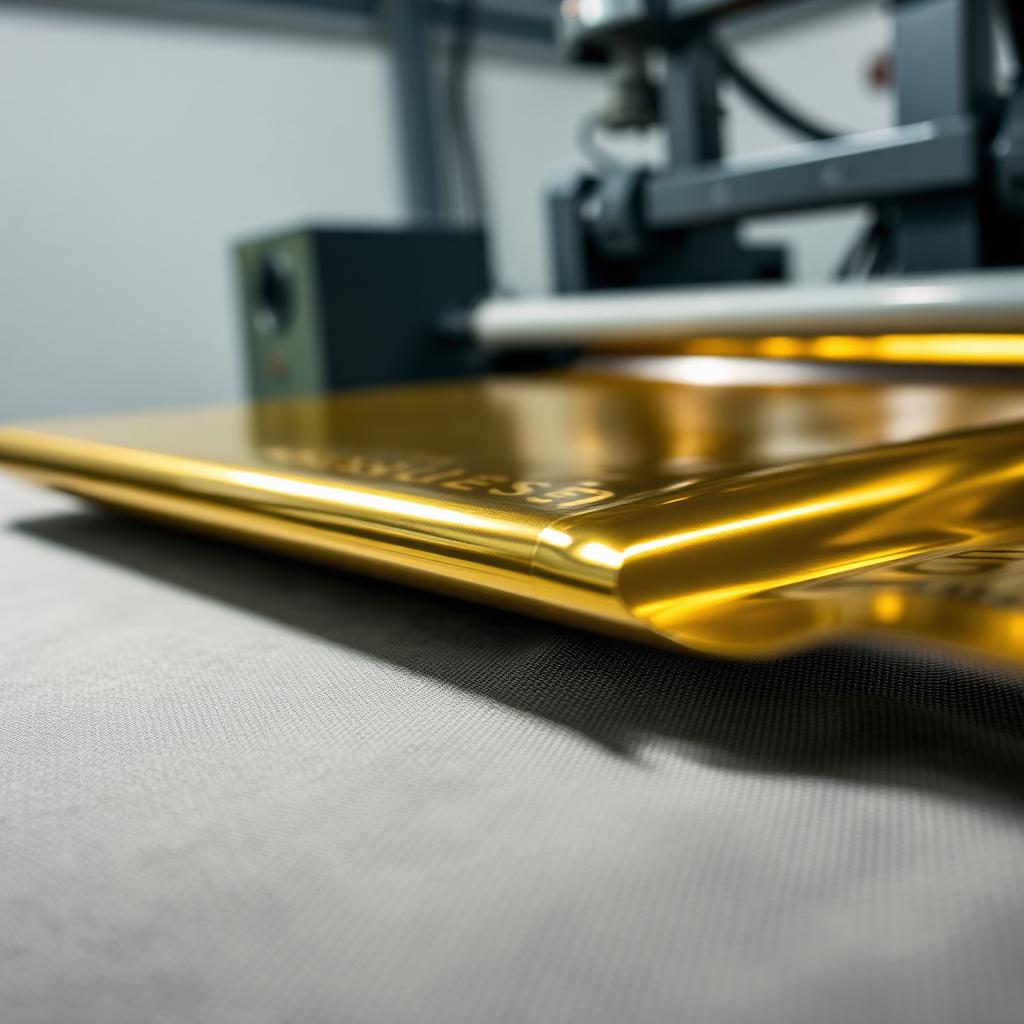
Lámina de acabado textil(también: lámina de transferencia térmica, lámina para prendas, lámina de estampado en caliente para telas) es una lámina de estampado en caliente cuya capa adhesiva se reformula del sistema rígido de vinilo/acrílico utilizado en papel y cartón a uno flexible hot-melt de poliuretano (PU) o co-poliamida (CoPA) que penetra las fibras de la tela y sobrevive a ciclos de lavado de 40–60 °C. El foil textil está diseñado para estirarse 15–30% sin agrietarse, seguir el movimiento de la tela y pasar las pruebas de lavado AATCC 135 / ISO 6330 para 25–40 ciclos de lavado doméstico. Se utiliza para logotipos, nombres de marca, numeración deportiva, gráficos de moda y adornos en camisetas, sudaderas con capucha, ropa deportiva, mezclilla, partes superiores de calzado y artículos de cuero. Explore las familias de Gama de foil de estampado en calienteo comparar con el de sustratos rígidos Guía de pilar de estampado en caliente, foil holográfico, foil nacaradoy foil matefamilias para papel y cartón.
Cómo se aplica el foil de acabado textil — secuencia de prensa de calor de 5 pasos
Preparación y pre-prensado de la tela
Pre-prensar el área de la prenda durante 3–5 s a 130 °C para eliminar la humedad y aplanar las fibras. La tela húmeda o con fibras levantadas causará una unión desigual de la lámina y plateado en los bordes.
Aplicación de la capa adhesiva
Para flujo de trabajo de dos etapas: imprima o serigrafíe adhesivo de transferencia térmica (HTA) con la forma del diseño, o coloque una película adhesiva de PU precortada. Cure / fije a 130 °C × 5 s. Los grados de foil de estampado directo omiten este paso.
Aplicación de foil
Coloque el foil textil con el lado de color hacia arriba sobre el área adhesiva. Use una lámina de cubierta de teflón o silicona para proteger la capa de liberación del foil y evitar quemaduras.
Ciclo de prensa de calor
Prensado a 140–160 °C, 3–4 bar de presión, 10–15 s de permanencia (dos etapas) o 150–165 °C × 12–18 s (estampado directo). La temperatura y la permanencia se ajustan según el tejido: los sintéticos requieren menos calor, el algodón más.
Retirada en caliente y curado
PELAR EN CALIENTE inmediatamente mientras la lámina aún esté tibia; el enfriamiento antes de pelar rasgará la capa de color. Post-curar a temperatura ambiente durante 24 h antes del primer lavado para permitir la reticulación completa del adhesivo de PU.
Compatibilidad de telas — ajustes de prensa por sustrato
Siempre realice una prueba de lavado de 3 muestras (AATCC 135, 40 °C, 25 ciclos) antes de la producción a granel — la química del acabado de la tela varía entre los fabricantes.
| Tela | Temp. de prensado | Tiempo de permanencia | Pelar | Ciclos de Lavado (40 °C) |
|---|---|---|---|---|
| Jersey 100% algodón | 155–165 °C | 12–15 s | Caliente | 30–40 |
| Jersey 100% poliéster / deportivo | 140–150 °C | 10–12 s | Caliente | 25–35 |
| Algodón/Poliéster 50/50, 65/35 | 150–160 °C | 12–14 s | Caliente | 30–40 |
| Denim (algodón, crudo / lavado) | 160–170 °C | 15–18 s | Caliente | 30–40 |
| Nylon / Lycra ≤ 8% | 140–150 °C | 10–12 s | Caliente | 25–30 |
| PU y cuero dividido, cuero sintético | 130–140 °C | 8–10 s | Caliente | 20–25 (suave) |
| Felpa cepillada (lado liso) | 150–160 °C | 12–15 s | Caliente | 20–25 |
| DWR / técnico impermeable | No recomendado (solicitar grado resistente al flúor) | — | — | — |
6 familias de foil textil — elegir según el brief de la marca
| Familia | Efecto óptico | Mejores telas | Uso Final Típico |
|---|---|---|---|
| Oro / Plata metálico | Metálico espejo 85–95 GU | Todo | Logotipos de moda, numeración deportiva, denim de lujo |
| Holográfico | Arcoíris / pilar / matriz de puntos | Algodón, poliéster, mezclas | Ropa urbana, moda juvenil, ropa para festivales |
| Nacarado | Perla suave 35–55 GU, bitono | Algodón, poliéster | Ropa de novia premium, ropa de mujer, ropa infantil |
| Mate (Oro / Plata / Negro) | Bajo brillo 5–15 GU | Tejidos premium, athleisure | Logotipos de lujo, marcas discretas |
| Color pigmento (RGB-W-K) | Color sólido opaco | Todo | Gráficos de marca a todo color, logotipos grandes |
| Reflectante | Plata / color de alta reflectividad | Poliéster, mezclas, ropa de trabajo | Chalecos de seguridad, ropa de trabajo, ropa deportiva de visibilidad nocturna |
Lámina de acabado textil — especificaciones técnicas
| Parámetro | Prendas estándar | Moda Premium | Lavado industrial |
|---|---|---|---|
| Espesor del soporte de PET | 12 µm | 16 µm | 19 µm |
| Química del adhesivo | Copoliamida (CoPA) | Poliuretano (PU) | PU reforzado + reticulante |
| Capa de aluminio | ~30 nm | ~50 nm (metálico) / ~30 nm (perla) | ~50 nm |
| Temp. de prensado | 140–155 °C | 145–160 °C | 150–165 °C |
| Tiempo de permanencia (prensa térmica) | 10–12 s | 12–15 s | 15–18 s |
| Ciclos de lavado AATCC 135 / 40 °C | 25–30 | 30–40 | 50+ |
| Lavado industrial (60–90 °C) | No calificado | 5–10 ciclos | 30–50 ciclos |
| Frote en seco Martindale | ≥ 150 | ≥ 200 | ≥ 300 |
| Elástico (sin grietas) | 15% | 20–25% | 25–30% |
| Temp. de servicio | -20 a +60 °C | -30 a +70 °C | -30 a +80 °C |
| Ancho del rollo | 320 / 640 mm | 200–1,040 mm | 320–1,040 mm |
| MOQ | 1 rollo | 1 rollo (stock) / 1,000 m² (personalizado) | 1,000 m² |
| Tiempo de entrega | 5–7 días | 5–7 días (stock) / 20–28 días (personalizado) | 25–35 días |
Dónde se utiliza el foil para acabado textil
Oro metálico, holográfico y negro mate en camisetas, sudaderas con capucha, chaquetas de mezclilla y gorras — la decoración dominante para logotipos de streetwear premium y lanzamientos limitados.
Foil metálico y reflectante en uniformes de equipo, numeración deportiva, camisetas atléticas y ropa de yoga / running — duradero a través de 25–40 lavados de ciclo deportivo.
Acentos metálicos dorados, plateados y holográficos en la parte superior de las zapatillas, logotipos swoosh, lengüetas del talón y parches de la lengüeta — aplicados con prensas de calor rotativas o de horma de zapato.
Oro mate y plata mate en logotipos de bolsillos traseros de mezclilla premium, bolsos de cuero, carteras y pequeños artículos de cuero — estándar de equipaje y accesorios de lujo.
Lámina reflectante plateada y de color reflectante en chalecos de seguridad, chaquetas de alta visibilidad, uniformes de hostelería y ropa de trabajo industrial, calificada para ciclos de lavado industrial.
Lámina de color blanco perla, rosa perla y pigmento en ropa de novia, faldones de bautizo, gráficos de ropa infantil y cojines/mantelería decorativos.
Preguntas frecuentes sobre especificaciones técnicas
Q01¿Qué es la lámina de acabado textil?+
La lámina de acabado textil — también llamada lámina de transferencia térmica, lámina para prendas o lámina de estampado en caliente para tela — es una lámina con soporte de poliéster diseñada para adherirse a tejidos planos y de punto (algodón, poliéster, mezclas, cuero, mezclilla) bajo una prensa de calor plana o rotativa. La construcción es una pila ajustada de 5 capas (PET 12–19 µm + cera de liberación + capa de color/metálica + ~30–50 nm de aluminio + adhesivo de poliuretano termofusible específico para textiles) donde el sistema adhesivo se reformula para la penetración de fibras y ciclos de lavado de 40–60 °C en lugar de sustratos rígidos de papel/cartón. La decoración típica son logotipos, nombres de marcas, numeración deportiva, gráficos de moda y detalles de adorno en camisetas, sudaderas con capucha, ropa deportiva, chaquetas de mezclilla, partes superiores de calzado y artículos de cuero.
Q02Lámina de acabado textil vs. lámina de estampado en caliente para papel/cartón — ¿cuál es la diferencia?+
Tres diferencias de ingeniería. (1) Adhesivo — la lámina textil utiliza un termofusible de poliuretano (PU) o copoliamida (CoPA) que se ablanda a 130–160 °C y penetra las fibras de la tela; la lámina para papel utiliza un adhesivo de vinilo/acrílico más rígido que se adhiere a superficies recubiertas a 95–135 °C. (2) Flexibilidad — la lámina textil está diseñada para estirarse 15–30% sin agrietarse para que la decoración siga el movimiento de la tela; la lámina para papel es rígida y se agrietaría al flexionarse. (3) Resistencia al lavado y frote — la lámina textil está calificada para pruebas de lavado AATCC 135 / ISO 6330 (típicamente 25–40 lavados domésticos a 40 °C) y pruebas de frote Martindale; la lámina para papel no tiene dicha calificación. Siempre pida lámina vendida como grado 'textil' o 'transferencia térmica' — la lámina de estampado en caliente para papel se delaminará en el primer lavado.
Q03¿Qué telas textiles funcionan con el foil de transferencia térmica?+
Ideal para telas lisas tejidas y de punto apretado: 100% algodón (jersey, sarga, denim), poliéster (jersey, microfibra, malla deportiva), mezclas de algodón/poliéster (50/50, 65/35), nylon, mezclas de lycra/spandex ≤ 8%, felpa cepillada (lado liso), PU y cuero dividido, cuero sintético y microsuede. Difícil o no recomendado: felpa de pelo grueso, tela de rizo, tejidos de punto acanalado profundo, telas técnicas repelentes al agua o con recubrimiento DWR (el recubrimiento bloquea la adhesión), 100% seda y telas con acabado suavizante de silicona alto. Para prendas técnicas impermeables, solicite una lámina textil resistente al flúor; el adhesivo de PU estándar no se adherirá a una superficie con acabado DWR.
Q04¿Qué ajustes de prensa producen una transferencia de foil limpia y resistente al lavado en tela?+
Proceso de dos etapas. ETAPA 1 — Imprima o aplique primero una capa de adhesivo de transferencia térmica (HTA) utilizando una impresora digital de lámina, un HTA serigrafiado o una película adhesiva precortada, luego cure/fije a 130 °C × 5 s. ETAPA 2 — Coloque la lámina con el lado de color hacia arriba sobre el adhesivo y presione a 140–160 °C, 3–4 bar de presión, 10–15 s de permanencia, luego DESPEGUE EN CALIENTE inmediatamente. Enfriar antes de despegar rasgará la capa de lámina. Para lámina textil de estampado directo (sin pre-adhesivo) en sintéticos lisos, prensa de una sola etapa a 150–165 °C × 12–18 s, despegue en caliente. Siempre realice una prueba de lavado de 3 muestras (AATCC 135, 40 °C, 25 ciclos) antes de la producción en masa — la química del acabado de la tela varía entre fábricas.
Q05¿Qué resistencia al lavado y al frote debo esperar del foil para acabado textil?+
La lámina textil de calidad de producción con el sistema adhesivo de PU correcto ofrece: 25–40 ciclos de lavado doméstico a 40 °C (AATCC 135 / ISO 6330) sin agrietamiento, desprendimiento o pérdida de color significativos; ≥ 200 ciclos Martindale de frote en seco y ≥ 100 de frote en húmedo sin abrasión medible; resistencia a detergentes suaves y lejía doméstica en concentraciones de consumidor; temperatura de servicio de -20 a +60 °C. El lavado industrial (60–90 °C, detergente alcalino, agitación mecánica) reduce significativamente estas cifras; para aplicaciones de ropa de trabajo, hostelería y ropa de cama de hotel, solicite una lámina de grado de lavado industrial con adhesivo de PU reforzado (calificado para más de 50 ciclos de lavado industrial).
Q06¿Qué familias de foil están disponibles para la decoración textil?+
Seis familias se envían como variantes de grado textil. (1) Oro y plata metálicos: la lámina textil de mayor volumen, utilizada en logotipos de moda, numeración deportiva y denim de lujo. (2) Holográfica: patrones de arcoíris, pilar de luz y matriz de puntos para ropa urbana y moda juvenil. (3) Nacarada: blanco perla, champán, rosa perla para ropa de novia y de mujer de primera calidad. (4) Mate: oro mate, plata mate y negro mate para marcas discretas de primera calidad en ropa deportiva y tejidos de lujo. (5) Colores pigmentados: rojo, azul, verde, negro, blanco opacos para gráficos de marca a todo color. (6) Reflectante: lámina de alta reflectividad para chalecos de seguridad, ropa de trabajo y ropa deportiva de visibilidad nocturna. Las seis familias comparten la misma plataforma adhesiva textil de PU/CoPA.
Q07¿Cuál es el MOQ y el tiempo de entrega para la lámina de acabado textil?+
Lámina textil en stock (oro, plata, arcoíris holográfico, blanco perla, negro mate, plata reflectante en anchos de 320/640 mm × 120/300 m): MOQ de 1 rollo, se envía en 5–7 días FOB Shanghái. Lámina textil pigmentada de color en stock: MOQ de 1 rollo en rojo, azul real, blanco y negro; MOQ de 1,000 m² para color textil personalizado según Pantone, tiempo de entrega de 20–28 días. Lámina textil holográfica con logo personalizado: MOQ de 3,000 m², 35–45 días incluyendo la herramienta maestra de grabado. Paquete de muestras A4 gratuito de las seis familias de láminas textiles más una muestra de prueba de lavado de 4 ciclos, enviado en 5 días hábiles a compradores calificados.
Q08¿Puede la lámina de acabado textil reemplazar la serigrafía o el DTF para la decoración de prendas?+
Complementa en lugar de reemplazar. El foil es la mejor opción para: efectos metálicos / espejo / holográficos / perlados (que la serigrafía y el DTF no pueden igualar), logotipos y marcas de menos de 100 cm² donde un acabado de lujo premium es importante, numeración deportiva con brillo metálico, acentos de moda en mezclilla y cuero, y decoración de ribetes en calzado y accesorios. La serigrafía sigue siendo mejor para gráficos a todo color de cobertura total en grandes áreas y alto volumen. El DTF (directo a film) sigue siendo mejor para gráficos fotorrealistas a todo color. La prenda premium típica combina gráficos a color DTF o serigrafiados + un logotipo o acento metálico estampado con foil; esta es la pila de decoración estándar de lujo para streetwear y athleisure en 2026.
Muestra gratuita de foil textil + paquete de prueba de lavado
Díganos su tejido y uso final — le enviaremos una muestra A4 de las 6 familias de láminas textiles más una muestra de prueba de lavado AATCC 135 de 4 ciclos en 5 días hábiles, gratis para compradores calificados de ropa, calzado y accesorios.